Scotland Surfing Guide – Famous Spots, Top Surf Towns, How to Travel

Scotland surfing = cold water strike missions to wild Atlantic slabs, idyllic white-sand beaches with totally empty beach breaks, and some of the best surf adventuring you’ll ever do.
An introduction to surfing in Scotland
“My word it’s jaw-dropping up here.” – so goes the thoughts of pretty much every surfer as they move around and bend in the road along the Scottish surf coast.
This wild and forgotten land is somewhere out of this world. From the vertical cliffs of wild Cape Wrath in the north all the way to cotton-white beaches of the Outer Hebrides, the lochs of Lomond to the grassy pastures of Angus and the fishing towns of the east, Scotland is unlike anywhere you’ve ever been.
Surfers haven’t quite explored it all yet. Or, at least, if they have, they’ve not reported back.
There are some spots that are super famous, but the nation has long been more famed for its hiking paths, Munro mountains, and whisky.
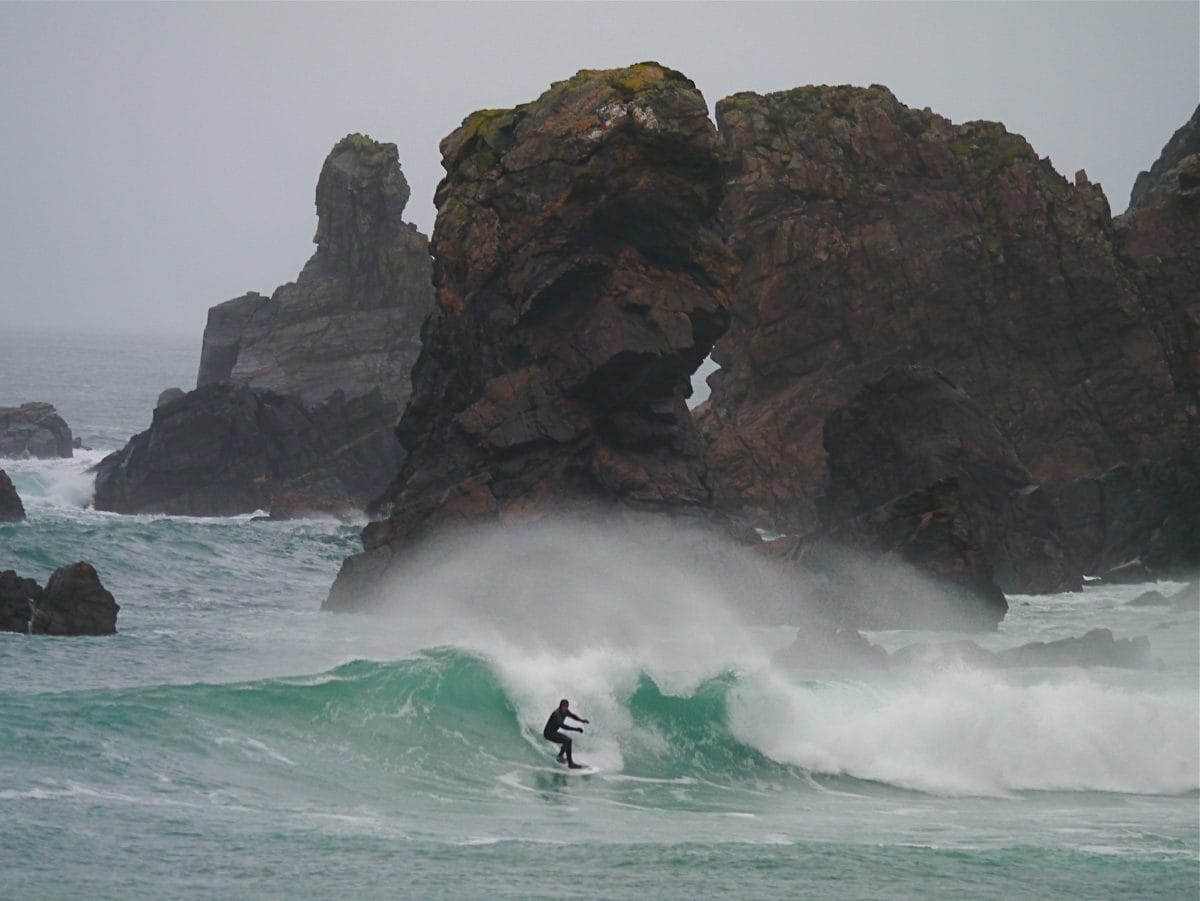
Part of the reason for that is that paddling out in Scotland takes some serious moxie. The main surf season comes as the temperature drops in the water, and big, ferocious swell systems are often the norm.
But if you know where you’re going, the rewards are spectacular: Empty point breaks that fire off slabby barrels that seem plucked from Tasmania; shimmering beaches where A-frames roll in and there’s not another soul in sight; rocky coves with curling lefts and rights and a few salt-washed cottages plonked alongside.
Coming here is about going off track and seeking out spots that will push your surfing. It’s about going to the extremities of the UK and meeting the full brunt of the North Atlantic.
You’ll need a car. And you’ll need a sense of adventure. But you’ll never look back.
We might use affiliate links in this post. Basically, you click em’ and we get a little something from your booking or purchase. They help us keep offering more and more in-depth surf guides to awesome places all around the globe. So, thanks for that!
This is just one part of our complete guide to surfing in Europe
What’s in this guide to surfing in Scotland
Scotland surfing at a glance
The good:
The bad:
Where to surf in Scotland?
Scotland, a bit like Northern Ireland before it, has three coastlines that can work. Let’s break em’ down one by one…
- The East Coast – This is the most fickle of Scotland’s regions, relying on North Sea windswell, though offshore winds are dominant so when it does work it can be great. Also more accessible and better for a variety of levels of surfers since beaches replace rocky point breaks.
- The North – Because it’s more accessible than the islands, the North tends to be the most surfed region in Scotland. This is the home of the legendary breaks at Thurso, but also the unexplored reaches of Cape Wrath. It’s consistent, gorgeously wild, and easier to reach than the Outer Hebrides.
- The Outer Hebrides – The piece de resistance of Scotland’s surf regions for us has to be the west and the islands. The Outer Hebrides, plonked some 50 miles off the mainland in the Atlantic, are the best regions, offering totally deserted and picture-perfect beaches and rugged point breaks that suck up all that NW Atlantic swell.
Surf spots in the north of Scotland

There are two things that make the northern coast of Scotland the most popular surf region in the country: First, the geology – it’s all flat slate slabs that create shallow, hard reefs out of deep water. Second, the exposure – swells from W to E come in here with ease. It’s also kinda accessible compared to the Outer Hebrides, since you don’t need a prop plane or a ferry to get over.
Gills Bay
A monster wave can erupt at Gills Bay when the biggest of the winter storms starts firing. SW winds – the dominant ones – are all offshore here, so the big old left handers that crank up on the side of the rocks on the west side of the bay are often groomed and pushed up into slabby walls that only the most daring surfers will attempt.
It doesn’t generally work until you get size, so there’s nothing much here for learners. Very rippy, very dumpy. Be careful.
Dunnet Bay
The angles of the beach at Dunnet Bay means that there are usually nice right handers that peel off a sandbar in the middle.
They work best as the tide starts to push up and about an hour before it hits high, when it can soften out. There are times when it’s a mess, usually in the peak of the winter as the big low-pressure systems coalesce around Iceland.
On smaller days, around 2-4 foot, though, it’s a great place to learn to surf since the bottom is all sand and the waves stay nice and green with any S wind really.
How to surf? North Coast Watersports do excellent 2-hour lessons on Dunnet Beach. They’re great for complete beginners and improvers.
Murkle
Murkle is one of the many slabby reef breaks on this run of shore. It’s often not surfable but can be epic on its day. It’s a left, with barrel sections that can throw out total cover ups and backdoor sections. For advanced surfers only.
Thurso
The name Thurso is now pretty legendary.
Mag covers and WSL comps have made it the starlet it is today and people will drive for miles and miles to catch it when it’s on. First surfed in the 70s by some intrepid Scousers on a mission, it’s now considered Scotland’s finest right hand reef.
At least that’s Thurso East, which breaks on – you guessed it – the east side of the bay.
There’s also a beach break that’s nowhere near as daunting, and Shit Pipe, a more east-facing break that works on the larger winter swells quite well, offering an A-frame near where a muddy (thankfully not shitty) river flows into the bay.
Read our full ultimate guide to surfing in Thurso right now
Brims Ness/Crosskirk
Around the ruined cemetery and old church at Brims Ness is where the north coast gets really slabby. Slate is the rock here, forming big, flat platforms that edge slowly into much deeper water. That means one thing: Slabs.
There’s a fricking monster that can kick up with heavy N swells just below the windfarm but it’s not for mere mortals – even the paddle out is deadly.
Further along under the old ruins themselves at Brims is a more protected spot that’s still on shallow reef but does give a semi hollow right hander that can barrel. It’s like a cold-water Bingin in reverse on its day cos it’s nice and round.
Sandside Bay
Sandside Bay is wide and well protected from W winds. The lower dunes to the south of the ocean here will let in a touch of SW wind, which will be offshore. Couple that with a nice NW swell and the lines will groom up into some of the best sandbar breaks in this part of Scotland.
Most come for the hollowish left that breaks off the reef on the far side of the bay from the golf course, however. It can be a beast.
Strathy
The beach at Strathy opens directly north into the Atlantic, which means any of those heavy, heavy swell will need to work a touch harder to bend their way in and break on the inside of the bay.
The upshot? This is one of the better learner locations in northern Scotland. Plus, the rivermouth on the west side of the bay usually crafts some fun banks that offer cool A-frames or and very nice lefts.
Good goofy spot. Lower tides or mid tide generally best. Rips are the main issue.
Torrisdale Bay
More beach break where the Gulf Steam SW winds are dead-on offshore is on offer at Torrisdale. The eastern end of the beach is far superior usually, since the river there has formed the better banks. A-frames breaking in the center and some great rights as you move up towards the estuary, though the rips are unpredictable. This is a stunning place to surf and you’ll probably be totally alone.
Sango Sands
Sango Sands tends to be smaller than most beaches in the Durness and north coast region simply because it looks a bit more east. Windswell is usually what you’re chasing here. The best sets are smaller chest-high waves on the inside of the bay. Short rides, but fun. Nice campground on the hill right above.
Sandwood Bay
You’re now in the remote reaches of the wild Cape Wrath, the totally empty northwestern extremity of Scotland. Sandwood Bay is the only beach in the region that has complete exposure to the Atlantic and that means it will close out and max out in a jiffy with the winter storms.
But it’s a solid choice for spring and summer surfing when you’re chasing swell, though it’s a absolute chore to reach – we’re talking a few hours’ drive from most places and then a three-mile walk over the cliffs and dunes.
There’s a mix of spots but mostly it’s peaky beach break that sections nicely. You should be 100% completely on your own here. All the time.
Surf spots in the Outer Hebrides

The Outer Hebrides suck up all the Atlantic NW swells and have long, open beaches and rugged point breaks aplenty. Yes, they are a chore to get to but you’ll be rewarded with some of the remotest surf spots on the British Isles. It’s worth the trip at least once if your life.
Port of Ness
The northern tip of the Isle of Lewis has enough angle on it to pull in N swells, refracting them into this wild bay and small harbor town. It’s usually when there’s some good size in the charts, as you need some power to help things refract in.
All that helps to temper things and the usual result are sets of mellowish lines cruising between the rocks. Good for bodyboarders and groms. Also lovely that any westerly winds are plum offshore. Often totally flat in summer.
Eoropie Beach
The first of the west-facing beaches on Lewis is a perfect welcome to what surfing in the outers is like. It’s a punchy, rippy beach break with shifty A-frame peaks up and down its whole length.
The banks here are usually kinda’ epic and they can hold size, but only if you nail them down with a winter E or SE wind, which is rare-ish. Rights at the top end of the bay are the best of all.
Barvas
The bay at Barvas is flanked on both sides by a shallow-shelf cobblestone reef. It’s got rights on one side and lefts on the other.
Of the two, the lefts reign superior. They peel for like nearly ½ a km from the point to the inside, with enough face to work with for proper top to bottom surfing. It can get big here and dumpy but, if it’s smaller, can work for lots of levels.
Bragar (Labost)
There’s a left-hander reef on the outside of the Labost headland just north of Bragar though we’ve not seen it work all too often. The nice thing here is that SW winds blow neatly offshore and big winter N swells can squeeze up between the heads to give wedgy spots in the middle of the beach.
Dalbeg
A sucky left-hand slab waits to get kicking in the winter over in the tiny cove of Dalbeg. It’s dangerous and steep but the payoff is coverups in cold and icy water.
Cliff
Ultra-consistent Cliff Beach is one of the best beach breaks in the UK. It can handle size more like a reefy and loves those big hits of NW swell in December and January, especially since it has some okayish protection on the south side thanks to the cliffs.
When it is large, it’s not for everyone. Leave it to the big wavers, cos the sets will lurch up off the outside rocks and whack inwards. They’re capable of holding triple OH and have the moxie of an Irish bombie, which they surf more like.
During the spring and summer, Cliff mellows well and it can be the only spot working in August, when the water is turquoise clear and the sets are fun A-frames. This is one of the most surfed spots in the Outer Hebrides and one of the few where you might find yourself with some company.
Scarista
The huge dash of sand at Scarista is open to NW swells and there are points on the beach where SW winds angle offshore. It’s an okay spot but doesn’t have the banks to match the beaches further north.
Sollas
The crescent of white sand at Sollas is one of the most idyllic spots on the Outer Hebrides.
Sadly, it doesn’t work all that well so often because of it’s super-shallow shelf and big headlands, which cut down W swell. It’s also kinda strange for wind, as SEs – which hardly ever blow through – are offshore.
Nonetheless, there can be decent windswell peaks here for learning on and it’s one of the top spots on North Uist for beginners in the summer months.
Vatersay
At the southern end of the main stretch of Outer Hebrides, the largely untrodden island of Vatersay is a gift. There’s one main beach, Traigh Shiar, which has some of the whitest sand on the islands and relatively consistent beach break peaks from November to April.
They’re not world-class but they are punchy and fun, work at most levels of tide, and are good for all levels under 6 foot (when they will closeout).
Tiree
Tiree has established itself as one of the better isles for surfing on the Scottish west coast. It’s got its own surf schools and a clutch of white-sand beaches and point break reefs that get good action from the W swell channels in the Atlantic.
Balevullin Beach tends to be the top spot because it angles NW and has some nice patches of rock and good sandbars that can handle decent size.
Check out our complete full guide to surfing in Tiree right now
Surf spots in eastern Scotland
The Outer Hebrides suck up all the Atlantic NW swells and have long, open beaches and rugged point breaks aplenty. Yes, they are a chore to get to but you’ll be rewarded with some of the remotest surf spots on the British Isles. It’s worth the trip at least once if your life.
Sandend
There are some moderately challenging wedges working at Sandend with bigger winter swells. In the summer, the place is generally churned up into mush most of the time, but it can be popular with sea kayakers. When it’s really big it will change its face and hold overhead, but that needs a SW wind and NW groundswell over 8 foot at least.
Fraserburgh
Two-mile-long Fraserburgh Beach is probably the most surfed spot on the east coast of Scotland. It can work on both North Sea windswells and with NW groundswell that bends and refracts into the bay.
On the latter, you might just catch the long left point working. If not, then it’s going to be lots of individual beach peaks that can be fun rides of 40-100m with some nice off the lip sections and whatnot.
Aberdeen
Aberdeen has a long, flat-shelf urban beach that can be relied upon to offer mushy peaks whenever there’s windswell in the North Sea. To the south of the town, exposed Nigg Bay would once churn out brutal right walls in the winter but they built a massive harbor to service the gas industry and all that’s gone.
St Andrews East Sands
Plenty of cold-water wedges under the gaze of arguably the most famous golf course in the world. They don’t tend to do well on much size so bring extra volume with ya’.
When to surf in Scotland?
The surf season in Scotland runs from October to April, though it is possible to surf here all year round.
The autumn is the start of the main swell season because it’s when the Atlantic starts seeing low-pressure storms move across from Iceland and the Gulf Stream kicks up big W-SW winds, which are sometimes – but not always – offshore along key spots on the north coast.
The depths of winter can be HEAVY here. We’re talking 20-foot plus and it’s only the slabs of Caithness in northern Scotland that are working and they’re only for the kamikazes out there. You’ll also have to factor in the cold.
The waters of the North Sea and North Atlantic can dip to 44 F (7 C) or lower and the wind chill will make it feel a whole load worse than that. You’re looking at 6-mil+ of rubber and hoods, gloves, the whole shebang.
We’d say time it for September or October if, like us, you enjoy a mix of conditions – bigger days in with smaller days and some days that are stormy, others that are flat. The spring is also a good midpoint, though the water is still cold in May like it’s not in Oct.
The summer months do work in Scotland since the seas around here are a swell factory. It’s the best time to travel up if you want the most accessible beginner conditions on the Outer Hebrides especially, where the white-sand beaches will look utterly fantastic and there’s actually rarely a completely flat day.
We might use affiliate links in this post. Basically, you click em’ and we get a little something from your booking or purchase. They help us keep offering more and more in-depth surf guides to awesome places all around the globe. So, thanks for that!