
The Ultimate Guide to Surfing Ireland

Surfing Ireland is wile and reliable. This place gets the full brunt of the Atlantic Ocean on its rugged western edge and is a surf haven for it. Beach breaks with shelter line up next to cliffs that stand above some of Europe’s mightiest slabs. It’s cold here, and often hard going, but the rewards are not to be doubted.
An introduction to surfing Ireland
If your idea of a surf heaven is a dune-backed beaches bristled by frigid, salty air, a cozy pub that serves thick Guiness on hand, and largely empty line ups, then Ireland has to be on your bucket list.
The Emerald Isle gets swell all the time. Just look at where it sits: To the west of the UK, hoovering up any and all NW and W swells in the Atlantic.
The Wild Atlantic Way is where you’ll want to focus. It’s a driving route that links up County Donegal in the north with County Cork in the south.
As it weaves across more than 1,200 miles of Atlantic shoreline, it knits together all of the most famous surf spots Ireland can muster, plus loads of spots that are off-radar, sitting like hidden gems out in the wild, far from pretty much anything.
For that reason, we say Ireland really lends itself to surf roadtrips. Bring wheels or rent em if you can and an adventure here can go off the charts.
There are other ways to do it, too. Bundoran, for example, is a great place for families and learners, especially in the summer months. It’s one of just a few beach towns that’s got great infrastructure – surf camps, surf schools and – of course – oodles of quaint Irish taverns.
One more thing: Seasons matter a lot here. Winters can be brutal. Summers can often be flat. Time it right and you’ll have the surf trip of a lifetime. Time it wrong and sheeeesh!
We might use affiliate links in this post. Basically, you click em’ and we get a little something from your booking or purchase. They help us keep offering more and more in-depth surf guides to awesome places all around the globe. So, thanks for that!
This guide is a part of our larger guide to surfing in Europe
Ireland surf at a glance
Levels: All levels // Wave type: Beach, reef // Season: Peak is spring and fall, but all year works here
The good:
The bad:
What will I find in this guide to surfing in Ireland
Where is Ireland?
The location of Ireland is key to its success as a surf destination. The island of Ireland (that includes Northern Ireland and the Republic of Ireland), is sat in the Atlantic Ocean to the west of the United Kingdom.
The upshot? All of the swell that creeps down in NW and W channels from the high latitudes, heading to either Wales, Cornwall, or even France and Portugal, hits here first. It crashes into the west coast, which is where most of the top Irish surf spots are located.
How to get to Ireland?
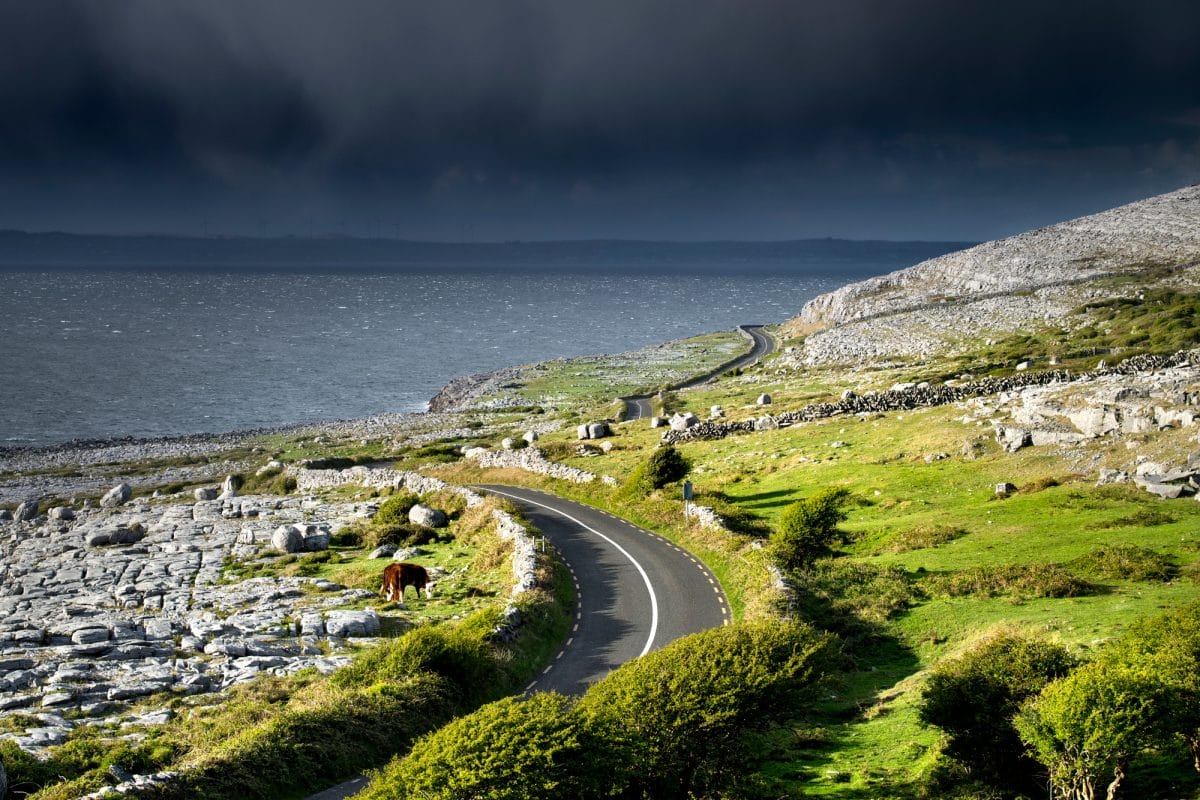
It’s not hard to get to Ireland these days. This is the country that blessed Europe with its number one low-cost airline, after all – Ireland is the hub of Ryanair! That means you can often find $20 flights into Dublin or another regional airport from the UK and airports in mainland Europe.
On top of that, given the long familial links between Ireland and the US, there are stacks of airlines that do transatlantic hops from Dublin across the pond – Aerlingus especially. We use Kiwi to check them because they’re great for finding the cheapest connections on multiple airlines.
The other, more fun and eco-friendly way to travel to Ireland, is to hop on a ferry. There are now links from Liverpool, from Holyhead and Fishguard in Wales, and even from Northern France. Tickets aren’t uber-cheap (you’re looking at $400 ish for a car). But that gets you AND YOUR WHEELS over to Ireland.
We think that’s important. Ireland is PERFECT territory for a surf roadtrip and having a ride of your own will improve your experience here no end. So, either grab that ferry or rent – RentalCars.com are our overall fav rental option, mainly because they have very generous late cancellation policies on most bookings.
Surf spots in Ireland

We think the best way to run through the top surf locations in Ireland is to go county by county.
It makes it easier, since there are only six, maybe seven, counties worth thinking about if you’re serious about surfing in Ireland. And that goes for all levels – from beginners up to complete pros.
Naturally, they are the counties that sit on the western side of the island, getting the brunt of the Atlantic swells.
They range from County Donegal in the north and go all the way to County Kerry in the south. We’ll also include County Cork here, because there are some very decent surf beaches there that are especially great in the height of winter when the west is nothing but bomb after bomb.
County Donegal
If we had to pick a single county to surf in Ireland, it would be county Donegal.
There’s really one reason for that: Bundoran. The small but downright fun-loving town sits right on the southern edge of the county’s border with Co Sligo but it’s pretty much now the undisputed capital of Irish surfing.
There are two spots that have put it firmly on the map…
Tullan Strand is the beach break that extends to the north. It’s classic Celtic stuff, with peak after peak of punchy waves stretch in front of a bank of sand dunes. Utterly beautiful and varying from easy beginner crumblers in summer to pounding closeouts in the winter storms.
The Peak is the break you can see working on the outer reefs right in the middle of the town itself. There’s hardly a bad work to say about it, working on virtually any swell above 2 foot, it’s ultra-consistent and fires off perfect A-frames with hollow rights and fast lefts like an Irish Margaret River.
Where to stay: The Allingham Arms Hotel is comfy, cozy, and located plum on the Bundoran reefs – you almost see The Peak from here. It’s also within walking distance of the town’s bumping bars and gastronomy (something that’s part of the charm in Bundoran)
Check out our in-depth guides to these key surf spots in County Donegal:
County Sligo
If Donegal is numero uno, County Sligo is a close second on the surf front.
If you haven’t yet seen clips of the mighty Mullaghmore going off on 50-foot midwinter storm swells, then get on it! Most chargers say it’s the finest XXL wave in the northern Hemisphere, Nazare included – a fast, hollow, slab of a sea monster that emerges in the depths of January and December to challenge the gnarliest gun toters out there.
Don’t worry, Donegal has more manageable stuff for us mere mortal surfers. The long, wide beaches of Easkey and Strandhill are ranked among the country’s best learner-intermediate locations and pick up plenty of swell all year round.
Where to stay? Around $140/night can score you one of the uber-cozy glamping pods at the Easkey Glamping Village. They’re brand new, done out like a Scandi bolthole, and sit within easy drive of the county’s most consistent beach break.
Check out our complete guide to surfing in County Sligo, and our other guides to these key surf spots in Sligo:
- Mullaghmore
- Enniscrone (coming soon)
County Mayo
County Mayo is where things get wild. An untrodden edge of northwestern Ireland, the region is known for its potato farms and soaring cliffs (the Croaghaun Cliffs are the third-highest in the world, don’t ya know?).
To surf here – and you really, really should surf here! – you’ll need a car. Explore west towards the Mullet Peninsula, where beaches like Elly Bay are a picture of what it means to escape the crowds. We’ve been there, surfing clean summer 2 footers on a log without a single soul around, just blazing white sand and the seabirds in the air.
Achill Island is the most famous surf destination in Co Mayo. It’s the largest of Ireland’s offshore rocks and has Keel Beach, great for all levels.
Where to stay? The quirky Pure Magic Lodge is a fun spot with themed rooms and an on-site pizza joint. It’s not far from here to the beach breaks of Keel, but you’ll also be in the heart of Achill Island, which has loads and loads to see
Check out our complete guides to these key surf spots in Co Mayo:
- Achill Island (coming soon)
County Galway
Generally speaking, the Galway coastline is just too fragmented and faces the wrong way to be as good as its neighbours. There are some jaw-droppingly stunning sands like Dog Beach in Errisberg and Selerna Beach in Moorneen that might throw out the odd log peeler in bigger storms but they aren’t reliable and are hard to get to, even with your own car.
Most people here opt to drive south into Co Clare, where the Lahinch reefs and the consistent beach peaks of Doughmore are unbeatable.
We’d say this though: Do include Galway as a stop on a west coast road trip. The beaches mentioned above are paradisiacal. You get sand as white as talcum powder and truly wild landscapes aplenty.
County Clare
For us, the only surf town in Ireland that can really match what’s offered up in Bundoran is Lahinch. That’s the jewel in the crown of Galway and it’s home to oodles of surf schools and hostels and whatnot – perfect for learners in spring, summer, and early fall when the smaller swells are around.
Outside of that, there are runs of sand that work well, even when other places are flat. Take Doughmore, which is highly exposed and often has a decent log wave in the midsummer. Or Fanore Beach, which works best on NW swells.
Plus, Co Clare has stacks for the adventurous high intermediate and up. There are the barrelling rights of Crab Island and Doolin, plus hidden point breaks that enjoy offshores in prevailing SW winds all the way along to Kilkee – you just gotta’ be willing to find them!
Where to stay? Castledarcy Glamping is soo nice. Escape to nature in one of these self-catering glamping pods. The main surf beaches are <5 mins drive away.
Check out our complete guides to these key surf spots in Co Clare:
- Lahinch (coming soon)
County Kerry
Co Kerry is the last of the great surf regions in Ireland. It caps off the southern end of the west shoreline with its iconic trio of peninsulas – the home of the Ring of Kerry driving route.
For surfers, the Dingle Peninsular is the key. In the shadow of the craggy Glanteenassig peaks, you’ll surf Brandon Bay when there’s N in the swell and Inch Beach when there’s S. Local surf schools are based in Dingle Town itself, so that’s the best place to be based unless you have a car.
Where to stay? An Capall Dubh B&B Dingle is a proper Irish B&B that oozes local charm. They serve proper Irish breakfasts and have rooms suitable for couples, families, and solo surfers alike.
Check out our complete guides to these key surf spots in County Kerry:
- Dingle (coming soon)
County Cork
Facing south into the Celtic Sea, County Cork has a series of big beaches backed by cliffs that are fairly decent in the autumn and winter. They rely on swells wrapping in from the Atlantic, so are generally less consistent and smaller than their compadres out west. AKA – good for beginners and improvers.
The other upside here is that the Co Cork beaches tend to face south and a bit east, meaning the dominant W winds that are the bane of the other counties is offshore.
The gorgeous white-sand inlet and beach at Inchydoney is the star of the show in these parts, but Garrylucas and Garretstown near Kinsale are also fairly reliable.
Where to stay? Inchydoney Island Lodge & Spa is a stunner. Sat right on Co Cork’s most reliable surf spot, it has a swimming pool and super-nice rooms that can offer views of the peeling waves.
When to go surfing Ireland?
 iStock.com / Oleh_Slobodeniuk
Ireland has surf all year round. The rule is this: It’s much bigger and more consistent in winter from November to March, and smaller and more beginner friendly as you approach summer.
The coldest months (November-Feb) see the fiercest Atlantic storms and low-pressure systems up above Ireland send strong NW and W swells. Hardly a week goes by without something happening somewhere, and this is also the time for the bomb squads to hit Mullaghmore and the other XXL spots.
As spring approaches in March and April, the storms slacken off and things have a mini peak, with good consistency but lighter W winds (which are onshore across the Wild Atlantic Way) and a good chance of elusive easterly offshore. We’d say this, along with mid-fall are the perfect time for intermediates and good surfers to roadtrip in Ireland.
The summer can be flat but it rarely is. Most beginners will choose June-August to come to Bundoran or Lahinch for training from the seasoned surf schools there, which often know exactly what where to go to find a working wave. It’s a nice time to be in Ireland, too, with the top chance of small, fun-wave surfing, good weather, and good vibes.
We might use affiliate links in this post. Basically, you click em’ and we get a little something from your booking or purchase. They help us keep offering more and more in-depth surf guides to awesome places all around the globe. So, thanks for that!