
9 Alluring Surf towns in Mexico for 2027 Travels

Time to take a look at the surf towns in Mexico. Woop.
There’s some good uns’ here; surf towns that really get under your skin, make you book another week, then another one.
All of them, naturally, are on the Pacific Coast (anyone who goes east to surf here is cray cray).
But we’ve gone for a nice spread – from Baja California up in the north all the way down to big, wave-kissed Oaxaca.
I’ve also tried to list surf towns that suit different sorts of people. There are small, out-there surf towns that still aren’t busy. And there are more bustling spots like Puerto Escondido, which, to be frank, no list like this could be without.
Enjoy.
We might use affiliate links in this post. Basically, you click em’ and we get a little something from your booking or purchase. They help us keep offering more and more in-depth surf guides to awesome places all around the globe. So, thanks for that!
>>This is a part of our full guide to surfing in Mexico
Sayulita, Nayarit

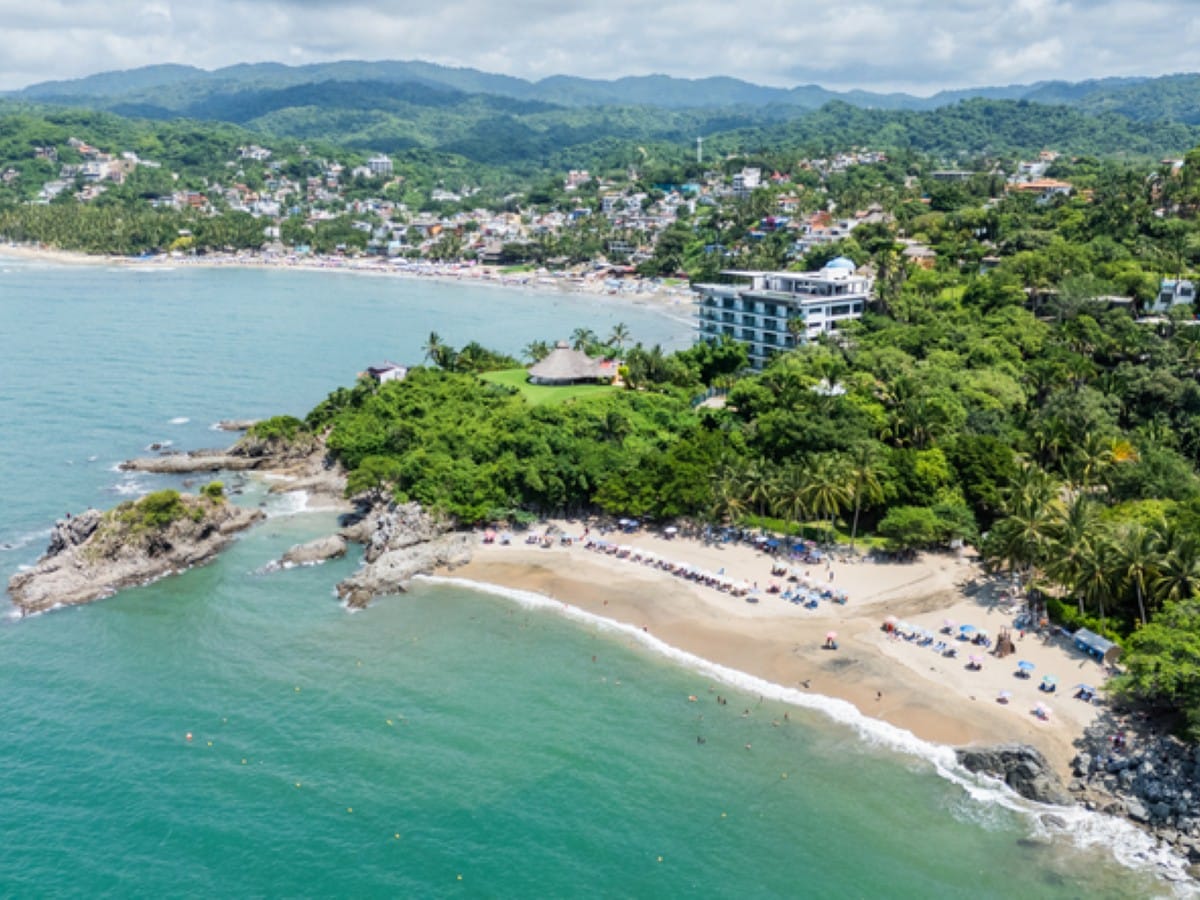
Sayulita is probably the most iconic surf town in Mexico.
It’s been the go-to option for everyone from traveling gringos to seasoned Mexican surf teachers for some decades now, and, if I am being honest, it’s showing signs of wear and tear.
What do I mean? Crowds, mainly. The beach break here is busy AF these days. Getting in the water early can help, but you’ll never be alone. I also mean the town itself, which has become a bit of a spring breaker party fest in the same ilk as nearby Puerto Vallarta.
But, all that said, it’s hard not to love good old Sayulita.
It’s very much a good-time place, with accessible everything – the hotels are fantastic, the taco bars are exactly what you’ve been craving, there’s good coffee, yada yada.
On top of that, Sayulita is surely among the best beginner spots on the planet. It’s graced by a main beach break that peels so softly into the town, and has a ever-so-slightly harder reef on site too. That makes it perfect for progression, and very accessible – you’re never more than a short walk of a few mins to the waves if you stay in town.
Where to stay? Ysuri Sayulita overlooks the main surf break, 2 mins from the town center, and offers its own pool.
>>Read our complete surf-travel guide to Sayulita here
San Pancho, Nayarit
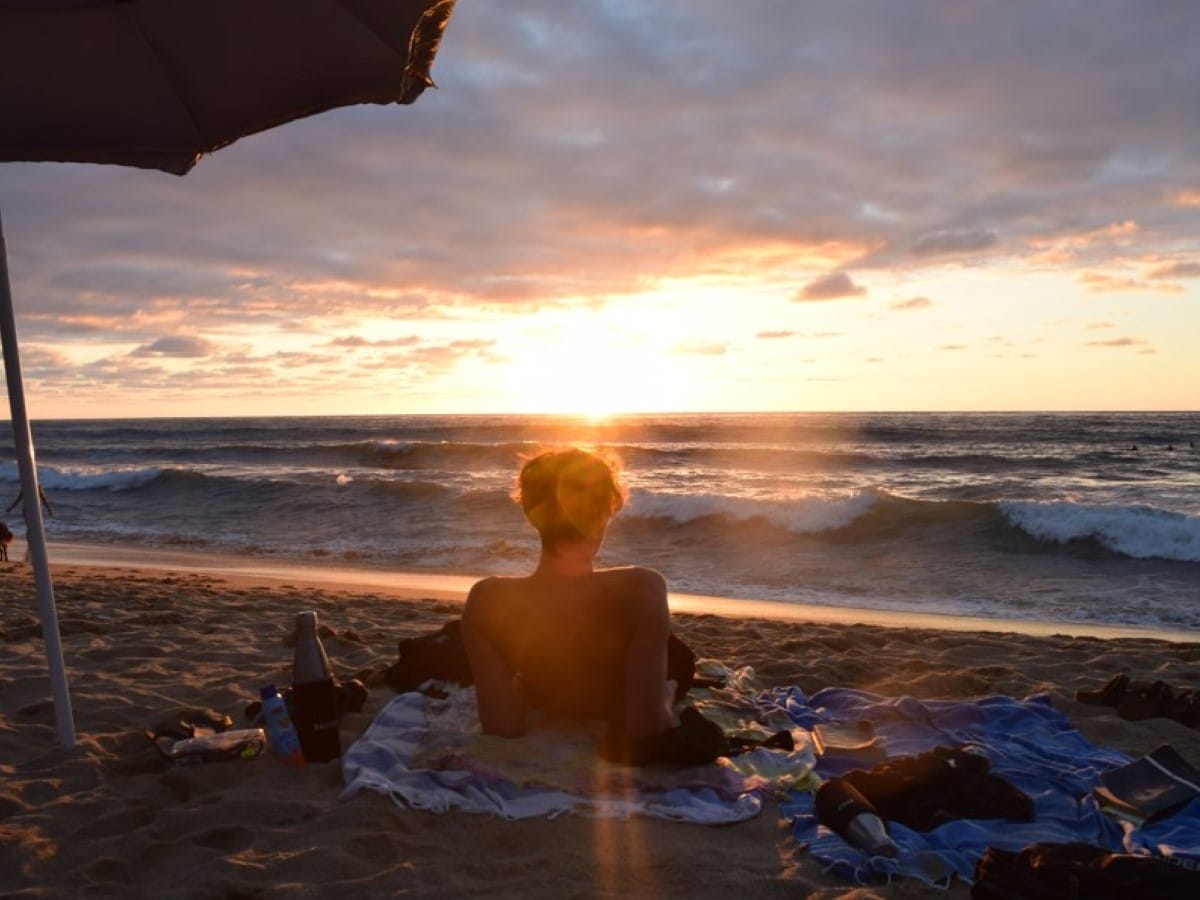
San Pancho is about 15-20 minutes in a taxi north of Sayulita. That puts it on the same Nayarit coastline, amongst the same punchy beach and reef breaks that define the region.
The main break here is on San Pancho Playa. I’ll just put a disclaimer down quick and say it’s NOT the best around. It’s quite a dumpy little bastard, and there are surprising patches of reef dotted around the bay that love to scratch boards and bodies. It can be okay, especially at the more sheltered south end of the beach, but it’s never going to be the ride of your life.
The saving grace is the basic face that San Pancho is tucked close enough to key regional spots like aforementioned Sayulita (great for beginners, and 15 mins to the south) and Punta Mita (all levels, about 35 mins to the south), so you can treat it as a neat base for strike missions.
And what a base it is. San Pancho is a characterful beach town with all the ingredients – cobbled streets, roadside taquerias, margarita stalls under the palms. It’s basically what you came searching for.
Think of it as a bit more of a chilled version of Sayulita with access to very similar breaks, but ready yourself for a bit of travel around the region.
Where to stay? PAL.MAR Hotel Tropical is a super-stylish boutique hotel in the heart of town.
>>Read all about lovely little San Pancho right now
Puerto Escondido, Oaxaca
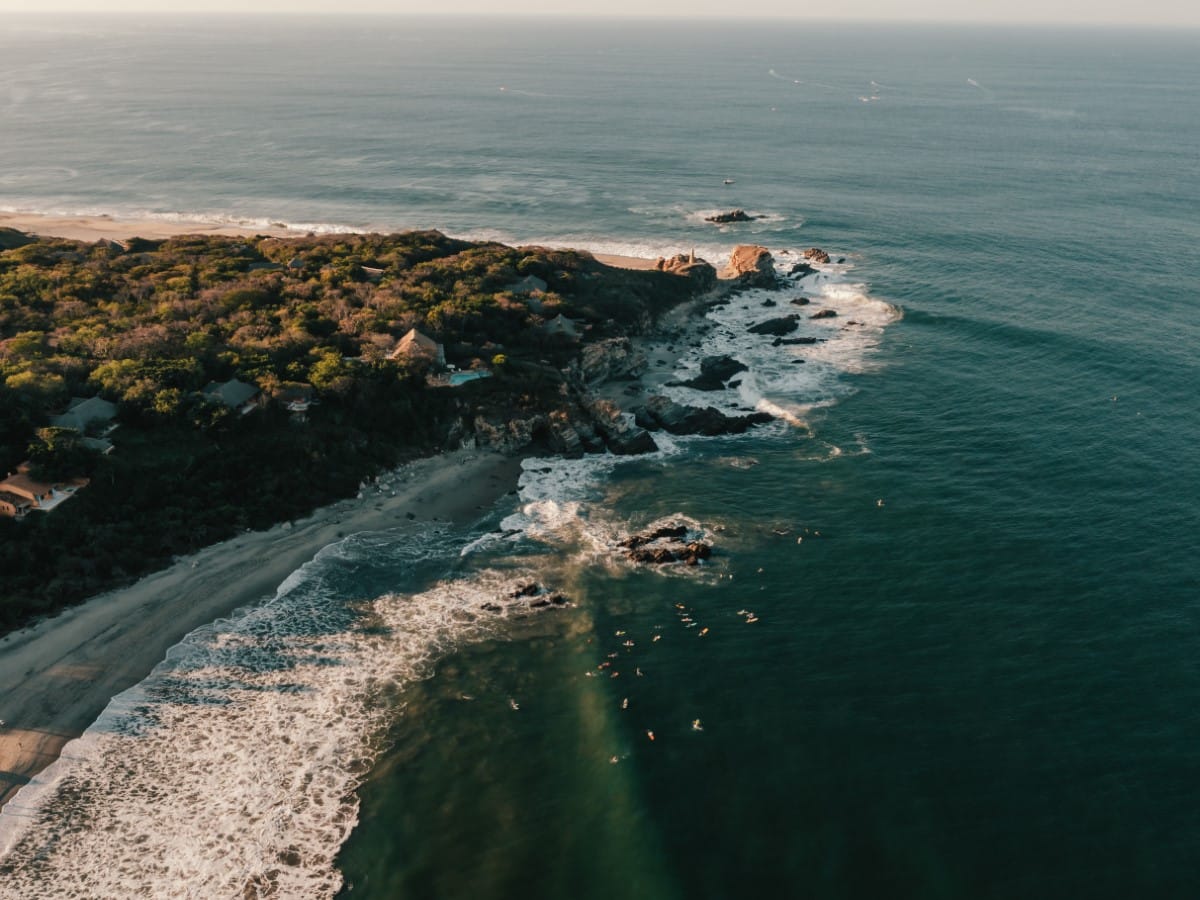
Famed mainly for the huge beach breaks on Zicatela Beach, which aren’t really for us mortals, Puerto Escondido does have more up its sleeve that XL pounders, so don’t worry about that.
It’s more of a city vibe than a small surf town, like, say, San Pancho, and also acts as the gateway to the greater Oaxaca coastline, which is nothing short of epic, especially if you like right-hander point breaks.
It gets a whole load more chill up on Carrizalillo, a beach that benefits from shelter to the south and north thanks to two big headlands. A nice A-frame with better rights breaks in there. Then there’s the nice left point at La Punta, which goes from a sucky take off by some rocks into a long shoulder. Good for bigger boards on smaller days.
Puerto Escondido has ramshackle, urban areas that sit tight with more pleasant residential quarters. Like I said, it’s a bigger town than others on this list, so not the sort of sand-in-your-feet chillout place.
These days, a lot of surfers head straight south out of town along Zicatela beach to La Punta, where there’s an area called Brisas de Zicatela. The neighborhood behind the beach there has a more surfy, tropical feel to it and it’s where you get the better cafes and surf stays.
Where to stay? Casa Beu Hotel Boutique is right in the coolest surfer neighborhood south of town. It’s also super-stylish, has a pool, nice sunbathing spaces, and good vibes.
>>Read a full guide to Puerto Escondido, its surf, and its beaches right now
Mazunte, Oaxaca
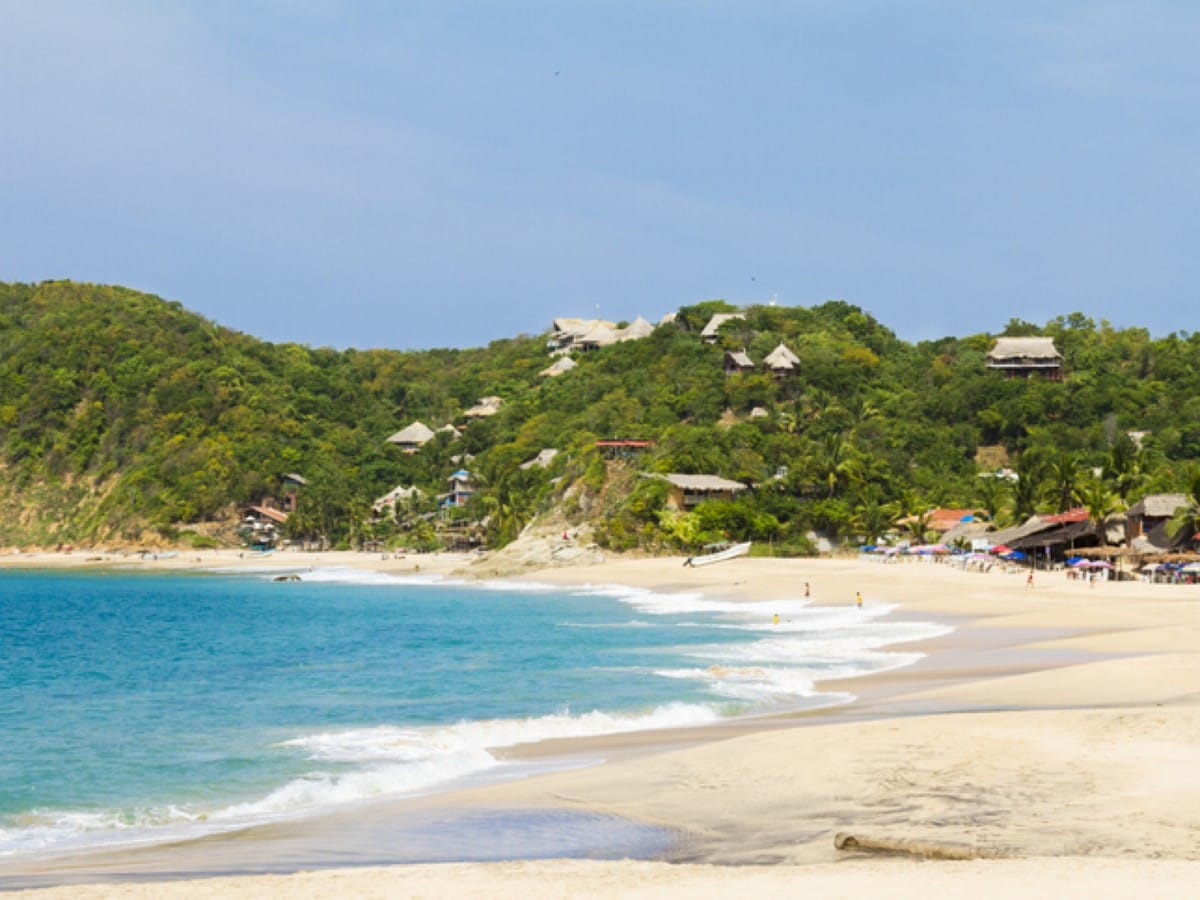
Mazunte is one of those places that really gets its claws into you. It’s cut its teeth on offering a proper hippy, get-away-from-it all sort of beach town vibe, with super chilled hotels and bars lining up along one of the most stunning bays in Oaxaca – which is staying something.
The major downside I can see is that there’s no real surf in the town itself. Instead, you’ll travel one bay to the east, to San Agustinillo. It’s a spot that varies a lot. It’s often mushy but also can get real punchy on direct S swells, which hit head on. It doesn’t hold shape as well as some places, but it’s solid enough for casual sessions.
Mazunte itself has grown a lot in the last few years. It’s graduate from unknown Free Love escape to a more mature yoga-beach town, complete with pizza joints, cafes, and proper yoga studios. You’ll still get the odd New Ager who’s yet to get the memo that the crowd is moving on to pastures new, and there’s a great offering of meditation classes etc if you’re into that.
Meanwhile, the array of good Airbnbs and boutique hotels has gotten a lot better, which makes it an all-round more tempting offer.
Where to stay? ZOA Hotel – an adult’s only spot on the cliffs overlooking the beach. Stunning sunsets abound.
Los Cabos, Baja
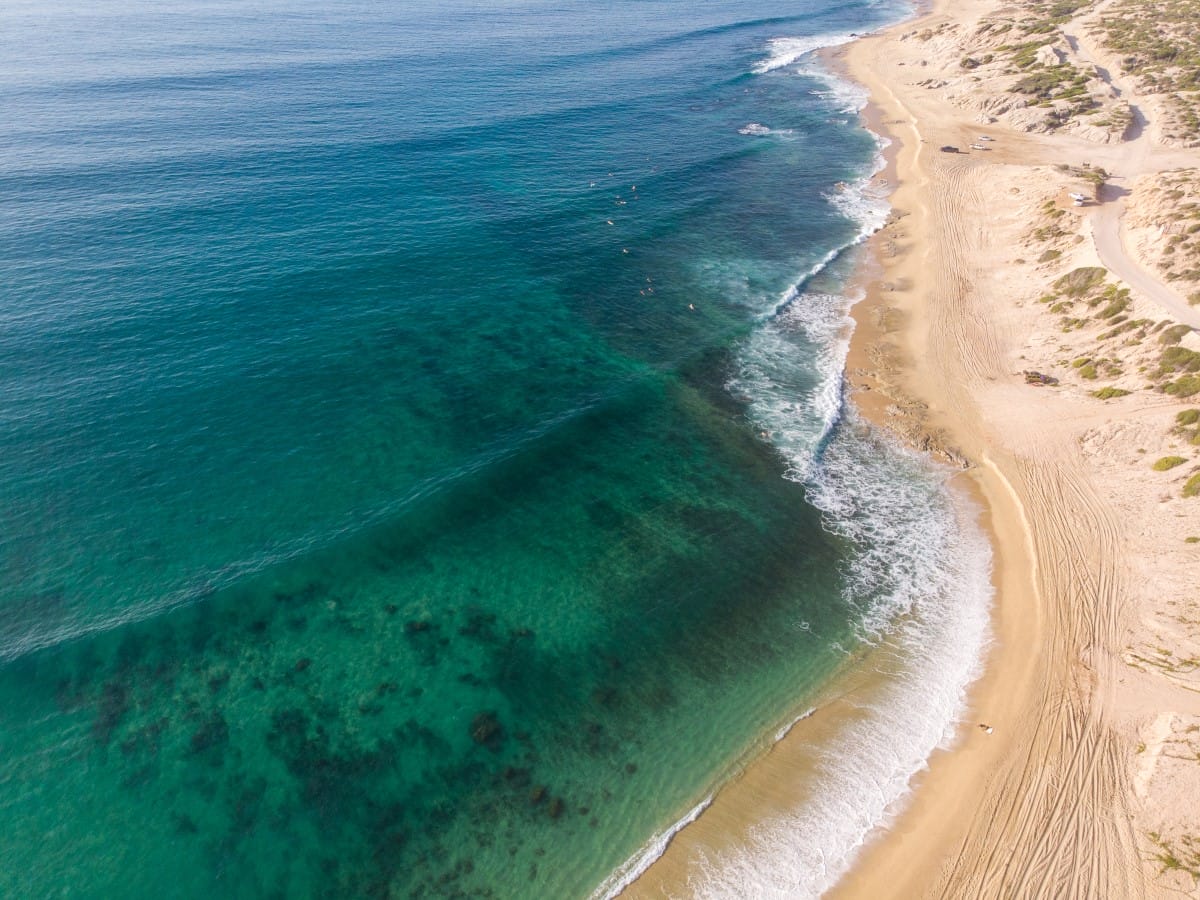
Los Cabos, the area that hosts themain town of Cabo San Lucas, sells itself largely on swim-up bars and timeshare touts, but look past the all-inclusive gloss and you’ll find one of Mexico’s most consistent summer surf zones.
The 30km Hotel Corridor linking San Jose del Cabo (where most people fly into) and Cabo San Lucas faces straight south, you see. That means it soaks up southern hemisphere groundswells from May to October like a sponge.
At that time, spots like Costa Azul (Home to La Roca and some other breaks) work like clockwork. They peel over boulder and reef in warm, boardshort-friendly water. Monuments, at the Cabo San Lucas end, meanwhile, is a more punchy left for confident surfers who can handle the crowd.
Late summer brings the wildcard of hurricane swells, which can light the whole coast up or close it out – really no telling what you’ll get.
The vibe of the town itself is very much spring breaker, particularly during, well, spring break. If that’s not your bag, and it’s not mine, then the better play might be to look for somewhere closer to key surf beaches up the shoreline, at spots like Costa Azul.
Where to stay? The Cabo Surf Hotel, of course. Right on one of the region’s best surf beaches with walk-to-wave access, and sea-view suites.
>>Read all about Cabo San Lucas right now
Troncones, Guerrero

Troncones is the left-of-field choice on this list. It’s one of the headline names down in the state of Guerrero, which not all that many people go to, despite it having just the same swell cover and consistency as places like Oaxaca.
So, you’re dodging the crowds by coming here, and you’re gonna get some pretty lovely waves.
The town faces a nice long playa that has loads of sandbar waves that work through the tides. The swell forecast will dictate how they play – anything 2-5 foot and with low morning winds usually gives nice A-frame peaks for all. They can get messy when breezes kick up though.
On top of that, Troncones is the stepping stone to La Saladita, a long, peeling left point that’s been hailed (even by us) as one of the best longboard waves in the country – that’s about 20-30 minutes’ drive to the north.
Now: the town. Palm-thatched fishing shacks and paint-peeling skiffs line the shore. They herald a place that’s truly tropical chill to the T. There’s a nascent array of boutique aparthotels and the like, but they aren’t dominating here like they do in Sayulita.
It’s still undiscovered. For the moment.
Where to stay? Lo Sereno Casa de Playa sits right on the main beach. A pool rises just meters behind the sand. The rooms are designed with tropical perfection – polished concrete, local materials. It’s a stunner.
>>We have a full surf guide to Troncones
Ensenada, Baja California
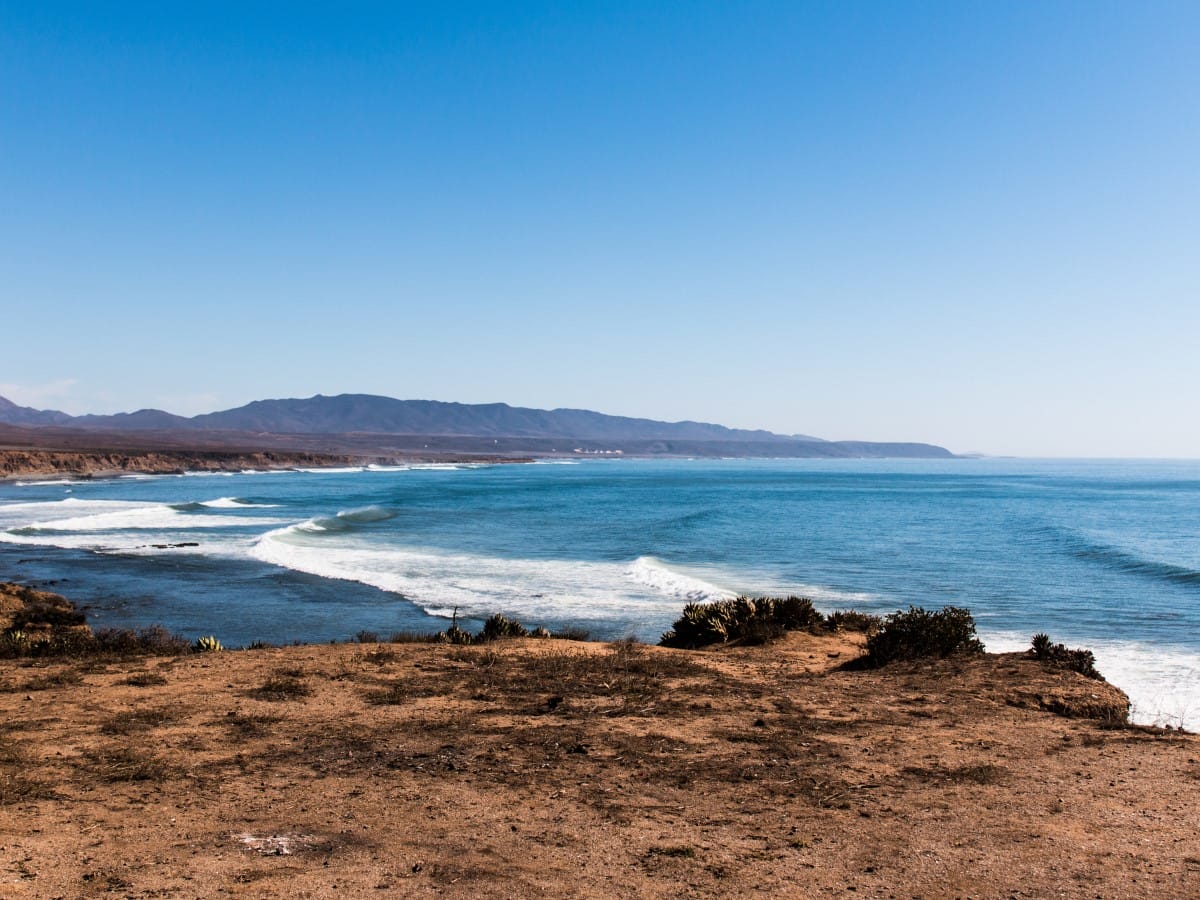
The city of Ensenada has long been the goal of many cross-border US surfer strike missions. This is the first real surf town you come to in Mexico after ditching San Diego – the drive is about 2 hours each way between the two.
We mention the way down specifically because it’s essentially a montage of some of the most ridiculously good breaks in North America. It’s peeling right point after peeling right point, with the likes of San Miguel and K-38 giving the goods.
Down in Ensenada itself, there’s a strange sort of Costa del Sol vibe, with a big port filled with yachts giving way to a town that’s linked up by an open ocean promenade that sprouts palm trees.
I can’t say it’s the prettiest town around. There’s something quite urban about the way its graffiti-clad streets emerge from the desert, and it doesn’t have the charms of the more tropical Pueblo Magicos further south.
But there’s grit, and there’s great surf, all close to the US border.
Where to stay? Native Residence – this hilltop hotel isn’t in the town itself. It actually clings to a ridge about halfway between the US border and Ensenada. Thing is, one of the region’s top surf spots is just down the hill, and it’s super highly rated for its views and comfort.
>>Read more about surfing and traveling Ensenada
Chacahua, Oaxaca
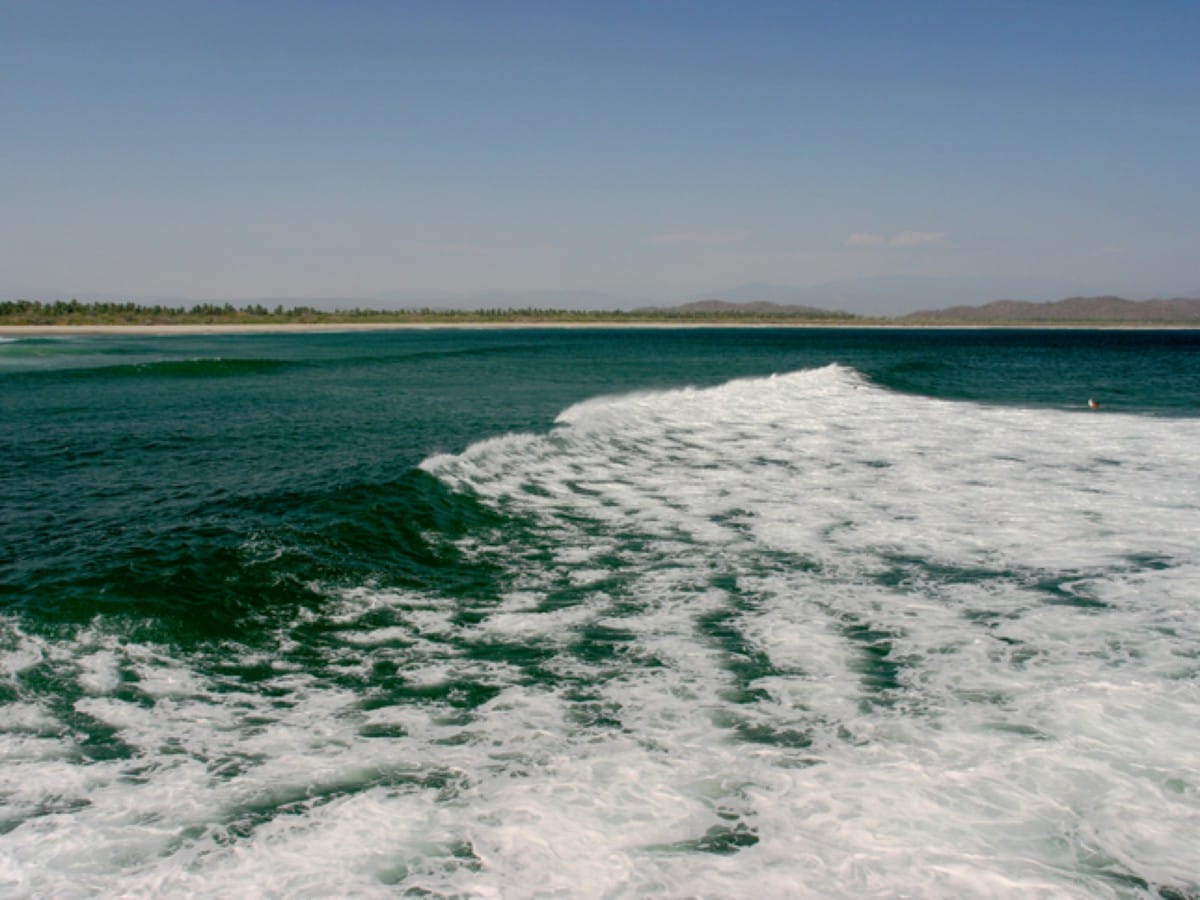
Chacahua is a bit like what Puerto Escondido was before the boutique hotels and booming crowds arrived.
Tucked inside Lagunas de Chacahua National Park, around 70km west of Puerto, the village is reached only by boat through a mangrove-lined lagoon from Zapotalito, which does a fine job of filtering out the more casual crowd.
The prize is a long right-hand point wrapping off the rocks below the lighthouse, serving up peeling, rippable walls on the south swell hits that come through from April to October. On smaller days it’s a longboarder’s playground and the perfect step up for improving intermediates.
Accommodation means palapa cabañas on the sand, patchy internet (just the way it should be) and power cuts aplenty. Fill the flat spells with fresh fish, hammock time and, on dark nights, a bioluminescent paddle across the lagoon. It’s kinda cool.
Behind town, a whole national park spreads across the jungles and the mountains, offering safari and mangrove expeditions galore too.
A good off-radar option if you’re looking for something different.
Where to stay? Hostal Onahu Chacahua has some nice but basic rooms and onsite board hire.
Punta Mita, Nayarit

Punta Mita caps off the headland that forms the northern arm of the Bahia de Banderas, one of the most wildlife-rich and naturally gorgeous bays in Mexico.
That places it at the south end of the Nayarit riviera, and, crucially, blesses the town with both west- and south- facing beaches and reefs. The upshot? The swell window here is huge, and there’s almost always something working.
On one side, the bigger N swells will hit El Faro to give punchy sets that can suit pretty much all levels, depending on the size. To the south, La Lancha has a lovely right and an A-frame with a fun, fast-drop left that works in the middle of the bay, and it likes big summer season SW swells.
Punta Mita has the feel of a bit more of an upscale hotel area than its neighbors of Sayulita (which is a party town) and San Pancho (which clings to the traditional feel of a Mexicana fishing village), so it’s a good choice if you like surf trips with a side of luxury.
The main downtown area is on the L-bend of Avenue Las Redes, which now has loads of great seafood joints, coffee shops, and cocktail lounges.
Where to stay? Susurros del Corazón, Auberge Collection – if the budget allows, this lux hotel will pamper you right beside the waves of La Lancha, one of the best spots in the whole Punta Mita area.
>>Read this guide for more in-depth info about surfing in Punta Mita
What is the best surf town in Mexico for beginners?
Sayulita is probably the best surf town in Mexico for beginners. I say that because there are two very accessible breaks right out front. I would add perhaps Troncones, which has access to Playa La Saladita (a good longboard wave), and Los Cabos, where breaks like Old Mans can be suitable for beginners, so long as the swell is playing ball.
Do I need a wetsuit in Mexico?
For the most part, no. The water sits in the high 20 C year-round, so boardshorts or a bikini and a rash vest for sun protection will usually do. Baja is different, though. In winter, the Pacific side of Baja California Sur drops into the high teens, so pack a 3/2 mm wetsuit minimum. Further north around Ensenada it’s colder again, and a 4/3 mm is wise from December to April.
When is the best time to surf in Mexico?
Mexico has waves all year, really, but the biggest swells come through in the peak of the summer months, when the SW hits are pushing up from the Southern Hemisphere. That’s key time in Nayarit, Oaxaca, and Los Cabos, at the mouth of the Sea of Cortez. It can get BIG then, so beginner surfers might prefer shoulder seasons like May and September, or even the winter, when it’s typically smaller in most of the above surf towns.
