Brittany Surf – The Complete Guide

With north, south, and east coasts, the Brittany surf offering almost always has offshores and something to ride. Combo that with friendly locals, great food, and medieval cities.
An introduction to Brittany Surf
“Rugged” is the keyword for Brittany. And that usually bodes well for surf.
This long, twisted peninsular that bends out of northern France into the Atlantic picks up swell on three sides.
At points, it’s fringed by long, open beaches. In other places, steep cliffs and jagged tors rise dramatically above dashes of white sand and pebble.
Because it’s got ocean to the west, south, and the north, there’s almost always somewhere that’s offshore.
The upshot? There are spots here that can handle the full whack of conditions. Big and blustery winter days can be spent hunting for wedges in more protected inlets, while summer swells are abundant on the west-facing points and exposed beaches.
To cap all that off, we’d add that Brittany feels rawer and more wild than the rest of the French Atlantic. The surfers here take pride in their wind-lashed coast and their harsh conditions, and, to be frank, their happier and more welcoming because of it.
As a destination for a cheeky autumn or spring road trip, Brittany can hardly be beaten. You can hop between epic surf points and enchanting medieval towns, drive idyllic country roads, and get a feel for that unique and fiercely independent Breton culture.
You’ll love it.
We might use affiliate links in this post. Basically, you click em’ and we get a little something from your booking or purchase. They help us keep offering more and more in-depth surf guides to awesome places all around the globe. So, thanks for that!
This guide is just one part of our complete guide to surfing in France
Surfing in Brittany at a glance
The good…
The bad…
What’s in this guide to Brittany surf?
Where is Brittany?
The key to surfing in Brittany is the location.
The peninsula pokes out of the northern Atlantic side of France.
It borders Normandy to the east and the Pays de la Loire to the southeast, with the Bay of Biscay, the Celtic Sea, and the Atlantic itself dominating the coasts.
We’re advocates of driving here if you can. Surf trips are just better in Brittany when you have your own wheels.
The roads are generally excellent and there’s parking and good access at most of the beaches.
You can either come across from the UK or elsewhere in Europe via motorways and the Eurostar/Ferries (the first arriving in Calais, the latter coming in to Roscoff or Saint Malo, the main passenger ports in Brittany itself).
Alternatively, fly into one of Brittany’s regional airports – Nantes and Rennes are the two largest – and then rent a car when you arrive. That’s easy. We use RentalCars.com just because we like that they often offer late cancellation policies.
Brittany surf spots
We think it’s helpful to split Brittany up into three regions on the surf front: The north, the west, and the south.
Not only are these three quite distinct in terms of the shape and nature of the coast, but they also face completely different angles, picking up differing swells and going offshore on opposing winds.
Let’s take a look at each in turn and the top spots on offer…
Surfing in North Brittany
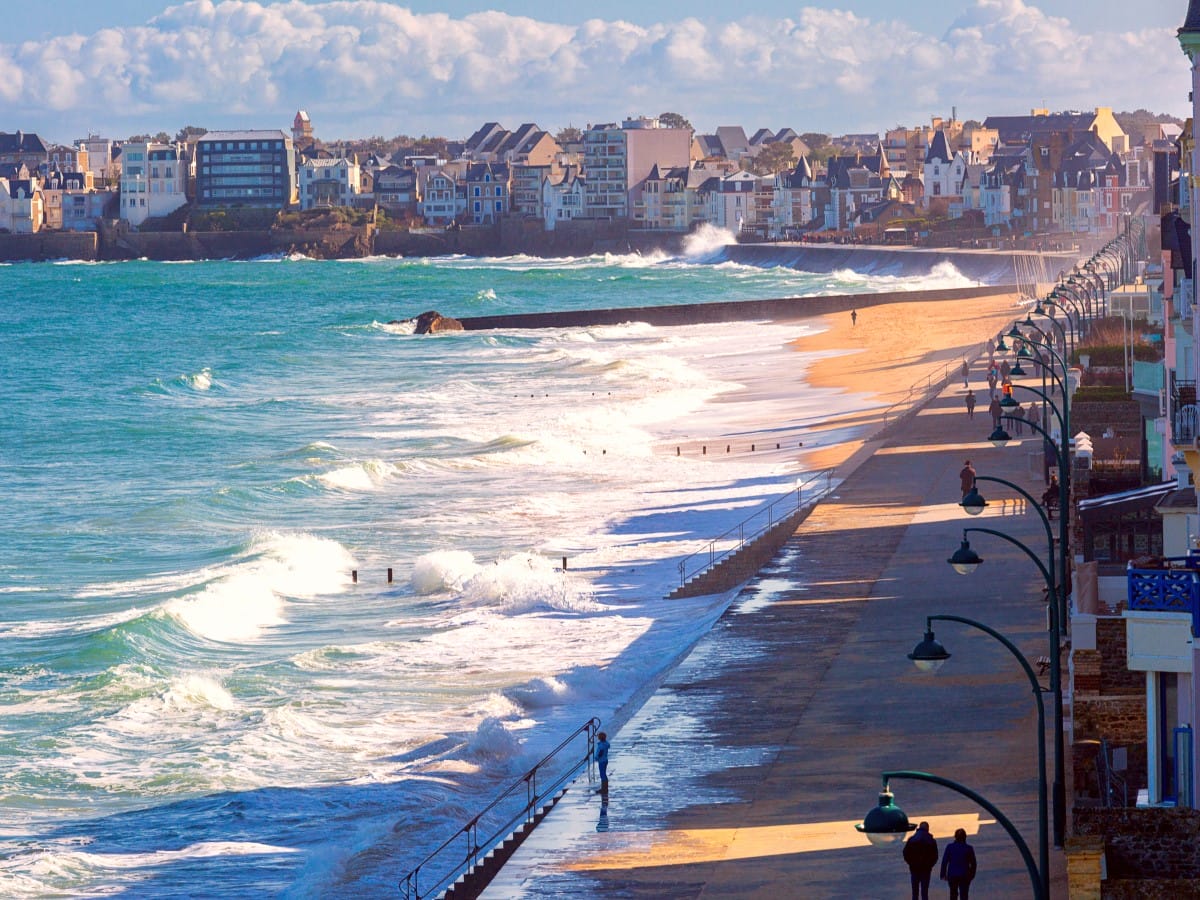
The north is generally best in the winter with the heaviest winter NW swells that pump through and power up the English Channel and the Celtic Sea.
Good easterlies and SE are offshore, which can happen if there’s a cold snap deeper in Europe. You’re after those cold, crisp midwinter sessions and when they happen they are beautiful.
Le Sillon (Saint Malo)
You can hit Le Sillon literally minutes after driving off the ro-ro in Saint Malo. It’s typically a winter-only spot because it relies entirely on the NW swells and they have to be decently big.
That, or you need a sloppy wind swell in the Celtic Sea, which isn’t ideal but can work.
It’s entirely beach break, wonderful for beginners, and even within walking distance of the heart of Saint Malo town (which is one of the most enchanting places in the whole of Brittany if you ask us).
We have a complete guide to surfing in Saint Malo here
Saint Lunaire
The Plage De Longchamp is the main beach beside the rather lovely seaside resort otwn of Saint-Lunaire. It gets whacks of winds well most of the year and bigger NW swells in the winter months, when it’s a nice punchy fat wave that can be ripped up. Will close out at OH or so but is okay.
Perros-Guirec (Trestraou)
There are a couple of pretty good spots in Perros-Guirec. The main beach is called Trestrignel and it will hoover up NW swell in the winter months. Maxes out easy but is good in the 5-8 foot range, when it can be quite a powerful beach break with frothing lefts and rights.
It’s better for more advanced surfers then but will be great for beginners on smaller days when it’s <3 foot.
The reefs at Pors-Nevez are a little further from the town are a bit trickier, while the beach breaks of Trestraou are more protected, though in our experience the banks there make for some steep faces that do love a closeout.
Locquirec
Locquirec is the greener side of northern Brittany. Surrounded by farm fields and high cliffs, the beaches here are really quite lovely.
The town has a few that are surfable…
The best is Plage du Moulin de la Rive, which is a patchwork of jagged reefs that you’ll need to watch out for and long sections of sand. There are several peaks that will hold decent size. Best for intermediates+.
Dossen
Dossen is the beach that’s just along from La Mauvaise (see below). It’s okay but suffers from wind since only direct S winds are offshore.
The rest are either onshore or crosshore and there’s almost nothing to protected the sets. Summer days can bring in decent logger waves. Often busy with swimmers when it’s warm though.
La Mauvaise Grève (Moguériec)
The reef at La Mauvaise Grève can be good with 5 foot and an E wind in. Lefts and right but the left is best as it’s a good blend of fat and steep, alternating in sections to make a wave that’s very fun to ride to be honest.
Stay at incredible Du Theven right in front of the sand for good rooms and great food.
Surfing in Western Brittany

When we talk about western Brittany, we’re talking about the Atlantic-facing coastline of the Finistere region, which is the area that caps off the peninsula on its ocean side.
This is where the shores get their rep for being rugged and untamed. It’s seriously gorgeous country and a great place for driving and surfing without crowds.
Conditions wise, the best winds are E-NE and anything in the NW-SW channel works for the swell, except for a few key spots that hide in the swell shadow of the Molène Archipelago (mainly the coves of northern Finisterre)
Penfoul
There’s just something about the Plage de Penfoul that reminds us of the Towan in Newquay. Big cliffs overshadow the bay that’s speckled with large rock stacks. Okay, it’s not quite so built up but the odd white-painted coastal home caps off the headlands.
Below is where you’ll surf, on the NW-facing beach that gets generally good swell coverage between Nov and March.
Depending on the angle of the swell, you can either get a fat left wall off the western head or a more pitching right on the cobbled reef on the eastern side. Peaks also break in the middle. It’s a lovely spot. Good for all levels on a low to mid swell size.
Le Gouérou
It’s strange but Le Gouérou and Kervilon (which is just to the south) are the only two spots in Brittany that suffer from serious localism. It’s still not awful but we’d recommend getting in the water anyway.
It’s a spot for low (after the turn) or mid tide as the water is off the reefs, when there are nice A-frame peaks that can be hollow at points. Good for seasoned intermediates.
Reminds us more of a Spanish Galician wave than something French. It just looks and seems to surf a bit more like that.
Les Blancs Sablons
Long Les Blancs Sablons is a classic Breton beach break with mediocre peaks up its whole midriff.
The key spot is the north end of the bay, where a small section of reef creates nice rights that are only really worth riding on the bigger swells of the winter.
There’s a bit of that swell shadow here from the offshore islands, but the NW channel remains open meaning decent consistency at Les Blancs Sablons between November and March.
Good for all levels most days. Just be careful of rips and rocks at the south end of the beach.
Trez-Hir
Trez-Hir bucks the trend of western Brittany in that it’s one of the few bays in the region that actually faces east. That’s not great for swell – it needs the largest storms of the season to work, so only turns on maybe once or twice a year.
It’s just nice that Brittany has this in its roster, because massive low pressures can send wedgy beach breaks right into the town beach and they can be wonderful for their short moment in the limelight, especially that Atlantic west trade winds are offshore..
Plage de Porsmilin
Big winter storms have the power to wrap into southern Finisterre and punch into the reefs at Plage de Porsmilin. When they do that, they can create steep, semi-hollow lefts that are pretty glorious to watch and very hard to surf. By summer, it’s a very pretty beach, usually without any wave at all.
Deolen
Once a local secret, Deolen is know very much known but rarely surfed. It’s a bit of a ferocious wave that needs some size to get working – at least five foot to be honest. Only working at low tide, it breaks off the shore under the rocks of Grève de Déolen, with access over the reefs beyond the beach there. It’s rarely got anyone on it but can be heavy and dumpy.
Le Petit Minou
One of the best in Finisterre and Brittany as a whole, Le Petit Minou should definitely make the cut if you’re planning a roadtrip to surf here.
The key is to catch it early and dodge Saturdays and Sundays. It’s the main spot linked to Brest city and the locals can flood the beach.
They aren’t nasty or anything. They just love to surf and the place gets busy super quick. The wave is very good quality and kinda consistent.
It’s mainly a long left hander that punches off the rocks into a sectioned wall that will get hollow on days that are maybe 5 foot or more. Low tide tends to work best but OH and low can break boards.
The outside reef on the left side of the bay is known as Les Moules and is a much more dangerous option that’s usually not got crowds. While Le Petit Minou is generally an all-level break, Moules is a shallower reef with low clearance and faster; best for upper intermediates.
Lostmarc’h
A cobblestone reef bulges out of the side of Douarnenez to give the ficklish left handers of Les Roches Blanches (also known as Pointe de Leyde). It’s a very hard initial section that drops into a steep and fast line over what’s quite shallow reef. The good thing here is that west winds are slightly offshore, and that’s a rare thing in Brittany, even France in general.
Les Roches Blanches
The Plage de Lostmarc’h is very nice to look at – wispy white sand, brooding blue-cerulean ocean waters, and rocky cliffs flanking both sides. The northern side of the bay is watched over by the craggy Pointe de Lostmarc’h, which also has a small reef section just below it.
A very good A-frame wave appears there as the tide peels back. The rest of the beach has punchy walls that can be ridden left and right. A few boulders underneath but generally a good all-level break with nice vibes.
Same peaks continue all the way down neighboring Plage de la Palue and there are multiple access points via sandy pathways from the parking on the cliffs.
Baie des Trepasses
Ultra consistent Baie des Trépassés is emerging as a great spot for surf camps and surf touring as it’s usually got something happening thanks to its exposure to a wide swell window.
The water is clean and the region is also beautiful. Plus, it’s a great base for tracking north and south to more reefs and spots, not least of all iconic La Torche.
We have a full guide to the Baie des Trepasses right here
Plage de Gwendrez
A very pretty beach break tucked onto the south side of the Finisterre headland, Plage de Gwendrez gets lots of swell and has some nice conditions in summer, when it’s banks can offer peelers that are perfecto for beginners.
There’s a surf school just behind the beach. I love it as an addition to a Brittany surf road trip.
Read all about surfing in Plage de Gwendrez
La Torche
Arguably the best-known surfing in Brittany happens either side of the La Torche headland.
This ultra-reliable beach break has become the hub of the main surf schools in the region and it’s generally very good for all levels of surfer, with beach breaks that increase in size as you push up or down the long bay.
Just to the south is the bay of Pors Carn which tends to be steeper and more tubey when its large.
Go south again and you’ll get to the deadly reefs at the end of the headland that is Trigs, a womping bomb of a bodyboard spot.
We have a complete guide to surfing in La Torche right here
Surfing in Southern Brittany
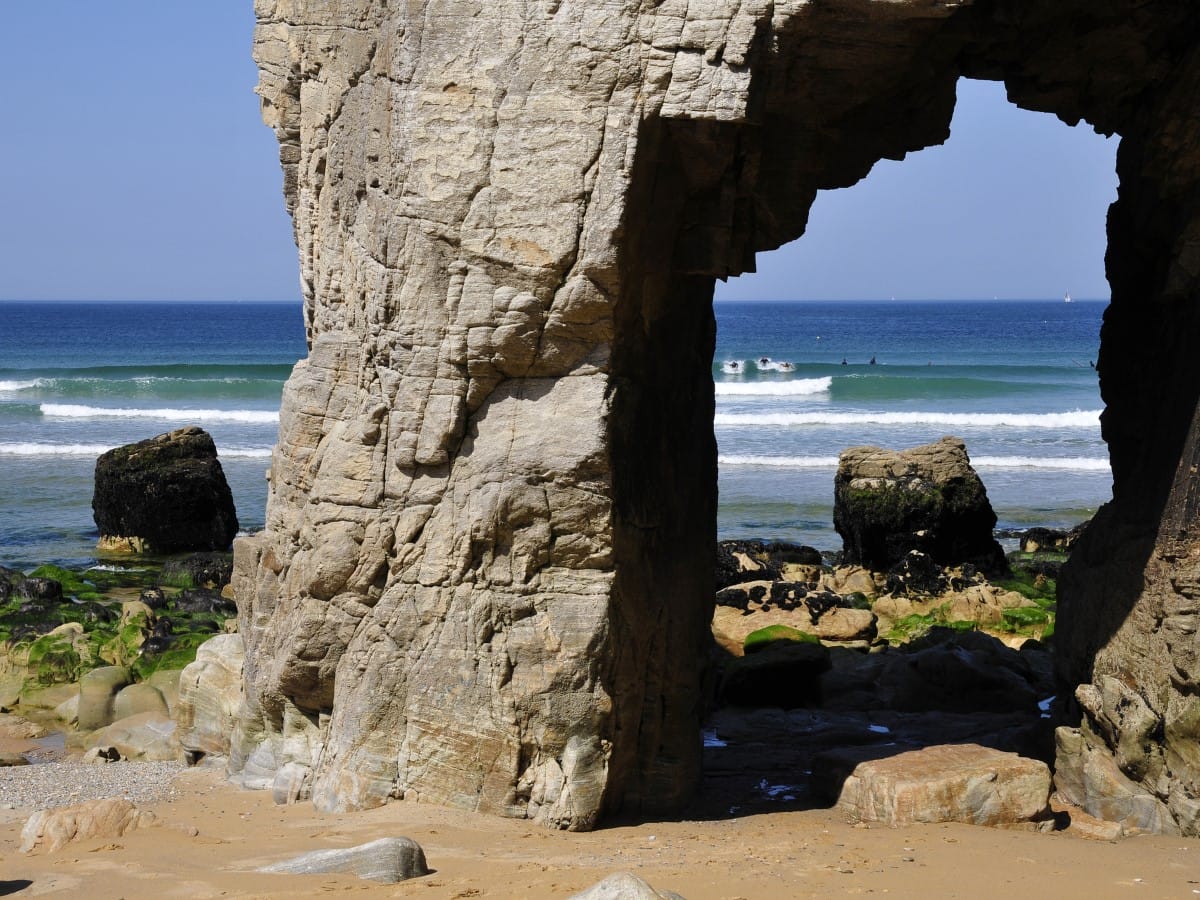
South Brittany still has plenty of exposure to W swell channels in the Atlantic but it’s more protected from the largest NW swells that push through in the height of winter.
As such, it’s a region that holds many of the best learner beaches in Brittany, though they are intersposed with a number of highly technical reef and river mouth spots that are not to be toyed with.
Guidel Plage
If you’re coming with kids or have never surfed before, Guidel Plage (or La Torche – see above) should be right at the top of your list. It’s got a large, wide-shelf beach to its south that has some of the most forgiving, bump-shaped waves around.
There’s good protection from W and N winds, so things tend to stay clean and there aren’t many hidden rocks and other hazards. Lots of surf schools and lots of space. Best on a lower tide.
Read our full guide to surfing in Guidel Plage right now
Plage des Kaolins
Strong W swells will suck off the reef at Plage des Kaolins to give a hollow rifle tube that looks a lot like Bingin Beach up and moved across to the Bay of Biscay when it’s working at its finest. It’s a hard wave with big rocks on show and patches of dry reef – only for experienced surfers.
Sainte-Barbe-Plouharnel
Sainte-Barbe-Plouharnel is the huge run of yellowed sand that marks the base of the lovely Quiberon peninsula, a region famed for its naval history and, now, it’s very good surf. This one’s best for beginners since it’s a wide beach without any rocks to be seen for most of its light.
The sets shape up nicely as the tide turns and starts pushing (about an hour or two after low low is best). It’s a great learning beach when swells hover in the 2-5 foot range. Above that it will get dumpy but still has some traingles to hit.
Quiberon
There’s plentttty to surf on the Quiberon, where the beaches face due west for a little bit again to hoover up those W swells in the Atlantic.
Points, big beach breaks, hidden harbor walls – it’s all here. And it’s one of the most stunning regions of the lot if you ask us.
Read our complete guide to surfing Quiberon
Donnat (Belle-Île)
The beautiful isle of Belle-Île is the largest of the offshore Breton islands. You’ll have to boat out here from Quiberon but it’s definitely got its rewards, in the form of a stunning beach with high rock stacks popping up in the middle and some of the clearest blue-turquoise water in the region.
The beach is rippy and there are currents, so experience is needed. The main wave is an A-frame peak in the middle of the bay that peels both ways with a slow pocket.
Where to stay when surfing in Brittany?
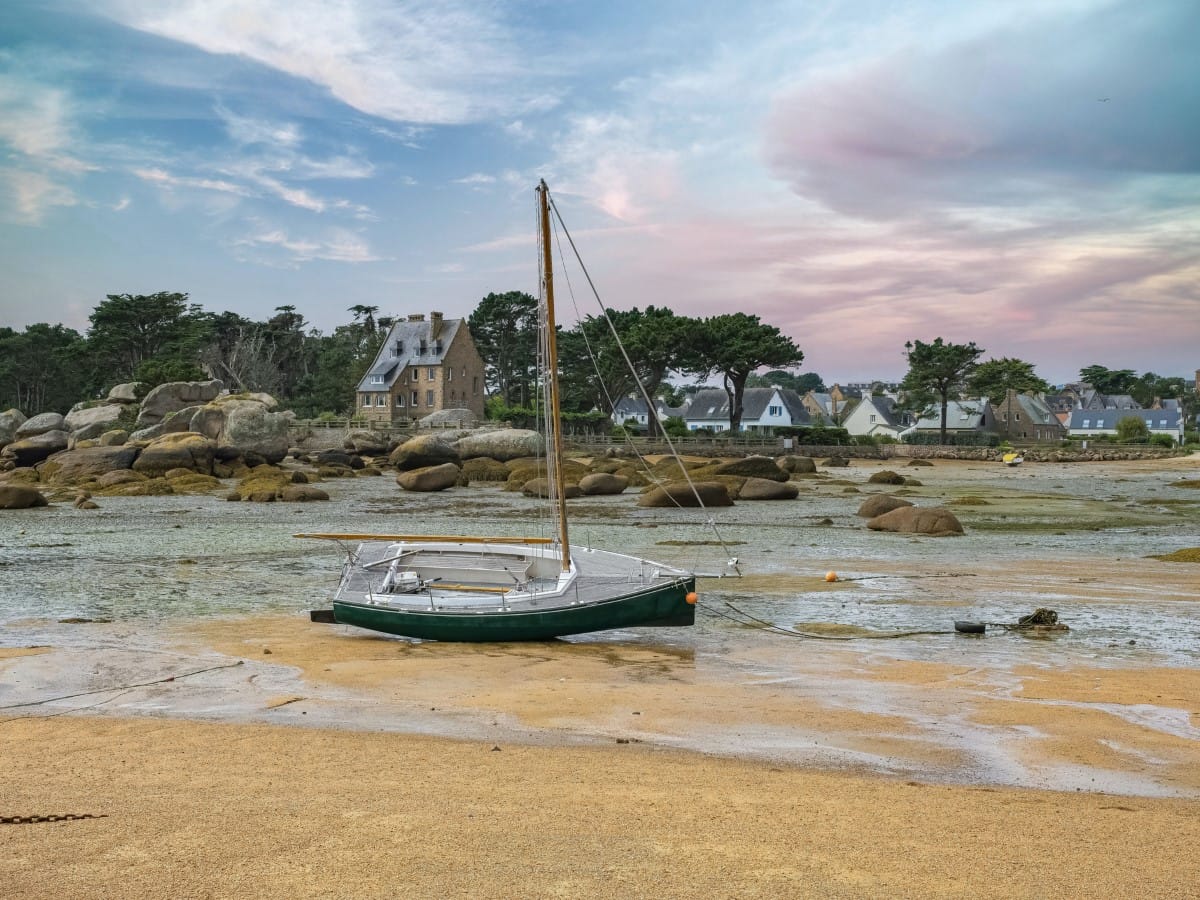
Seeking out the stays with character is part of the fun in planning a Brittany surf trip – we love driving around the region for, say, a week, hopping from campsite to lodge. There are some cracking options…
- Maison familiale-Surf House, plage de Sainte Barbe – A family stay that’s self-catering and charming to the T, this surf house puts you within easy striking distance of the long, beginner-friendly beaches at the top end of the Quiberon Peninsula.
- Camping de Lanven – A lovely glampsite with mobilehomes on a working farm. It’s surrounded by nature is just a few minutes from the epic surf beaches of La Torche, and even has cute ducks and goats on site, not to mention their own bakery that does fresh French bread every morn.
- Gîtes de Lézinadou – A series of seriously lovely self-catering stays that ooze style, these get you like five mins back from the consistent surf beaches of La Torche in western Brittany.
Surf lessons in Brittany

There are lots of surf schools in Brittany’s more beginner-friendly spots – Guidel, La Torche, Tresspasses – that offer lesson for around the $50 per person mark. Most will be 1.5-2 hours and have elements of on-beach and in-water practice.
We’d recommend booking in advance if you come in summer.
Our top recs for the region are:
- BBrother Ecole de surf – Run by locals Kevin and Stephen, this school has been going for over a decade and they really do know what they’re doing. It’s good technical surfing that’s still accessible. There are great bargains on packages of five or more lessons.
- YouSurf X Lastage – A local surf shop has teamed up with local teachers in Guidel to offer these affordable packages. From around $40, you get an intro to surfing that last 1.5 hours, including the neccessary warm ups on the beach and in-water wave practice.
When to surf in Brittany?
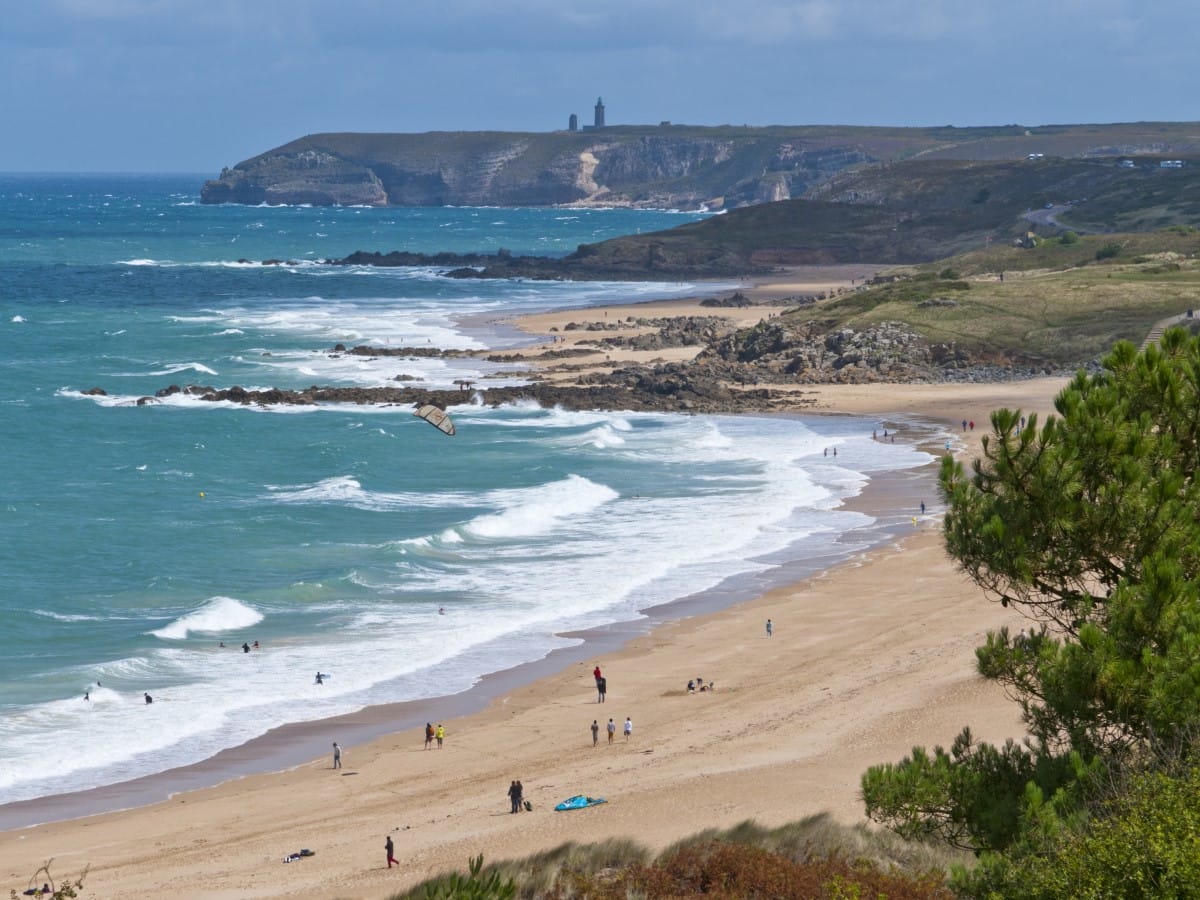
You can surf all year round in Brittany. There are waves here in the summer and in the winter, though the warmer months are generally better for learners, younger surfers, and surf campers. The winter is better for more advanced surfers.
Brittany hoovers up all the swell that crosses the Atlantic. That means a HUGE swell window that goes from the NW all the way to the SW. The upshot? It’s not so much about when you come but where you go.
Watch out for the prevailing winds especially. Heavy westerlies or northerlies can be counteracted by hitting the more protected southern beaches of Brittany. Winter easterlies can be wonderful in Finisterre and out west.
For us, the absolute sweet spots are mid autumn and mid spring. Summer holiday crowds are gone or haven’t arrived, winds tend to be most favorable for the south and west coasts, and there’s still lots of swell about.
We might use affiliate links in this post. Basically, you click em’ and we get a little something from your booking or purchase. They help us keep offering more and more in-depth surf guides to awesome places all around the globe. So, thanks for that!
