

Liencres Surf & Travel Guide

Liencres sits on the northern coast of Spain, just west of Santander, where the River Pas meets the Bay of Biscay and the beaches finally start to face head-on NW into the Atlantic swell channels.
It’s a small village that lords over some of the most powerful and exposed beach breaks in Cantabria. In my experience, they are all pretty great, with good shape, waves on almost all tides, and high consistency. Plus, this region is very beautiful.
This isn’t mellow tourist beach territory; it’s a stretch of wild bays backed by rolling dunes, pine forest, and big skies. And the surf can carry a punch, though it does get pretty good for learners in the summer months.
The two main beaches – Playa de Valdearenas and Playa de Canallave, which sort of merge with each other over a small patch of reef – form the beating heart of Liencres’ surf scene. Together they offer about 1.5 miles of reliable beach break with bits of rock here and there that throw up different ramps and whatnot.
Swell size dictates here. If it’s big, Liencres is powerful and rippy but super fun a lot of the time. If it’s small then it can be great for beginners – there are surf schools based on the sand actually.
We might use affiliate links in this post. Basically, you click em’ and we get a little something from your booking or purchase. They help us keep offering more and more in-depth surf guides to awesome places all around the globe. So, thanks for that!
Read all about surfing in Spain and surfing in the area of Cantabria
Where to surf in Liencres?
Liencres isn’t actually on the coast itself. It’s 5-10 mins’ drive from two of the best surf beaches in Northern Spain, though, and that’s the reason to come here. They’re often considered one, as they join together sort of, but let’s break each down…
Playa de Valdearenas
The bigger of the two beaches and the most famous for surfing. Valdearenas is a long, exposed sandbar system that faces directly into the Bay of Biscay. It picks up almost any swell and, when the sand is right, produces steep, powerful lefts and rights with real push.
On small to mid‑sized days, it’s fun and rippable; on big winter swells it’s a paddle‑out mission with heavy close‑outs in the mix. Rips can be fierce, so strong paddling is essential when you get anything in the OH range.
The western end of Valdearenas turns into a sort of estuary area where the sandbars are constantly churned up by the river, so it’s really unpredictable down there. The rips can also be killer at that end of the beach, so be very careful.
Playa de Canallave
Slightly smaller and more sheltered, Canallave is tucked just east of Valdearenas, separated by rocky headland. It shares a similar swell window but is often cleaner when Valdearenas gets too wild simply because of the extra wind portection.
It’s popular with local surfers looking for a slightly more manageable wave.
As the tide peels back on Playa de Canallave, a whole string of other breaks can appear below the cliffs going east from the entrance point of the cliffs. I’ve not surfed up there but it looked fun – just be sure you keep an eye on the water level and make sure you’ve got an exit strategy.
- Water temps – 12–14°C in winter (4/3mm + boots), 19–21°C in late summer (3/2mm or springsuit).
- Crowds – Can get busy in summer, but the sheer size of Valdearenas means you can usually find a peak to yourself. Autumn and winter are quieter.
- Hazards – Strong rips, shifting sandbanks, and heavy close‑outs on big days.
Other surf spots near to Liencres
- Santander – Santander’s main beach break is El Sardinero. Closer to the city vibe, with multiple peaks along its length. Consistent but smaller than Liencres; great for a mellow session. Always busy AF.
- Playa de Somo – About 40 minutes east by car (or a ferry from Santander), Somo (and neighboring Loredo) are long, north‑facing beaches with reliable peaks for all levels. More surf infrastructure and a lively surf town vibe. Great pick if you ask me. I love it there.
- Playa de Langre – Gorgeous beach that’s reached on steep steps down from the cliffs. Often not too busy and can be good for any level depending on the swell size. More classic Cantabria sand-bottomed beach break.
- Suances – Further west again from Liencres is Suances and one beach in particular: Los Locos. Another Cantabrian swell magnet, it’s got amazing rights off the cliffs at one end but peaks down it’s whole length. Very lively, cool town with some nice surf camp options.
When to surf in Liencres?
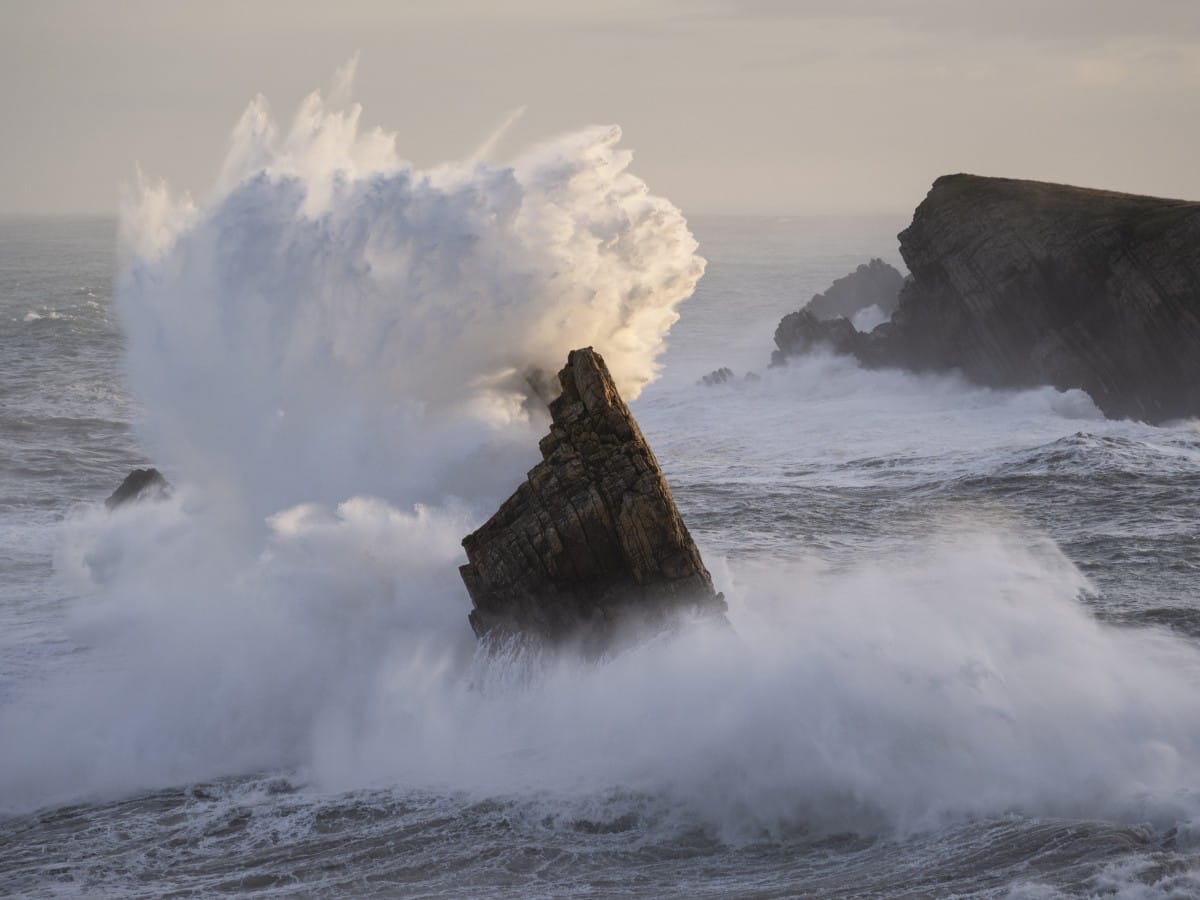
Autumn is the prime surf season for Liencres and northern Spain generally.
Consistent NW swells arrive, winds are often light offshore in the mornings, and the water still retains a little warmth from summer. I particularly like it early on in the autumn because the weather doesn’t suffer so much and this corner of Cantabria tends to do well with slightly smaller swells IMO. Size and consistency are rarely the issue – being blown out can be. Choose Sept or October for the peak of the peak.
Big swell season is the winter. Liencres gets raw, powerful surf, with long‑period Atlantic swells lighting up both Valdearenas and Canallave. The weather can be stormy, so you’ll need to pick your windows, but when it’s clean, the waves are world‑class. A 4/3mm or 5/4mm wetsuit with boots is essential.
Summer is the smallest and most beginner‑friendly time of year. Perfect for surf lessons and longboard sessions on smaller swells. Mornings are often glassy, afternoons bring sea breezes. It’s also the busiest period on the beach, though there’s plenty of room to spread out. Be warned that you can go some days in a row without surfable waves between June and August, though that is rare.
What else is there to do in Liencres?

Liencres isn’t huge on its own but the joy here is that you have a foot right in one of Spain’s most glorious regions. Okay, I’m bias saying that. You should decide for yourself. Visit…
- Dunas de Liencres Natural Park – The dunes behind Valdearenas are some of the largest in northern Spain. Walk through pine forests, explore sandy trails, and enjoy panoramic views of the coast. Gorgeous coastal hiking that will keep you enrtertained through any flat spells.
- Visit Santander -Just 20 minutes away, Santander offers city beaches, the Centro Botín art museum, an elegant promenade, and plenty of tapas bars and seafood restaurants. It’s a vibey city with lovely urban beaches and even some good surf of its own.
- Day trips to the mountains – You’re not far from the Picos and the highlands of northern Spain. If you’ve not been before and like hiking then it’s a must. There are day trips you can do, or drive over yourself and do the iconic gorge hike in Cares, which is nothing short of epic.
How to get to Liencres?
Liencres is in Cantabria, northern Spain, about 20 minutes west of Santander by car.
- By air – Fly into Santander Airport (SDR), which has regular flights from Madrid, Barcelona, the UK, and parts of Europe.
- By car – From Santander, take the A‑67 towards Torrelavega, exit for Liencres, and follow signs to the coast. There are shedloads of car hire places there – I use DiscoverCars to pre-book my rides these days as I think they do some of the best deals in Europe.
- By ferry – Brittany Ferries runs services from Portsmouth and Plymouth to Santander if you’re bringing your own surf gear from the UK. It’s a long boat and can be rough. I think I prefer the flying option.
We might use affiliate links in this post. Basically, you click em’ and we get a little something from your booking or purchase. They help us keep offering more and more in-depth surf guides to awesome places all around the globe. So, thanks for that!
