
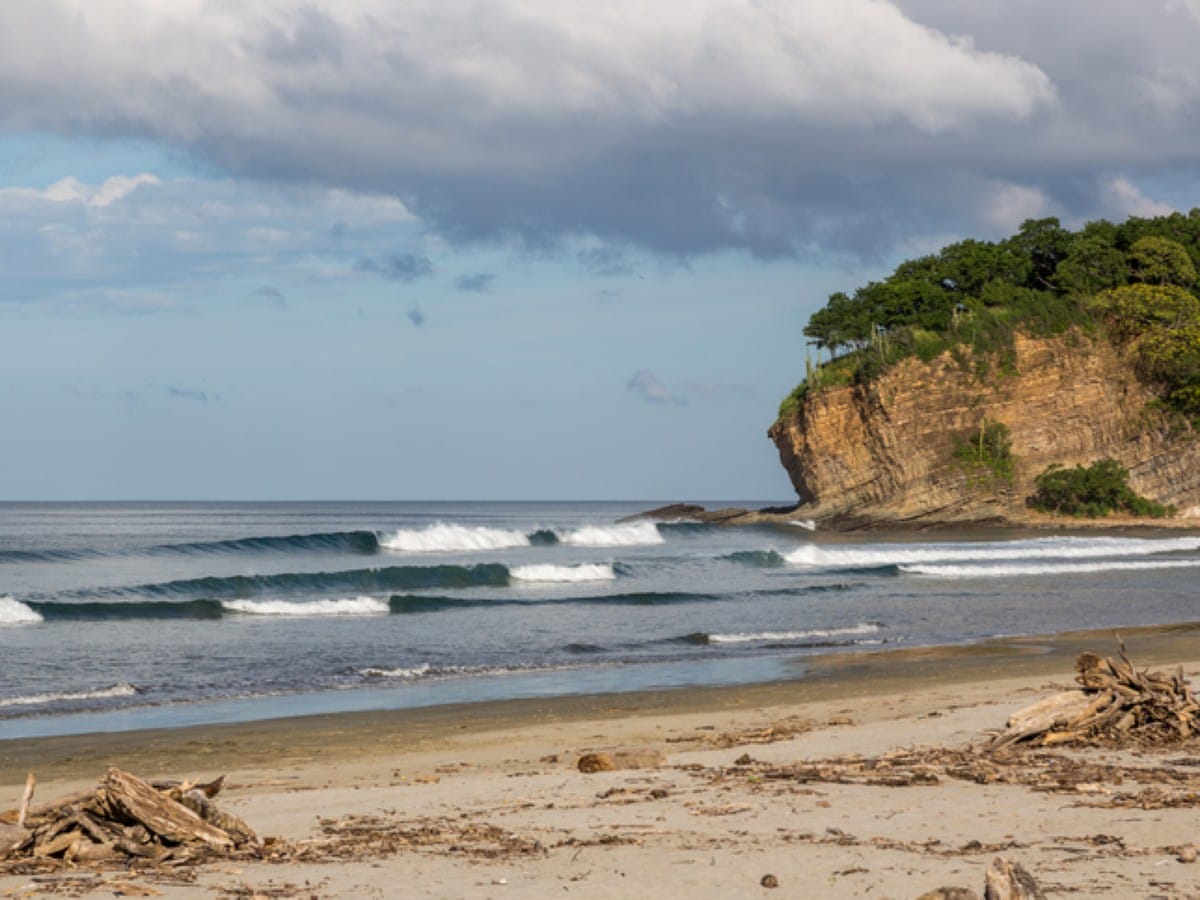
Nicaragua Surf Guide – Beaches, Offshores, Amazing Waves

Nicaragua was once the untapped surf territory of Central America.
That’s changed now, and there are two reasons for it.
First: Popoyo – the surf capital of Nica. One epic A-frame secured its fame years ago, but it’s recently broadened its offering with hooking right left point called Beginners Bay, so all levels now come.
Second: The100-mile-or-so stretch of coastline that runs north from the Costa Rica border, through the town of San Juan del Sur , and up to our personal fav of Playa Maderas.
Yep, despite a little civil strife, some of the trickier arrival airports in the region, and a lack of surf infrastructure, Nicaragua now draws thousands of surfers every year.
It’s easy to see why. The country has some of the finest waves in Latin America. They benefit from a unique combo of almost-unceasing offshore winds that are generated by the waters of Lake Managua and reliable SW swell systems that rise up from Antarctica in the summer months.
Couple that with thinner line ups than Tamarindo or Santa Teresa could ever dream of and you’re looking at a pretty package.
Recent years have also added a good mix of well-heeled surf camps and surf stays to the line-up in Nica. Gone are the times when you’d have to hunker down under canvas in the company of mantled howler monkeys and god-knows-what snakes.
And it’s cheap, too – costing just a fraction of what Costa Rica would.
We might use affiliate links in this post. Basically, you click em’ and we get a little something from your booking or purchase. They help us keep offering more and more in-depth surf guides to awesome places all around the globe. So, thanks for that!
>>This guide is a part of our larger ultimate guide to surfing in Central America
Plan your trip to Nicaragua
- Level: All levels. Probably shines for intermediates most.
- Season: Year-round. May-Aug bigger swells, Oct-March for beginners and improvers.
- ✈️ Flights: Into Managua (ACS)
- 🚗 Car hire: People do it more frequently now. Good for getting to lots of beaches, but beware of big-city chaos. DiscoverCars →
- 📋Insurance: SafetyWing includes surf cover as standard
- 🏄 Book this surf camp: Dreamsea Surf Camp – Based in San Juan, this stylish iteration of Dreamsea takes you many of the most famous beaches.
- 🏨 Book this hotel: Alive Beach House – Beachfront in northern Nica, walking access to amazing all-level waves, and downright gorgeous. A fine DIY surf stay option.
What will I find in this guide to surfing in Nicaragua?
Where to surf in Nicaragua?
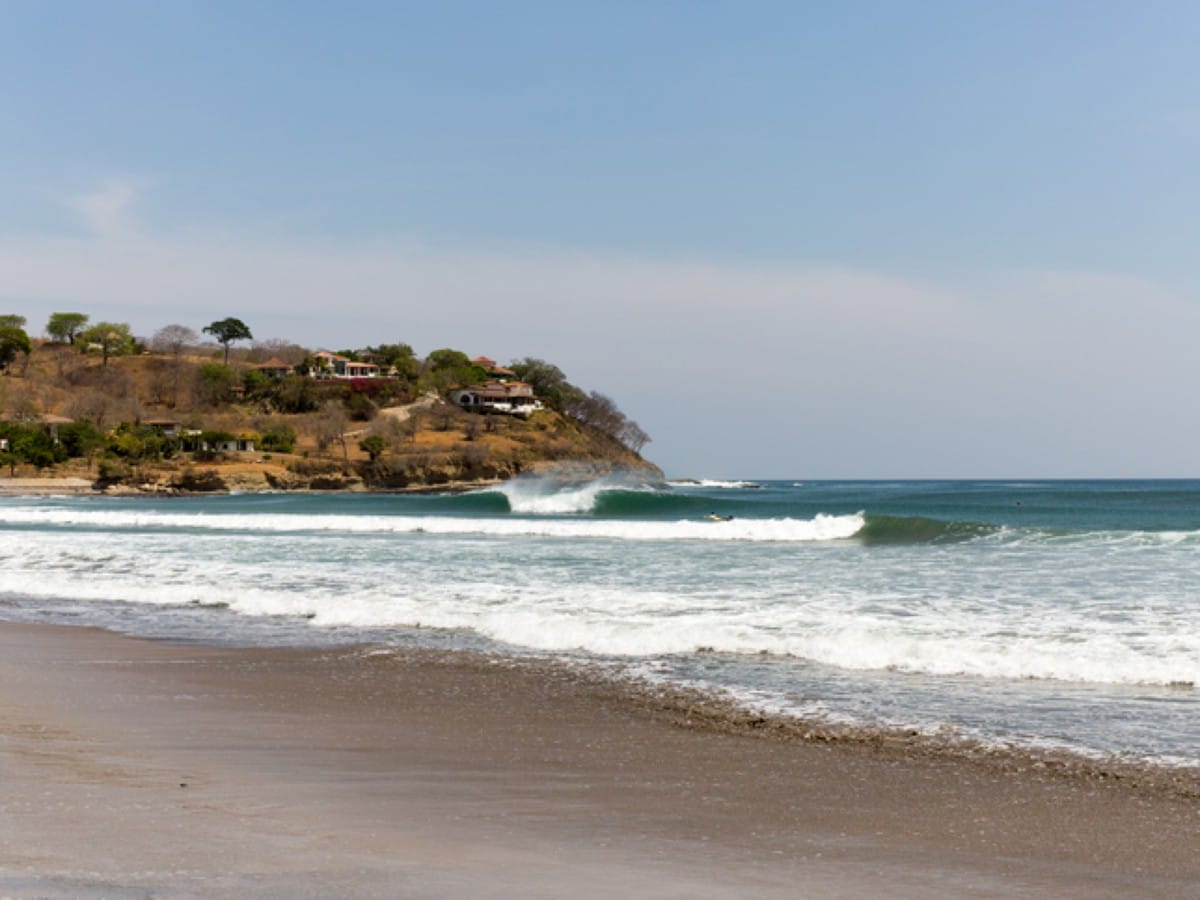
If you get to know one region in Nicaragua, get to know Rivas Province.
It’s tucked into the southwestern corner of the country, butting up to the Costa Rican border just past the town of San Juan del Sur.
The iconic surf town of Popoyo – probably the best known surf town in Nicaragua – sits at its northern end, and there are waves waiting to be discovered the whole way down, mostly rock reefs and good sandbars that rely on certain tides to work – good for all levels.
That said, the northern reach of the Pacific coast here is lately becoming more popular. It’s not backed by the big tourist town of San Juan del Sur, so tends to be much quieter, with breaks like Puerto Sandino’s (also known as Miramar) big left taking center stage.
The Boom
This heavy beach break is the main attraction in the north of Nicaragua. It’s intermediate-advanced surfers only, and it’s a barrel machine.
Quite fickle, so proper planning must be done.
Don’t expect the same surf-travel experience here you get in places like Maderas further south. It’s mainly for strike missions and only has a few simple hotels/hostels.
>>Check out our guide to Nicaragua’s The Boom
Puerto Sandino
The long left walls of the main rivermouth point break in Puerto Sandino are almost of Mundaka proportions.
They’ve elevated this gritty port town into the stratosphere among dedicated goofies looking to make strike missions away from the tried-and-tested south of the country.
We like it as an alternative option thanks to its upcoming lux surf camps, even if the beaches aren’t the prettiest.
A goofy’s dream. Can be pricy because literally the only way you can get out to the break is by boat and all boats now charge a premium.
>>Check out our guide to Puerto Sandino surfing
El Transito
If you want a classic beach break setup like you get further south in Nica, but the joys of the less-crowded north part of the country, El Transito is what you’ve been looking for.
The beach here loves long-period, smaller swells, and it’s a all-level mecca because of it.
The main breaks are the A-frame sandbars that work on all tides in the middle of the bay. Really nice, really fun, often softer than a lot you get in Nica.
There’s a great left at the south end of the beach too.
Hotels line the beachfront, offering very relaxed stays within easy walking distance of the waves.
>>Read our full guide to El Transito (coming soon)
Playgrounds
Playgrounds is what this uber-fine surf area south of the El Mogote Nature Reserve on the fringes of Playa Acosaco has been christened.
It’s a pretty unchartered part of the Nicaragua surf coast but people still make the trek up. They mainly come for the namesake Playgrounds Surf Camp (the reason it’s named Playgrounds), which offers access to all the area’s breaks and fantastic all-inclusive stays in the coast jungles.
There are something like 5-10 breaks in the offing, with Playground Left and Right trumping the lot with their hollow sections
Popoyo
Popoyo is proabbly the best-known spot in the whole of Nicaragua.
This one has the credentials to match other major global surf regions like the Ments or Bali, but perhaps not quite on the same scale.
There are about five or six named breaks within reach of Popoyo beach itself, but the focus always falls Main Point (usually known as just Popoyo) – an A-frame with very fast rights and more tubey lefts that crashes onto shallow reefs right in front of the bars and palapas. It’s quality.
Outer Reef is bigger XXL stuff for the Maverick’s vets. Then there’s Stoney’s, which plays a little like a NZ point break only in warm water; a left, of course.
Popoyo has recently started marketing itself as an all-level surf town, though. That’s mainly thanks to Beginner’s Bay, a typically mellow left that peels on the inside of a reef. Fair’s fair, it’s a good starting zone.
>>Read our complete guide to surfing in Popoyo right now!
Playa Gigante
Playa Gigante is the name of the town that sits on a headland between Gigante beach itself and Playa Amarillo to the north. It’s emerged as a great alt option to Playa Maderas for folks who want beginner-intermediate friendly waves without too many crowds.
I’d say Maderas or here is a good problem to have if you can’t decide. Neither will disappoint, but Playa Gigante will definitely be the more chill of the two. There’s not much in the way of nightlife and not much else to do besides surf. And it’s quieter.
Playa Amarillo is the main spot for waves. It’s got sandbanks its whole length but the lefts closest to town tend to be the better lines.
>>Read more about surfing in Playa Gigante
Playa Maderas
Playa Maderas is a dream of a surf destination. The best wave is a high-quality A-frame that works on upcoming tides and offers really great shoulders to the left and the right.
Really, though, people fall in love with this town because of the chilled vibes. Surf-yoga retreats hide in the jungles just behind the bay. Choose one of those and you can wake to the calls of howler monkeys and finish the day with cold beers while watching the sunset over the Pacific.
It’s sorta San Juan del Sur (see below) but without the development.
>>Check out our complete guide to surfing in Playa Maderas
San Juan del Sur
San Juan del Sur is a strange one. It markets itself as a surf town but doesn’t have surf.
The selling point is the fact that’s it’s right smack dab in the middle of about 100 miles of fantastic surfing coast.
You can head north for 20 minutes and be hitting the A-frame lefts of intermediate-dream Playa Maderas. Or you can go south to hit the beginner waves of Remanso, a mid-tide dream for learners who want rights.
That’s just scratching the surface, too – Hermosa, El Yanke, there are tons of waves in the region.
Really, SJDS is a party town with sea-veiw villas and yoga studios, a little like Nica’s answer to Tamarindo. Base yourself there to get all the amenities and travel out to surf.
>>Check out our complete guide to surfing in San Juan del Sur
Playa Escameca
A very high-quality A-frame breaks in the middle of this bay south of San Juan del Sur. Pretty vistas abound – think forest-covered coast hills and hardly any development.
I struggle to see why it’s not as popular as Maderas, but could be because it’s often a bit smaller and less consistent, though that’s negligible.
>>Read more about lovely Playa Escameca here (coming soon)
Playa el Coco
Playa el Coco is a seriously beautiful beach in that ultra-lovely surf zone south of San Juan del Sur – this one’s about 30 minutes’ drive south of the town, and all the quieter for it.
It’s very rarely busy. In fact, there’s often not another soul surfing here. The reason for that is the fact that Playa el Coco is generally a really easy, small wave. It’s suited mainly to complete beginners, a cohort that typically prefer to stay closer to San Juan for surfing. Beginners, and longboarders, that is.
Good, peeling rights and left break up and down, and there are some nice wedges under the high cliff at the north end.
The beach itself is just as much a reason to make the trip – it’s a beauty with some really nice hotels set in the jungles just behind.
>>Read more about lovely Playa Escameca here (coming soon)
When to surf in Nicaragua?
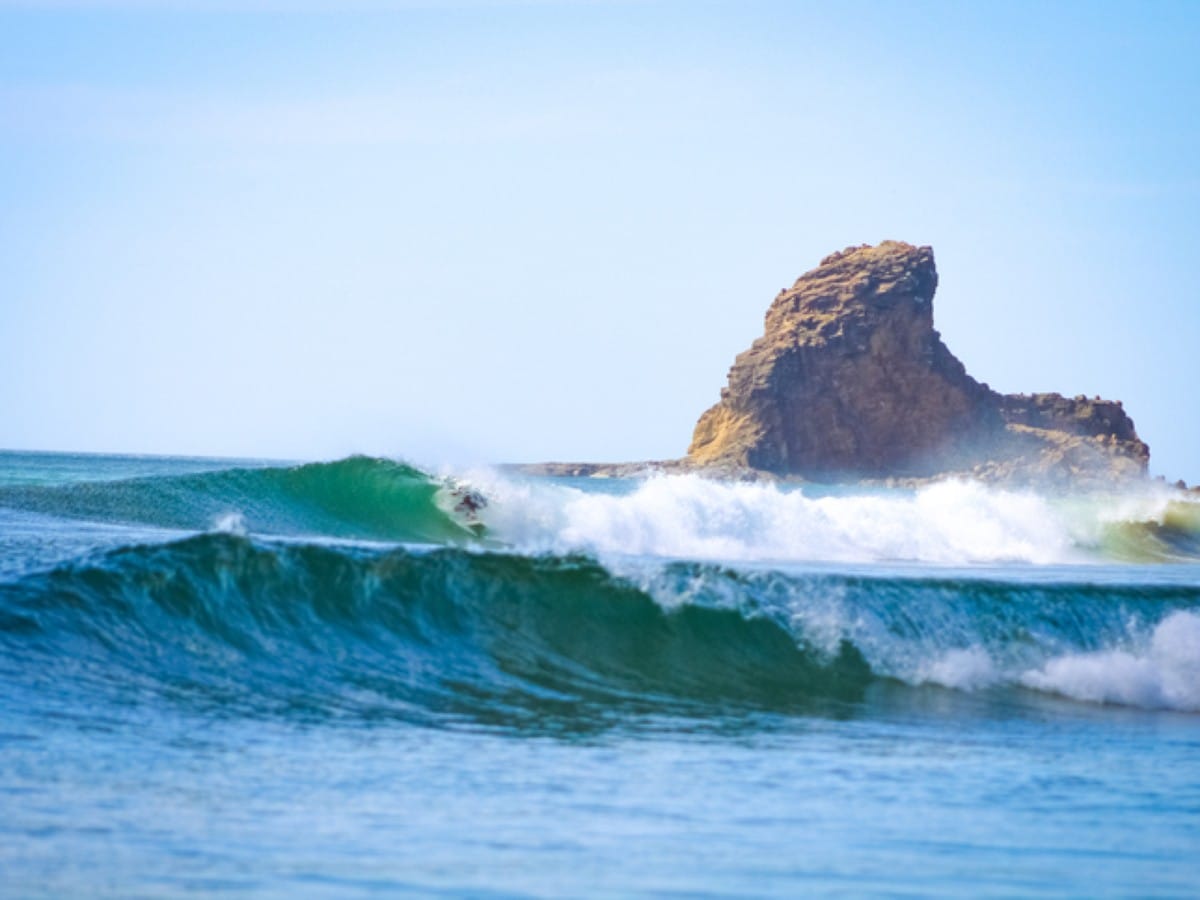
To be honest, there’s never really a bad time to hit the Nicaragua surf (save for, maybe, February).
The peak season is the summer (officially the wet season), when the SW swells that form in the Antarctic latitudes come up day after day. They are the same swells that power the Baja and SoCal but here they are even punchier, which means regular barrel days and overheads from the Popoyo reefs down, although Maderas and SJDS do offer more protection to help intermediates keep going during the bigger days between May and September.
Swells calm a touch in the autumn and winter, as the southern channels slacken. However, there are still strong offshores and decent mid-sized waves. That’s why we think November-January is the top time for beginners looking to surf in Nicaragua. February is the only anomaly, because it tends to be the windiest month and that can upwell and cause the mercury to drop in the water so it no longer even feels like your surfing in the tropics. Dodge that.
How hard is surfing in Nicaragua?
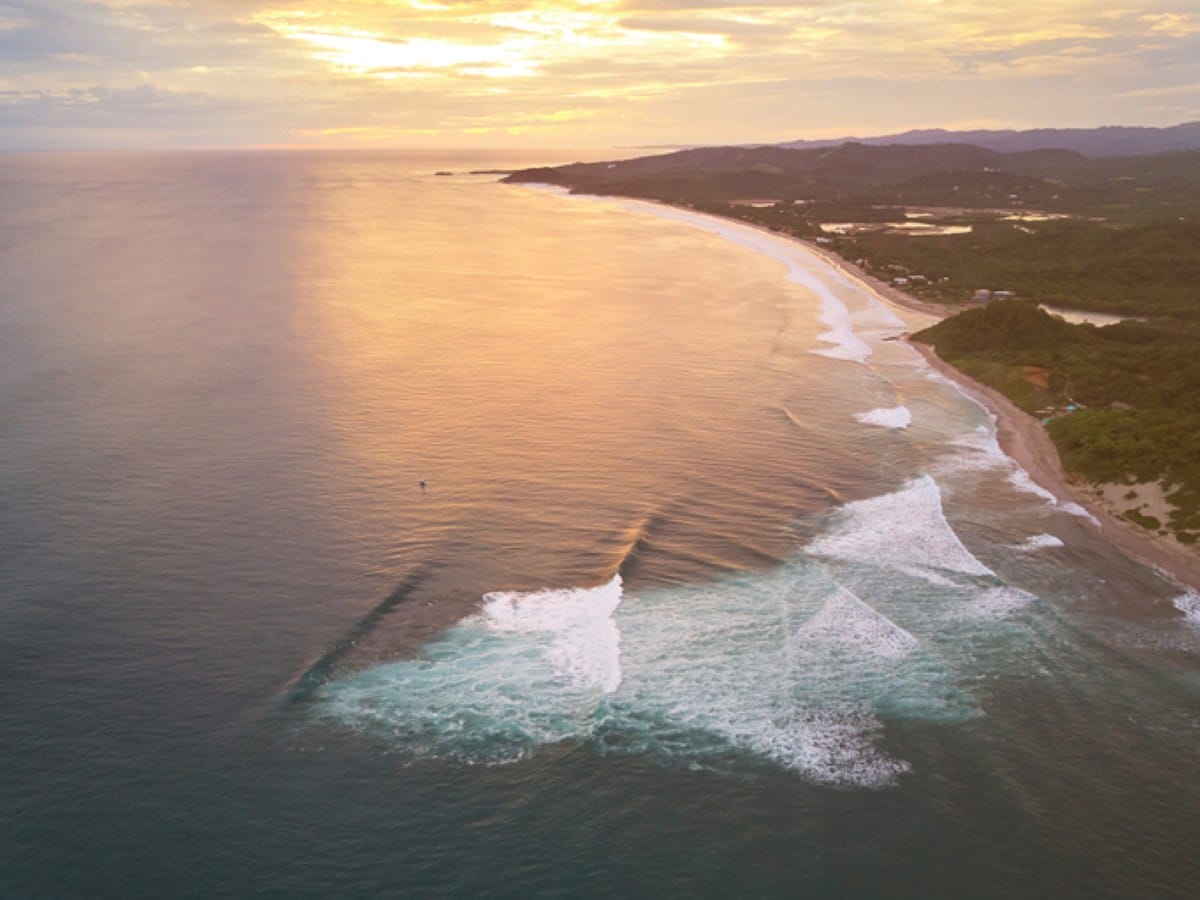
Nicaragua suits almost everyone, but it rewards intermediates most.
The famous offshore winds (blowing 300+ days a year thanks to Lake Nicaragua) groom waves into clean, predictable walls, which really helps hold the shape here and make progression easier than almost anywhere in Central America, Costa Rica included.
Beginners have forgiving beach breaks around San Juan del Sur and Playa Maderas, while spots like Colorado, Puerto Sandino (Miramar) and Panga Drops serve up hollow, punchy barrels in the peak season that will test advanced surfers.
I’d say timing is key. If you’re a beginner, then the winter is probably best. It’s still got LOADS of surf about but it’s typically at least a foot smaller than what it will be when the big SW swells get kicking in the summer.
The main challenge likely isn’t the waves themselves – it’s the consistency. Swell arrives almost daily from March to October, so expect some tired arms. It’s great for building confidence and fitness, that’s for sure.
Where to stay when surfing in Nicaragua?
Surf camps in Nicaragua
Nicaragua is actually one of our top picks as a surf-camp destination. Let’s break it down…
There are two key surf regions: Beginner-friendly Rivas around San Juan. That’s accessible and great for starters and digital nomads, since loads of the surf camps channel that work-away sorta’ vibe.
Then there’s Popoyo and the rest of the west coast, which really shine for more dedicated surf bums who care more about barrels than making board meetings.
As a bonus, you could also consider the north of the country, which now offers a few very nice surf camps in much-less-busy territory, with some more challenging waves like Puerto Sandino.
Essentially, that means this country covers all bases.
The reason a surf camp is a good idea is a) They will usually include transport to and from breaks, which means you can happily go somewhere like San Juan del Sur and not worry about finding transport to the waves and b) They’ll often show you secret spots; ones that don’t appear on guides like this/the internet at all.
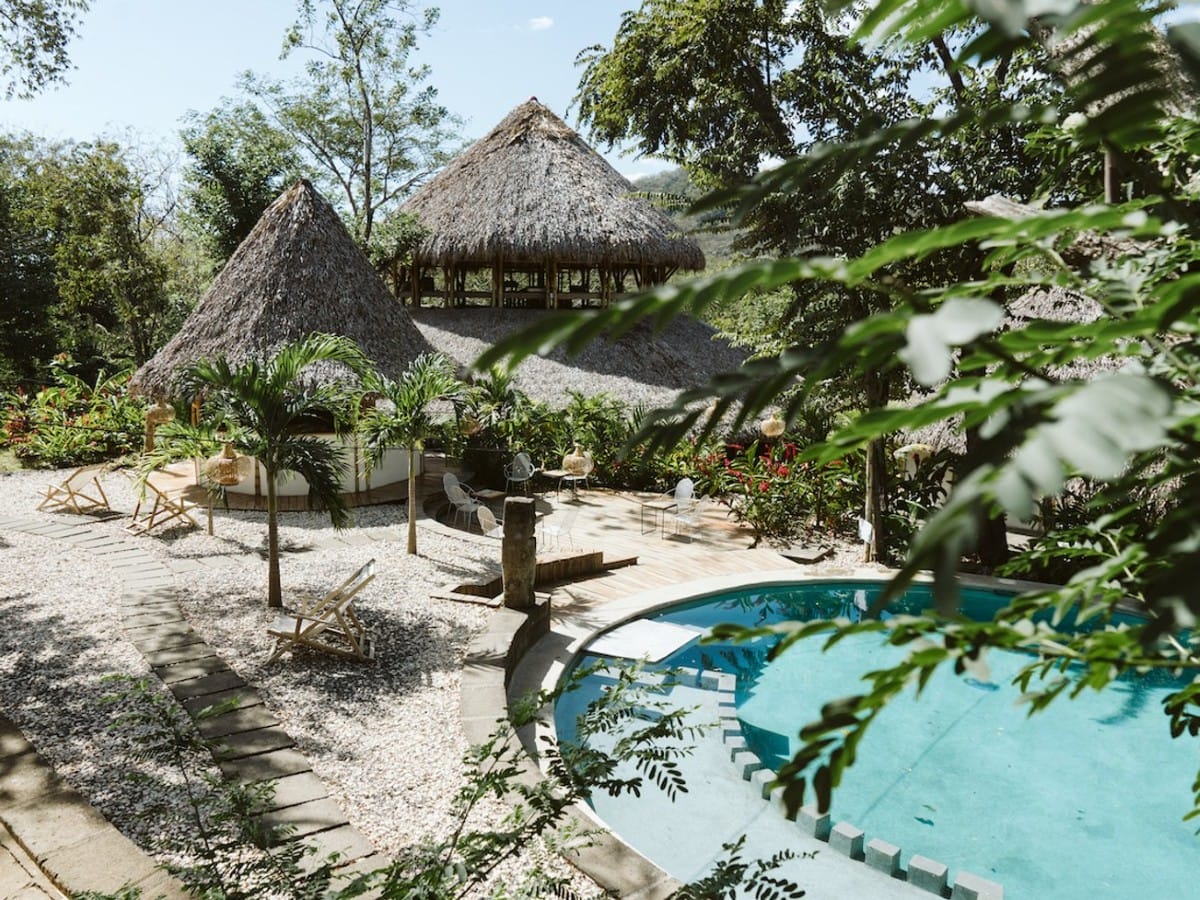
- Dreamsea Surf Camp – These guys run an 8-day package from a super-cool lodge in the jungles near SJDS. It looks more like a Balinese palace than a surf camp. There’s 10 hours of surfing throughout the week, plus theory sessions every day. The swimming pool is pretty Instagram-worthy too, if you care about that sort of thing.
- Miramar Surfcamp – This is probably the best pick for intermediates and up in Nica, especially of the goofy variety since the home break is that thigh-thumping left in Puerto Sandino. The retreat is right on the sea, overlooking an amazing A-frame wave that you can surf morning to night if you wanna’.
>>Get more picks in our guide to the very best surf camps in Nicaragua
Surf hotels in Nicaragua
Nicaragua has changes A LOT over the last 10-15 years.
Even with moments of political upheaval and the meteoric rise of next-door Costa Rica, there’s been a bit of a boom when it comes to surf camps and whatnot.
There are now some seriously fantastic options to consider for your trip, many of which sit tight right next to ultra-stunning beaches, offering very fair rates and more.
Go for a hotel over a surf camp if you don’t like planned surf trips, want a bit more service, and just like going at your own pace.
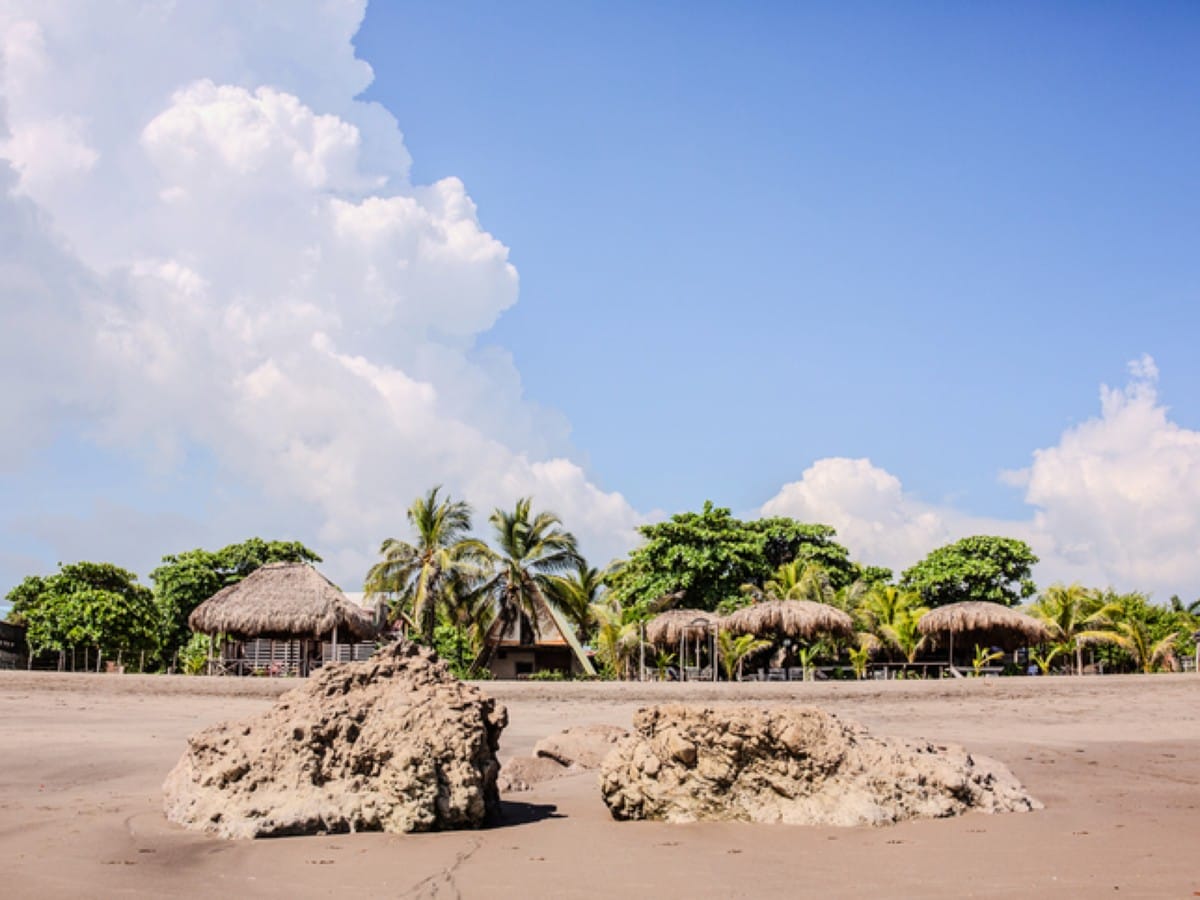
- Alive Beach House – Right on the front of El Transito beach, this is a superbly quiet and serene hotel where you’ll sleep to the sound of the Pacific. A left hander within 20 seconds walking, and loads of beach breaks maybe 2 mins’ walk up the sand.
- Buena Vista Surf Club – Hidden in the jungles behind Playa Maderas, this lovely lodge has a deck space poking out of the trees, great vibes, and walking access to arguably the best all-level beach break in the country.
>>Read our full guide to the top surf hotels in Nicaragua right now
Nicaragua travel basics
Where is Nicaragua?
Nicaragua is like the heart of Central America. It’s wedged in between Costa Rica and Honduras – the former to the south and the latter to the north.
Like many countries in the region, it spreads between two seas, with the Caribbean to the east and the Pacific (where pretty much all the surfing is done) to the west.
Talking of the surf territory, you’ll really need to cast your gaze over to the west coast. The southwesternmost corner of that is known as Rivas Province and it’s the mainstay – home to San Juan del Sur and Maderas, the two headline acts. Places like Popoyo and Puerto Sandino come further north.
How to get to Nicaragua?
Getting here is probably a touch harder than getting to Costa Rica but still shouldn’t be too hard. Major airlines run regular routes into the country’s only real international hub: The Augusto C. Sandino International Airport.
That’s in Managua, the capital. Thankfully, said capital is right on the doorstep of the Pacific coast, so you should only need to transfer like 2.5 hours max to get to any of the surf destintations we list below.
We might use affiliate links in this post. Basically, you click em’ and we get a little something from your booking or purchase. They help us keep offering more and more in-depth surf guides to awesome places all around the globe. So, thanks for that!