Montezuma Surf – A Complete Guide

Discover the beginner-friendly Montezuma surf at the tail end of the NIcoya Peninsula. It’s a fantastic place to wander jungles, hike to waterfalls, and taste some of Costa Rica’s easier waves.
An introduction to Montezuma surf
Montezuma is a laid-back hippy escape at the tail end of the Nicoya Peninsula. We won’t pretend that it has the surf to match up to other totemic locations in the region – Santa Teresa and Malpais are both 40 minutes’ drive away through the jungle, and they’re some of the best surfing in the whole country.
What it does offer is remote, well-sheltered beaches and breaks that match up nicely with a town where the pace of life is super easy, everyone has a smile on their face, and there’s equal measures of adventure and relaxation to be done between the sands and the jungles.
So, we’d say don’t bother coming here for an extended period of time if you’re looking to surf every day. Do consider dropping in as part of a cross-Nicoya road trip that includes other surf towns. You MIGHT be able to squeeze in a surf here and there, but there’s also lots to enjoy about loveable Montezuma before you whizz off again.
Oh yea, and the other thing Montezuma is PERFECT for? Beginners. Playa Grande is the main break and it’s all you could need as a starter. There are no territorial pros knocking you off waves. The sets are easy, usually small, and the vibes are good.
We might use affiliate links in this post. Basically, you click em’ and we get a little something from your booking or purchase. They help us keep offering more and more in-depth surf guides to awesome places all around the globe. So, thanks for that!
This guide is just one part of our complete guide to surfing in Costa Rica
Surfing in Montezuma at a glance
The good…
The bad…
What’s in this guide to Montezuma surf?
Where is Montezuma (and how to get there)?
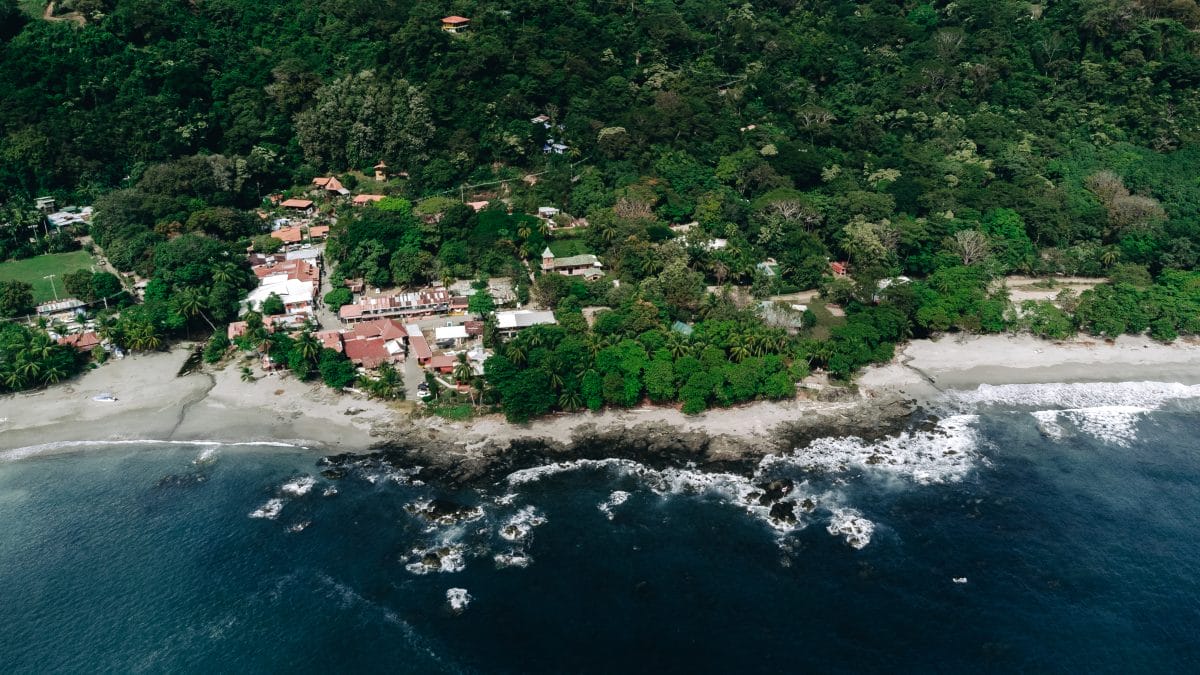
Montezuma is actually on the southeastern edge of the Nicoya Peninsula. It’s a part of the province of Puntarenas, which stretches from here right the way down the central coast of Costa Rica.
There are a couple of pretty fun ways to arrive here…
Daily short-haul flights can take you from either of Costa Rica’s two major international airports – Liberia and San Jose – to Tambor Airport. They take under and hour in both cases and arrive into a regional runway that’s about 20-30 minutes’ taxi from Montezuma. That has to be the expensive choice, but it’s quick.
We prefer catching a ride on the boat taxi from Jaco. It goes every day and takes and hour, whizzing you straight across the Nicoya Gulf to Montezuma Beach in about an hour.
It’s also possible to drive down the whole length of the peninsula on the 162 or eastern 21 highway. Both are now paved, which makes it a lot easier than it once was. You’re looking at about three hours of very beautiful road tripping to get here from Tamarindo.
If you want to go the car rental option, we’d highly reccomend RentalCars. They offer nice cancellation policies and we think have some of the cheapest rates for Central America…
Montezuma surf spots
 iStock.com / sestovic
Now you know WHERE Montezuma is, it should hardly come as a surprise that it’s not blessed with the same glut of surf breaks as the west-facing destinations of the Nicoya Peninsula.
This one faces southeast-ish. That means it doesn’t hoover up all the swell in 180 degrees of the ocean like its neighbouring towns. However, it still gets nice coverage from wet-season SW swells and has a few beaches that are open to good waves.
Generally speaking, the sets you will get here will be at least 2-3 feet smaller than over in Santa Teresa. Swells need to work a little harder to bend and refract up through the Gulf of Nicoya. That’s why Montezuma surf is considered more on the beginner end of the spectrum.
Here’s a look at what’s on offer…
Playa Grande
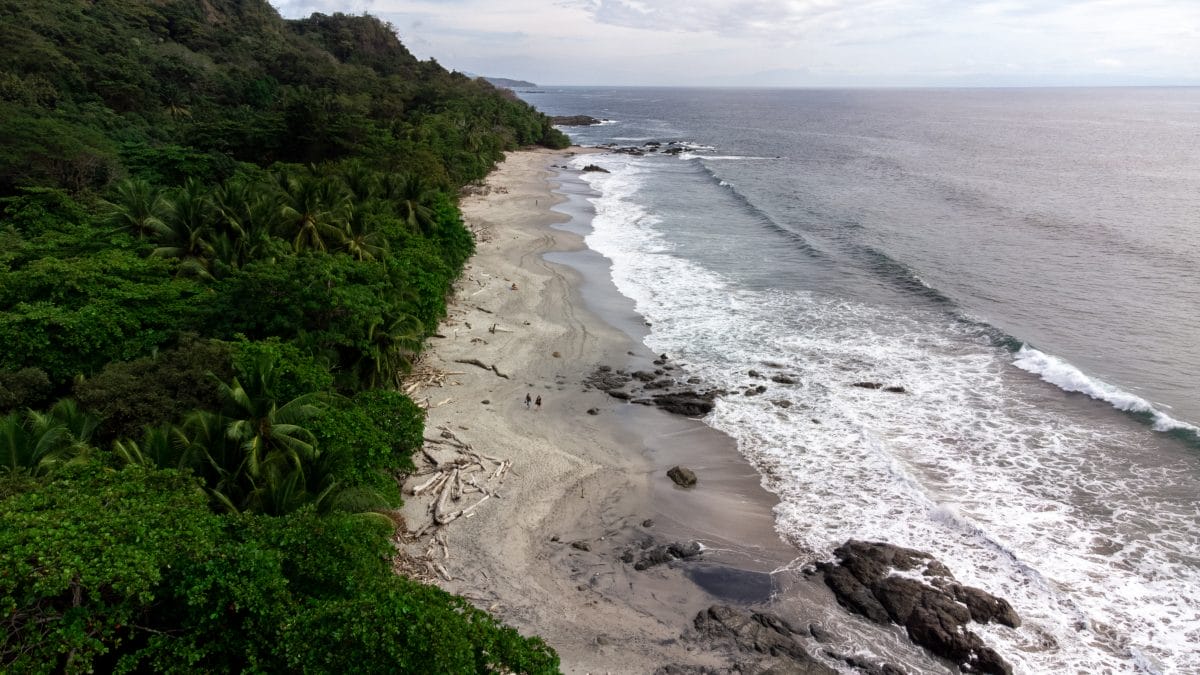
Not to be confused with its namesake in Tamarindo (which has hollow pipes fizzing off its rivermouths), Montezuma’s Playa Grande is one of the top beginner beaches in Costa Rica. It’s about 35 minutes’ walk from the main towns itself, stretching along a rocky run of coastline just to the east.
There’s no way to get there other than on foot but that’s what’s kept it seriously beautiful. We’re talking a coffee-tinged stretch of brown-black sand under thick blankets of coastal jungle. Tropical birds, monkeys, even sloths have been said to make an appearance here.
As we’ve mentioned, the waves here tend to be a few feet smaller than over on the west side of the peninsula. The only time when that won’t be the case is with head-on S swells, when the whole run of Grande will kinda close out.
Thankfully, it’s rare that you get direct S swell. Often, there’s an element of W in there too, which pushes the sets over the shallow sandbanks here to offer up nice chest-high peaks that peel really well to the right and to the left, though the rights are generally better.
Most people stick to the more protected western end of the bay. There’s no reason for that other than it’s where the path from Montezuma emerges. You can also walk 10 minutes more and get emptier waves as you head east. The far eastern end of the beach actually has a peaky little left hander off its rocks, which is the only moderately tricky wave in the area.
Surf schools have started to come here and it’s a great place to learn, with pushy whitewash and some nice green waves to graduate to. Perfect if you’re headed to Santa Teresa, Nosara, or Tamarindo next but want to start your surf journey somewhere super easy.
Los Cedros
To the south of Montezuma town, there’s about 1.2 miles of rugged coastline that angles too eastwards to get any decent swell. The first point that changes that is Los Cedros, roughly a 10-minute drive down the track (better with a 4×4) from the center.
The wave is kinda’ fickle. It needs good S swell and a full high tide. When that happens, the water will touch against the headland and form bowly left handers that move inside the bay. It’s fun when it works but you’ll need to ingratiate with a local to get a heads up.
Cabuya
The mouth of the Rio Lajas comes out at Cabuya, some 15 minutes’ drive south of Montezuma. There’s a wideeee reef shelf here that you’ll have to pick over, dodging urchins and spiky rocks as you go. The reward will be pretty much empty right handers that work their way off a point into a tapering shoulder. With N winds and SW swell, they can be pretty long but are rarely that good to warrant the pilgrimage from Montezuma town.
Santa Teresa
It’s not impossible to base yourself in Montezuma and head across to Santa Teresa to surf. It lies about 30-40 minutes through the jungles and it’s one of the best surf towns in Costa Rica as a whole.
The main beach is a run of several miles of punchy beach breaks with a consistency that would embarrass Bali. It’s a bit built up now but it’s got loads of camps and schools.
We’ve got loads more info in our complete guide to Santa Teresa
Where to stay when surfing in Montezuma?
You get a good array of hotel options in Montezuma these days. In fact, we’d say the stays here were some of our overall favorites on the Nicoya Peninsula. They’re kinda eco lodges nestled between the jungles and beaches. Just what you want from Costa Rica.
- Hotel Nya – There’s something really special about this modern hotel. It’s got a gorgeous pool, it’s built in the local style, and has extras like a yoga shala. The staff are super lovely and it’s just a downright nice place to be. It would be our top pick in Montezuma.
- Casa Frangipani –Friends of ours stayed up at Casa Frangipani. It’s a bit inland but it has more spacious suites with kitchenettes and living areas. The pool is gorgeous and it’s really private.
- Hotel Amor de Mar – One of the original hotels of Montezuma is this eco lodge in the coast forests near the rivermouth. Rooms are big. Monkeys visit the garden each day. You can make out of the sound of the waves from your suite.
Surf lessons in Montezuma
Remember we mentioned how good Montezuma’s Playa Grande is for beginners? Well thanks to that there’s now a wide selection of surf schools in town that offer lessons.
Most only last a couple of hours and are well-tailored to novices. That makes them a great choice if you’re passing through the town and fancied sampling what Costa Rica surfing is all about on some of the country’s easier waves.
We can highly recommend:
- Surf School By The Wave (3.5-hour surf lesson) – This is the best surf lesson package in town we reckon. It’s run by a fantastic local school that has ISA-2 level coaches. It’s also a bargain by Costa Rican standards. Book ahead and you can nail a private lesson for around $85 or a group lesson for $60 ish. It’s on Playa Grande and you get technique training before in-water training.
When to surf in Montezuma?
The best time to surf in Montezuma is the wet season in Costa Rica, which runs from May to around October, though it does change each year. That said, this town and the rest of the Nicoya Peninsula gets swell all year round, so there’s never really a bad time to come.
The wet season (known here as the green season) is when the strongest S-SW swells are working in the Pacific. They’re perfect for crossing the mouth of the Nicoya Gulf and coming into the points south of Montezuma and the sandbars of Playa Grande. There’s a risk that they will be too big and the whole area will closeout, but that’s very rare.
The dry season also works well but there are more flat days (think maybe one flat day to every five surfable ones). It’s also smaller in the dry season, making it a better time for complete beginners.
We might use affiliate links in this post. Basically, you click em’ and we get a little something from your booking or purchase. They help us keep offering more and more in-depth surf guides to awesome places all around the globe. So, thanks for that!
