
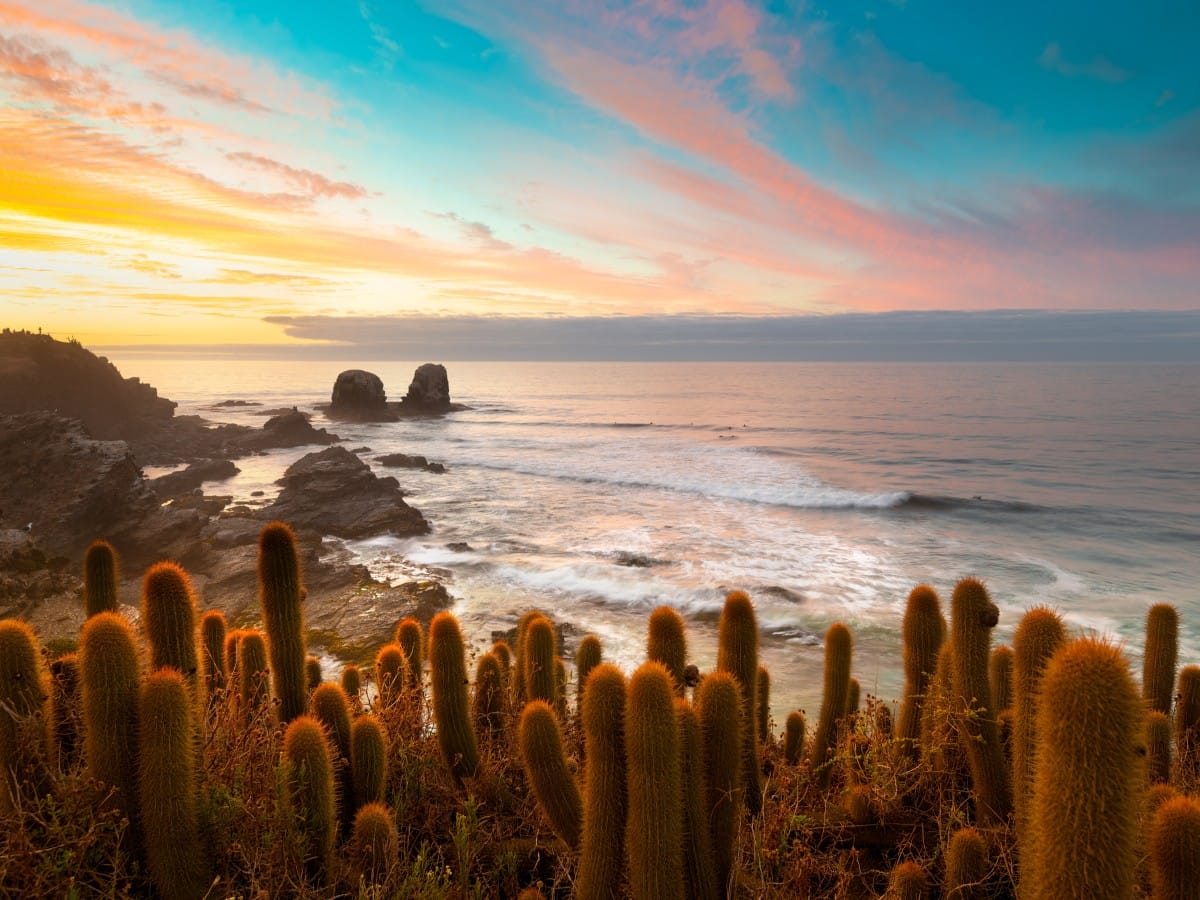
Pichilemu Surfing Guide – All You Need To Know

Pichilemu is rugged coastal town renowned for its powerful left-hand point breaks.
It’s right on the cusp of the legendary Punta de Lobos, the most famous wave in Chile. That’s a swell-sucking mega thing come the deep winter, when it stars in the XL circuit. It’s not always huge, though, and can be nice for rippers intermedaite+ when it calms down.
The town itself is a mix of rustic beach vibes and a growing surf scene, with plenty of hostels, surf camps, and local seafood spots to enjoy. It’s also not only for chargers. There are beginner beach breaks to the north, plus La Puntilla, a well-sheltered point that has shoulders that mello nicely as they peel into the bay.
There are two people who will want to come here: Advanced surfers who want to taste Lobos, and beginners/improvers who want some of the best surf camps in Chile.
We might use affiliate links in this post. Basically, you click em’ and we get a little something from your booking or purchase. They help us keep offering more and more in-depth surf guides to awesome places all around the globe. So, thanks for that!
This guide is just one part of our complete surf guide to Chile
Where is Pichilemu (and how to get there)?
Pichilemu is located on the central Chilean coast, about 200 km (125 miles) southwest of Santiago.
It’s part of the O’Higgins Region, a stretch of coastline that’s known for its consistent Pacific swells that come from the south in the winter.
The easiest way to get here is by car or bus from Santiago, which takes around 3.5 to 4 hours. Buses run regularly from Terminal Alameda in Santiago, with companies like Nilahue and Pullman offering direct routes.
If you’re bringing your own surf gear and want the freedom to explore, renting a car in Santiago is the best option but just be ready for some long stints on the road – pretty driving though, mind.
Surf spots in Pichilemu

Pichilemu’s most famous wave is Punta Lobos, which is actually a few bays around to the south of the main town.
It’s not the ONLY surf spot here, though. So I’ll go from the inside bay that’s in the town center where most of the surf schools do thier thing and run through all the spots south of that towards Lobos…
La Puntilla
La Puntilla is the most accessible and beginner-friendly wave in Pichilemu, sitting just below the town’s main promenade.
It’s a long, peeling left-hander that starts steeper and punchier at the takeoff before gradually mellowing out as it wraps into the bay.
This makes it a great spot for all levels, with advanced surfers taking off deeper while beginners and intermediates can ride the softer, rolling sections further inside.
The wave is very forgiving at smaller sizes, but once a solid south swell rolls in, it gets faster, hollower, and way more challenging.
Because of its user-friendly nature, this is where most surf schools and camps operate, so expect some crowds, especially in the summer months, which will thin out the deeper you push towards the take-off zone.
Infiernillo
Infiernillo is a lesser-known gem just south of Pichilemu’s main town, offering hollow, high-speed left-handers over a shifting sand bottom.
The wave is known for its fast, barreling sections that demand quick reactions and precise positioning.
It’s a bit high-risk, high-reward for me – sections can be unmakeable, and the takeoff requires a solid drop with immediate speed to avoid getting shut down, with rocks all over the shop.
The best conditions come when the sandbanks stick onto the reefs and hollow the wave out to give good backdoor sections that I’ll leave to surfers above my pay grade.
Not a spot for beginners.
Punta de Lobos
Punta de Lobos is the crown jewel of Chilean surfing, famous for its massive left-hand walls, heavy barrels, and iconic rock formations looming in the foreground.
Honestly, it’s a WAY more performance based wave than Chicama (Peru’s most iconic left), and not to be missed if you’re a good shortboarder after the best left in South America.
It’s the most swell-exposed break in the region, capable of handling waves from head-high to 25 foot. When it’s big, it’s fricking massive. The wave is now even on the big-wave circuit when it powers up in mid-winter.
The wave starts with a steep, often critical drop, leading into long, reeling walls that offer space for carves, drawn-out turns, and deep barrels.
On smaller days, it’s more forgiving and resembles a classic point break, with multiple sections that allow for more performance top to bottom surfing.
This is not a wave for beginners, and even good intermediates should approach it with caution. A strong current and a challenging paddle-out add to the intensity, plus it’s never, ever empty.
When to surf in Pichilemu?

Pichilemu is a year-round surf destination, but the best conditions depend on what kind of waves you’re looking for.
- March to October – This is the prime big-wave season, as long-period southwest swells light up the region and deliver consistent, powerful surf. This is when Punta de Lobos is at its most famous, with huge walls and heavy barrels drawing in experienced surfers from all over the world. The deep winter (June–August) sees the biggest and heaviest conditions, with waves sometimes reaching over 20 feet.
- November to March – For intermediates and beginners, the Chilean summer is the best bet. The swells drop in size, and the winds are lighter, making spots like La Puntilla much more forgiving. This is also the busiest time of year, as local and international surf tourists flock to the area. Spring and autumn (September–November, March–May) are great shoulder seasons, offering a mix of manageable swells, clean conditions, and fewer crowds.
Where to stay for surfing in Pichilemu?

Where you stay in Pichilemu depends on what kind of surf experience you’re after. If you’re coming to charge Punta de Lobos, staying near the break is the best move. There are plenty of surf lodges, hostels, and rental cabins just a short drive from the point, offering easy access to the waves and a more laid-back, surf-centric atmosphere.
If you’re looking for softer waves and a livelier town vibe, staying in central Pichilemu near La Puntilla is a better choice. Here, you’ll be closer to restaurants, bars, and surf schools, making it ideal for beginners and intermediates and something a bit more social.
If you have a car you can be a bit more flex and not worry too much about where you go.
- Punta de Lobos Surfcamp – The best option for learners is definitely this 7-day surf camp. It’s in a lodge just back from La Puntilla but they will take you to Punta Lobos if the conditions are right (aka not deadly). It’s a great camp, with ISA-qualified instructors, comfy rooms, and a fine location. Arguably the best in Chile.
- Surf Lodge Punta de Lobos – This is one of the best surf hotels in Chile. Hands down. Really cool setting in the forests outside of town, with a pool, a spa, and thier own surf-school partnerships.
- VIENTO BRAVO – Scandi-style accomodation with wood-panelled walls and stylish suites, super close to lots of surf, adults only so you can chill, and there’s an on-site hot tub.
We might use affiliate links in this post. Basically, you click em’ and we get a little something from your booking or purchase. They help us keep offering more and more in-depth surf guides to awesome places all around the globe. So, thanks for that!
