Hokkaido Surf – An Ultimate Surf-Travel Guide [2025]

Hokkaido surf isn’t quite as famous as the skiing in this snow-blessed land at the top end of Japan. But there are waves on both coasts, and they can be very empty.
An introduction to Hokkaido surf
Hokkaido = snow. Some of the best powder in the world forms here on the slopes of the high volcanos thanks to cold-air currents blowing out of Siberia. Most people come with the salopettes, snowboards, and skis in tow.
But we’d be remiss on this here surf publication if we didn’t also point out that Hokkaido is an island, flanked by an ocean – Mr. Mighty Pacific, no less – on one side, and the Sea of Japan on the other. Our point? There are waves, too.
There’s no doubt that this is the frontier of Japanese surfing.
The most famous breaks in the country are down south, in the relatively warm-water havens of Honshu and Shikoku. But Hokkaido possesses a tantalizing array of reefs, estuaries, long beaches, and industrial breakwaters, plus excellent swell coverage from the north and east.
It’s really all about the search. The locals here are fine with their breaks remaining out of the spotlight, so prep to do long drives on scenic coastal highways, though mountain ranges, and out to find wedgy beach breaks or harbor walls where there’s no one around at all.
Water can be cold in the deep winter, but the good news is that the balmier months between May and August are the peak surf times, as typhoon swells send up the goods from the southeast. You’ll need a wetsuit. You’ll need a car. It’s good fun.
We might use affiliate links in this post. Basically, you click em’ and we get a little something from your booking or purchase. They help us keep offering more and more in-depth surf guides to awesome places all around the globe. So, thanks for that!
This guide is just one part of our complete guide to surfing in Japan
Hokkaido surf at a glance
The good…
The bad…
What’s in this guide to Hokkaido?
Where is Hokkaido?
Check out a map of Japan, then look north. See that diamond-shaped isle That’s Hokkaido.
The second-largest island in Japan, it’s a prefecture in its own right and sits at the northern extremity of the country.
Notice the Pacific Ocean to the east and the Sea of Japan to the west. Those are key to the surf here.
There are three ways to get to Hokkaido.
Most will opt for a short-haul flight into one of the region’s main cities – Sapporo has the biggest airport here (flights from Tokyo take about 90 mins).
There’s also a passenger/car ferry that crosses the strait between Honshu (Japan’s biggest island) and Hokkaido from the port at Oma.
Or you can get the famous Japanese bullet train via the Hokkaido Shinkansen tunnel. That’s good for getting between major cities like Tokyo-Sapporo or Tokyo-Niseko but not so brill for hitting the more remote Hokkaido coastline.
For that, there’s only one real option: Rent a car.
It’s a must here if you want to surf because Hokkaido is all about the chase really. Swell comes through unexpectedly and start working on beaches or points that might be 50-100km from major towns, so driving will be part and parcel of a trip. The good news is that most of the roads are as scenic as they come.
Hokkaido surf spots
We’ve already said like five times here that Hokkaido is secret surf country. We’ve talked to locals who’ve mentioned break after break after break – too many to count on two hands.
It’s just that spilling the beans on those would be uncouth to the max, and, we think, detrimental to your trip – seriously, the joy of surfing in Hokkaido is the requirement to travel far and wide up stunning coast roads, from shore to shore, fishing town to fishing town, seeking out the wave that might be working.
We don’t want to spoil all that for ya.
So, we’ll just focus on the spots here that are known as the growing hubs of the Hokkaido surf scene. They offer a good starting point for surfers, especially since they are excellent for getting to know the friendly locals and sourcing that all-important info for further expeditions along the coast.
Surf spots on the eastern (Pacific) side of Hokkaido
The Pacific coast here is the best. This is where you’ll find those glassy walls that adorn the rare Hokkaido features in surf mags.
The beaches are harder to reach and the swell only works in the typhoon season (May-September).
There is something for all levels, though, and the water will be warmer, which is a bonus in a land where it can get freezing.
Uchiuraa Bay
If you followed the road around the edge of Uchiura Bay, you’d cross nearly 85km of the Hokkaido coastline. But the mouth of the bay is only 27 miles across, so there’s limited angles that the swell can push through into here. The good news is that the angles that are there are just about perfect for SE typhoon pulses in the midsummer. Anything from around 105 degrees to 160 degrees can work.
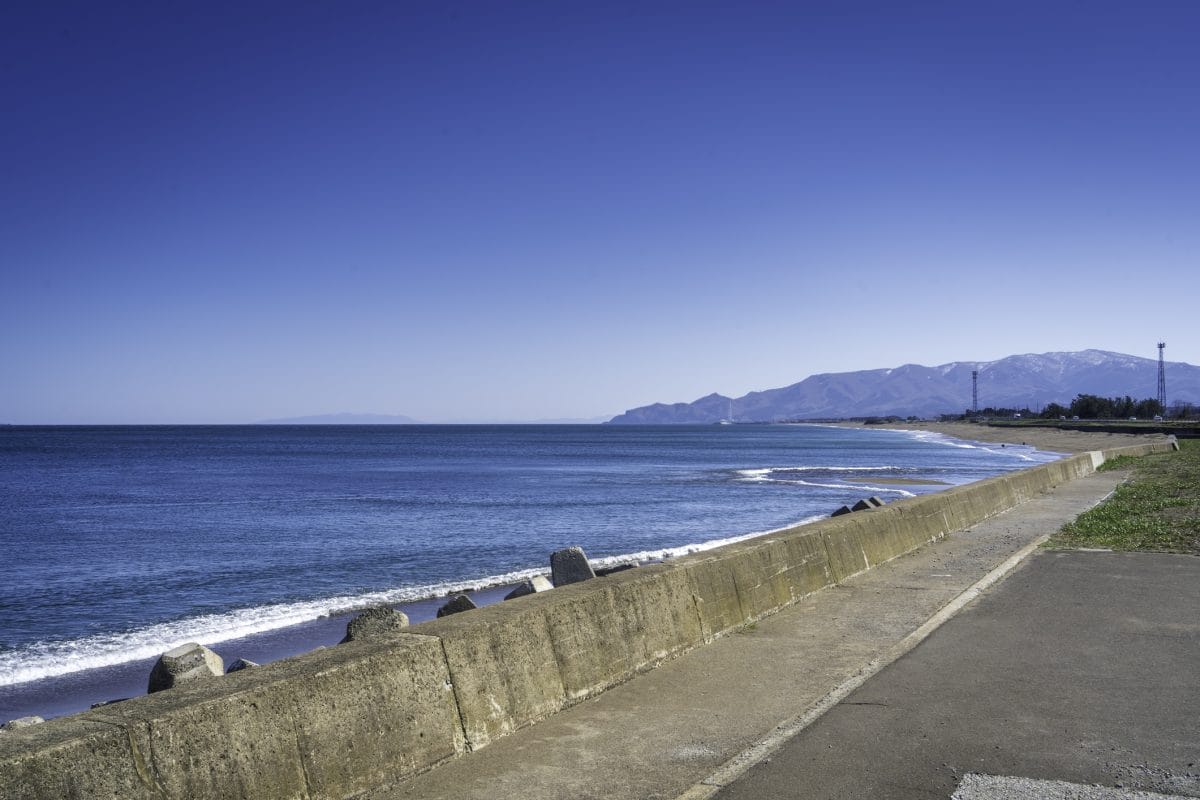
On the inside of the bay, there’s a long series of beaches and manmade obstacles that help to make Uchiura a veritable surf playground. Wedgy lefts and rights, long peeling point breaks, and even the occasional barrel are the byproduct of manmade industrial structures – the best of them being the big concrete breakwater at Shizukari, which can offer semi-hollow lefts in 4-5 foot swells and the even bigger harbour wall at Kuroiwa, again a left, but wallier and punchier.
Much of the rest of Uchiura Bay is long runs of beach break that can be decent but rarely epic. In smaller swells in the 2-4 foot range it’s a beginner and learner haven. Water is chilly in summer but Baltic in winter – 3/2 for June and 5/4s with hood and all the trimmings come Jan.
Hama-Atsuma
Right handers reign supreme along this dark-sand beach just to the northeast of Tomakomai port (the town where you’ll find one of the few surf shops on the island – look up Brayz, and the one in the vid above).
The take-off can be tight into the breakwater and the ride varies between quite dumpy and sectiony and long and peeling, all depending on the angle the swell is coming off.
When it’s good, it can be really good. You want nice SE angled swell that’s got about 8-10 seconds in the period. Couple it with a light wind offshore and it can be very fun ramps to play with, offering top to bottom surfing and occasional airs.
People will also surf any number of sandbank wedges that work up and down the beach; A-frames with generally superior rights working mainly at mid and high tides.
The beach isn’t the prettiest but it’s also not ugly. It’s just that the cars can drive right onto the sand and the main western end of the beach that has the best surf spots can look more like a carpark.
Surf spots in eastern Hokkaido (Sea of Japan side)
The Pacific coast here is the best. This is where you’ll find those glassy walls that adorn the rare Hokkaido features in surf mags.
The beaches are harder to reach and the swell only works in the typhoon season (May-September).
There is something for all levels, though, and the water will be warmer, which is a bonus in a land where it can get freezing.
Bishabetsu
Remote Bishabetsu take ssome time to reach – it’s about 1.5 hours’ drive north of Sapporo on the wooded 231 highway. Good fun that drive and there are a few surfable spots along the way if the swell is bigger as much of the coast there faces a little due east.
Bishabetsu itself has more northerly exposure so can get stormy when there are huge low pressures about in winter, but also comes in as quite a reliable option. The best thing about it is that the beaches that run up to Hamamasuku Kawashimo have decent banks and a shallow entry for some fun waves though they have been known to be a bit rippy.
Shioya
Within striking distance of the city of Sapporo – like an hour’s drive – Shioya can work when there are big low-pressures moving through the Sea of Japan because it has decent protection from N winds thanks to the main breakwater of the Shioya Fishing Harbor.
You can surf up there if there’s size in the forecast because swells wrap in and break right off the concrete. That’s kinda rare though. Mostly, you’ll be hitting knee-high peaks on Shioya Beach, where patches of rock (watch out for those as they’ve scratched many a board) and various sandbars offer good waves for all levels, from beginners to hotdoggers.
Hugoppe
The coastline gets more rugged as you turn the bend – the super-scenic bend – around the shoreline from Shioya to Hugoppe.
This is an area known as the Oshoro Coast and it’s very nice to look at, what with snowy mountains shouldering above lush green forests.
There’s not all that much to surf but we’ve heard tales of nice A-frame peaks working on the rocks at certain points. It’s bound to be a sketchy entry; no idea where you’d even get in.
Where to stay when surfing in Hokkaido?
The season is all important in Hokkaido. Come in the winter and you’ll want to be nearer to the west coast. Come in the summer and you’ll want access to the Pacific.
We think the summer is the superior season for sure so we’ve focused on that here, though we do have one option nearer the city of Sapporo, which is generally an excellent base for exploring the whole island, and a fricking awesome city in its own right.
- Kominka Guesthouse SENTŌ – An historic Hokkaido B&B with old-school design and stripped down double rooms that won’t cost a bomb. They have bikes for rent and you’re really close to some of the best surf breaks in Uchiura Bay.
- Tokachi Nakasatsunai Glamping Resort Feriendorf – Escape to the Hokkaido mountains and woods with this glamping stay. It’s one part alpine lodge, one part outback safari camp. For surfing, the more unknown runs of Pacific coast north of Uchiura Bay are on offer down the highway – home to the isle’s more secret spots.
- Sauna Villa Yoichi – A cute home with its own sauna and really cool minimalist design, this one’s a great access point to the surf coast and scenic roads around Sapporo city, which is around about an hour’s drive away.
Finding suitable accomodation in this part of Japan can be tricky. Options are sparser than around Tokyo and Honshu and many of the best places are set up mainly for skiiers. We’d reccomend using Booking.com’s map feature and picking places that have at least above 8/10 and zooming in to spot options that are near the coast.
When to surf in Hokkaido?
There are two surf seasons in Hokkaido: The summer for the Pacific coast and the winter for the coastline on the Sea of Japan.
For us there’s no question that the summer is the peak time. The water warms up to bearable levels (a 3/2 or a 4/3 should do it) and the swell is generally better, if a little more sparse. It comes up through the SE Pacific as big typhoons cross the tropics there, sending strong groundswell pulses into the eastern coast of the island. This is the time to surf gems like Uchiura Bay.
The cold season means rubber and lots of it. It’s not unusual to be surfing in -10 C or under in thick blankets of snow. That’s because the west coast of Hokkaido is all for the windswell that comes off strong winter storms – the same ones that bring snow from Siberia to the ski fields.
We might use affiliate links in this post. Basically, you click em’ and we get a little something from your booking or purchase. They help us keep offering more and more in-depth surf guides to awesome places all around the globe. So, thanks for that!
