Shikoku Surfing – A Complete Surf Guide to Japan’s Wild Island

Shikoku is one of Japan’s most off-the-beaten-path surf destinations. The island hides like a pebble under the bottom of much-larger Honshu island.
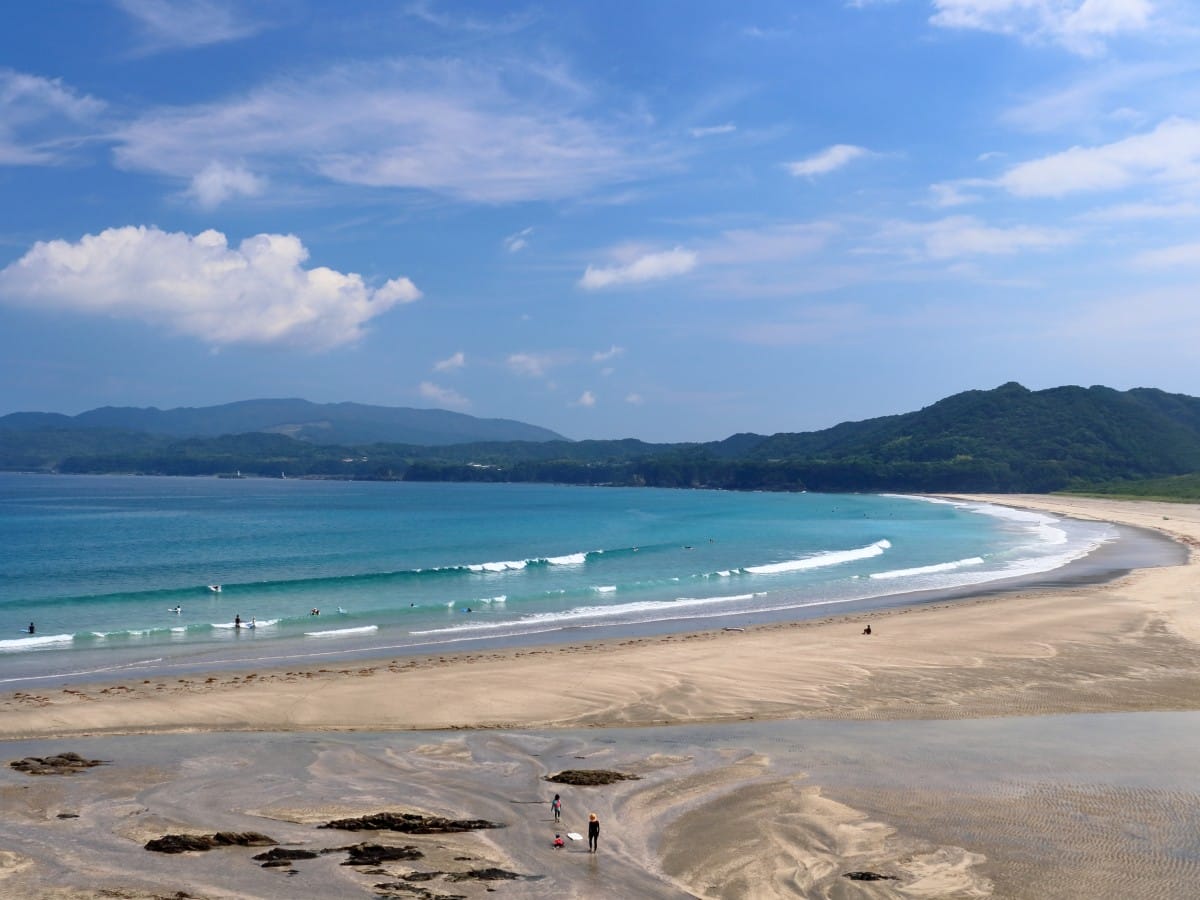
It’s known as a wild isle – think lush landscapes of pine-clad hills, misty mountains and long beaches of both black and white sand. The sort of Japan you dream of, you know.
The surf scene here is far more relaxed than in places like Chiba or Okinawa, making it a haven for those who prefer solitude in the lineup.
The southeast coast is the gold. It’s cut through by countless rivermouths but also has long beaches. During typhoon season, the sandbanks and silt deposits at the estuaries can create world-class barrels and wedges, but there’s plenty of variety.
A car hire is bit essential here, as surf spots are spread out along the coast, and public transport is limited. There are some options if you don’t rent, like a surf hotel in
We might use affiliate links in this post. Basically, you click em’ and we get a little something from your booking or purchase. They help us keep offering more and more in-depth surf guides to awesome places all around the globe. So, thanks for that!
This guide is just one part of our guide to surf travel in Japan
Where to surf in Shikoku?

The southeast side of Shikoku is the only area with surf and actually the best spots are limited to pretty much the top two thirds of that.
You’re essentially looking at the coastline between the towns of Minami and Kochi. That’s the area with the best exposure to southwest and southeast swells, which means wind swell and then the main typhoon swells in August and September.
Any further south of that there are still breaks but they are super local and generally more challenging because the coastal topography changes and the bays are cut up by quite jagged reefs.
Tainohama Beach
Tainohama Beach is a calm, beginner-friendly stretch of sand that rarely sees any serious surf.
The headlands on either side block most south and southwest swells, making it inconsistent for quality waves.
When a strong east wind swell pushes through, there can be small, fun waves, but it’s usually better suited for longboarders and first-time surfers or even groms.
If you’re desperate for a session and don’t want to travel far, it’s worth checking out, but don’t expect anything epic.
Uchizuma
Uchizuma is one of Shikoku’s most scenic beach breaks, nestled in a small, sheltered bay.
It has the potential to hold decent-sized swells, though it remains highly inconsistent.
When the sandbanks align, it produces a well-formed A-frame peak in the middle of the bay, with soft, rolling waves ideal for beginners and longboarders.
The north and south ends of the bay have exposed rocks, so it’s important to watch your positioning.
This is a great place for a relaxed session on a mid-sized swell, though it lacks the power of Shikoku’s better breaks – by that I mean anywhere further south.
Kaifu
Kaifu is Shikoku’s premier rivermouth break, known for its fast, hollow right-handers that fire off the concrete breakwaters that flank the rivermouth when conditions align.
This is a world-class wave on its best days, often compared to Pipeline when it’s maxing out. The waves can run for 200 meters or more, delivering deep barrels and powerful sections.
It’s a high-performance spot really, always attracting a local crew, so expect a competitive lineup when it’s working.
Swell direction is key here—typhoon swells from the southeast or large south swells bring Kaifu to life. When it’s big – AKA whenever it’s working – this is not a spot for beginners.
Shishikui Beach
Shishikui Beach is one of the more reliable beach breaks in Shikoku, offering waves all year round.
It’s fun on smaller days, producing soft, rolling waves that are perfect for beginners and longboarders.
During typhoon season, it transforms into a more serious wave, with bigger, punchier peaks that cater to more advanced surfers.
It’s a popular spot, so expect a friendly crowd, especially in summer. While it lacks the power of nearby rivermouths, it’s a great all-rounder with a welcoming vibe.
This one’s now quite popular with the breakout local surf schools and there seems to be more of them popping up every year.
Yasuda
Yasuda is one of Shikoku’s best SW swell magnets, meaning it comes to life during typhoon season.
The main attraction here is the left-hand rivermouth break, which fires off hollow, mechanical barrels when the sandbanks are right.
These perfect lefts are rare but proper quality when they appear.
If the river isn’t producing, the long beach section can offer consistent waves, making it a more reliable surf spot than many others on the island.
Kochi
Kochi is a bigger town with access to a variety of surf spots, making it a convenient base for exploring the region – especially rivermouth options on the southern side of Shikoku’s surf coast.
While the waves here aren’t anything crazy good in thier own right, the coastline beach breaks that can deliver great waves with the right conditions.
Niyodo, one of the best sandbar setups on the island, is just south, and several other river-fed setups lie to the north.
My two cents: If you want a mix of surf and city life, Kochi is the best place to stay.
Niyodo
Niyodo is a challenging rivermouth break that features fast, heavy right-handers when the sandbanks set up properly and the swell is biggg.
The shifting peaks can make it a tricky takeoff, but smaller swells will mellow it out A LOT and it gets great for logs in the summer months. Typhoon season (late Aug to Sept) will suprise with larger hits and possible cover ups.
Oki Beach
I know I said that loads of the spots south of Kochi were either too local or two unknown to mention here but Oki Beach is an exception you gotta’ make. It’s beautiful – white sands, lush clifftops, and solid sandbar waves the whole way along.
Usually great for all levels because it’s nicely protected from huge swells and is beach break pure and simple. The best spots are the lefts at the northern end of the bay but look south and there’s A-frames galore most tides.
When to surf in Shikoku?

Shikoku is highly seasonal, with typhoon swells dictating the best surf. That means the peak surf season runs from July to October, when strong typhoon systems send consistent, powerful swells to the southeast coast. This is when Shikoku’s rivermouths and sandbars fire, producing hollow, world-class waves at spots like Kaifu and Yasuda.
Outside of typhoon season, spring and autumn (March-May, October-November) offer fun, more manageable conditions, especially at beach breaks like Shishikui and Uchizuma. These months see a mix of local wind swells and smaller south swells, making them ideal for intermediates and longboarders.
Winter (December-February) is the least consistent season, with weaker swells and colder water. However, if you’re in Japan during this time, you can still find rideable waves on the more exposed beaches, though the best breaks tend to go dormant. It’s not at all a bad time for beginners but just be warned that not all the surf schools/rental places will be open so that could be a bit tricky.
One thing we wouldn’t skip on is sunscreen.
I use Suntribe’s blocks because they’ve made a real effort to strip out any unneccessary chemicals.
Plus, they offer Surf Atlas readers 10% off orders with code Surfatlas10.
Where to stay for surfing in Shikoku?

Shikoku’s southeast coast is the best place to stay for surfing.
I’d say it’s kind of essential to have a car, as many of the best waves are spread out.
The only real alternative is to stay somewhere really near one of the beach breaks – Shishikui is likely the only option on that count. I would say Oki but there’s hardly a single hotel in the area.
- The Roam – This is a really, really cool beach stay. A forest house that oozes Japanese style, it’s set between the woods near the Niyodo coast and Kochi. Good for surfers. Amazing if you like remarkable architecture.
- PavilionSurf&Lodge – A proper little surf hostel-lodge thing with its own rental spot and surf school. It’s right beside the beach break at Shishikui so it’s easy-peasy to surf from here.
We might use affiliate links in this post. Basically, you click em’ and we get a little something from your booking or purchase. They help us keep offering more and more in-depth surf guides to awesome places all around the globe. So, thanks for that!

What about board rentals? We’re in Kochi for only a day in mid-March and are having trouble finding a place that’s open.
Hata Dojo (https://www.hatasurfdojo.com/) might be worth checking. Not sure if that’s too far out of Kochi for you. They’re further south
Hi Joseph,
Thanks for the very insightful article.
In most of articles I read that Shikoku works well with S and SW swells as it should due to its exposure. But what about NE o E swells? I will be in Japan this whole of March and I am seeing a potential longer period NE swell mid month. Do you think any of it will get in Shikoku? Not ideal direction but energy might be there.. Should I focus on a more exposed, maybe up north, part of Japan? I am not looking for days of surf, but if I get lucky with a two day windows or something, it will be good already 🙂
Grateful for your advice.
Cheers.
Yann.
Hey – good question. To be honest with you, I doubt anything with too much N in it can work that well here. Like you say: The spots are mainly setup for S-SW and SE. I wouldn’t say definitely not – I’m trying to recall if it’s Shikoku that someone was telling me about that has some lefts that only work with NE swells or not. I CANNOT remember though! I think the best bet here is to reach out to someone local – Hata Dojo, who are based in Shikoku might be able to offer some better insights. Enjoy the trip though!
Hi Joseph thanks for the answer ! Yes I texted them to see what they think. I anyway will go and check the island, the nature looks amazing. As for the waves, if not the north, maybe the soutern part of the island will get some swell. I will let you know if I see some waves ahah.
Thanks again.
Yann
Hi!
I am a surf beginner going to Shikoku in September. Are there any beaches that are beginner friendly that time of year? Also I need to rent equipment. Is that easy?
Hey – Shikoku is still very much emerging, as is Japan generally, so you might find rentals a little thin on the ground. Hata Surf (https://www.hatasurfdojo.com/) are pretty much the go-to guys there now. Contact them and they should help you RE spots. It’s typohoon season then, so no telling what you’ll get really. Enjoy!