The 27 Best Beaches in the Algarve – For Surfers & Non-Surfers

The Algarve is the sort of coastline you could spend a lifetime exploring and still feel like you’ve barely scratched the surface.
Stretching from the Spanish border all the way to the wild cliffs near Aljezur, it’s a region of honey-gold coves, giant Atlantic bays, village-backed surf beaches, big resort strands, and hidden pockets that take a bumpy dirt track and a bit of stubbornness to reach.
Along the way you’ll meet every style of beach imaginable. There are calm-water family bays, cave-cut coastlines made for paddling and kayaking, surf-rich beaches where winter swells hit head-on, and long crescents of sand where the Algarve feels more like a desert frontier than a holiday postcard.
This guide brings all that together into one definitive listicle. We’ve picked the brains of surf experts and travel gurus to get a full rundown of all the top beaches in this amazing region, for both surfers and non-surfers alike.
>>Get more inspiration for surfing in Portugal and the Algarve
Should I got to the western Algarve or the southern Algarve?
The Algarve has two very different coastlines.
First there’s the west Algarve, the wilder, rawer side that faces the Atlantic swells head-on. This is where dramatic cliffs dominate the skyline, where rivers cut through ancient valleys onto wide sands, and where small surf towns like Aljezur, Carrapateira, and Sagres stay low-key and quietly cool. It’s less developed, harder to access, and much emptier than the south. And that’s a huge part of its appeal. Surfers particularly love it – the west gets the brunt of all seasonal swells, making it a year-round surf zone that tends to favour intermediates and above.
Then there’s the south Algarve, which curves gently east from Cape St Vincent toward Faro nearer the Spanish border. This coast is warmer, more sheltered, more resort-oriented, and more recognisable from the classic Algarve brochure shots. It’s where you get those golden cliffs, clear blue waters, sea caves, and hotels perched on the tops of ochre bluffs. Beaches are easier to reach, often with big car parks, beach bars, sunbeds, calm water for swimming, and plenty of family facilities. The winter can still bring excellent surf – especially around Lagos, Zavial, and Martinhal.
The rule of thumb? Choose the west for surf and solitude. Choose the south for calm waters, scenery, and holiday ease.
Beaches in the West Algarve
Praia de Odeceixe
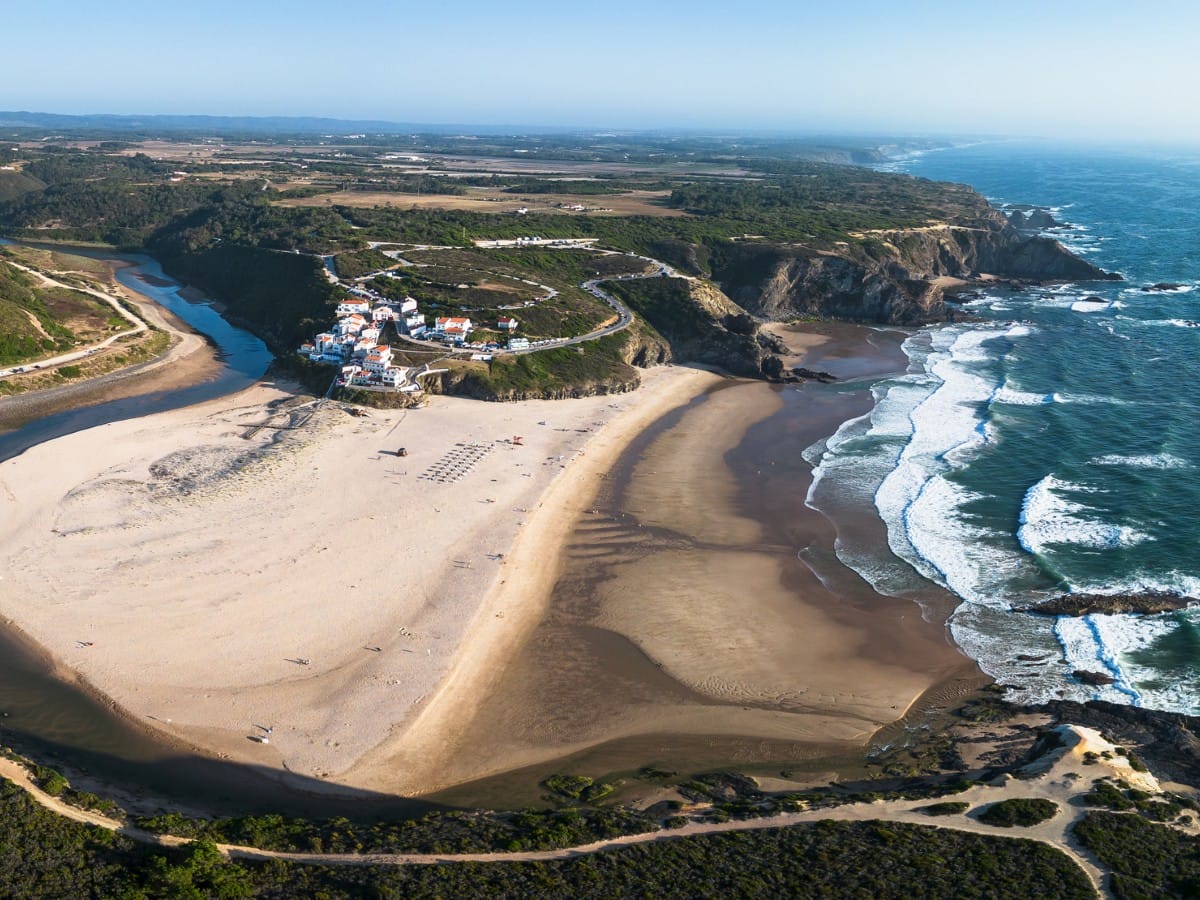
Praia de Odeceixe sits right on the border between the Algarve and the Alentejo. It’s a river-cut beach backed by the little whitewashed village of Odeceixe itself.
There’s a wonderfully remote feel to the whole place in spite of the litle village that clings to the cliffs, especially outside of July and August, when the crowds fade and the surf starts to pulse.
You reach the beach by following a winding road down from the main village of Odeceixe, passing cafés with ocean views and the odd surf shop offering rentals. At the bottom, the sand spreads out in a wide fan shape where the river meets the Atlantic, creating a calm-water side on one edge and proper open-beach exposure on the other.
Staying in the village above is a charm. The cottages here are some of the cosiest in the whole Algarve, perfect for stormy autumn weekends where you can watch the waves hammer the coastline and then wander down for a morning surf when you wake.
The surf? A consistent sand-bottomed beach break with mellow summer waves on the river side and punchier peaks on the main beach. Autumn and winter can get very good here, with clean left and right peaks and offshore winds funneling down the valley. Be wary of rips.
Praia da Amoreira

I’ll just go right ahead and say it: Praia da Amoreira is one of the most beautiful beaches in the entire western Algarve
A wide wedge of honey colored sand that’s sliced down its centre by a turquoise river that forms calm lagoons at low tide, it’s the closest major beach to Aljezur but somehow still feels remote, probably because of its spread of dunes, open space, and the big, pine-covered cliffs that loom over the northern side of the bay.
The southern side has a small beach café, but the river blocks road access, so you need to choose your side before you drive down.
Swimming here is excellent when the tide is right as the river turns into a warm, clear pool ideal for families, while the main bay offers rolling Atlantic waves. However, rips can form along the southern section by the river mouth, especially during bigger swells, so always be careful.
The views from the cliffs above the north side are spectacular. This is classic Vicentine Coast territory with that endless-wild-Atlantic feel.
The surf? In summer you’ll usually find easy, beginner-friendly peaks inside the bay, especially mid-tide. When it’s bigger, the northern outside section can fire with A-frame bombs that suit confident intermediates and advanced surfers. It’s exposed, consistent, and great on NE–E winds.
Praia de Monte Clérigo

Tucked just north of Arrifana, Praia de Monte Clérigo feels like its own little village at the edge of the world. A cluster of low houses and beach cafés cling to the slope above the sand, giving it a lived-in, slightly bohemian atmosphere that’s missing from the bigger western Algarve beaches.
You can stay right on the water here, step out with a coffee, and be on the sand before the sun burns through the morning mist.
The beach itself is broad, backed by cliffs, and broken up by reefs and rock shelves toward the southern side. At low tide, tide pools appear, making it a surprisingly good spot for families and casual swimmers who don’t mind dodging those heavy shorebreaks and looking for crabs or whatever.
For surfers, it’s a bit of a mixed bag; one of the more inconsistent spots in the region. The peaks shift constantly, the banks can be wonky, and wind exposure is high. But when Monte Clérigo does line up, it’s fun and playful, especially around mid tide.
The surf? A combination of beach breaks and reef influence, usually most workable on smaller swells. It suffers in onshore winds, and the peaks are famously shifty, but clean mornings can offer rippable left and right walls. Better surfers often check Arrifana or Amoreira first.
Arrifana

Arrifana is arguably the most famous surf beach in the western Algarve. Sitting on the cliffs overhead, you’ll look down upon a big crescent of a bay sheltered by high cliffs, with a dramatic rock stack guarding the southern end.
It’s a spectacular thing to behold, and a very reliable surf zone, attracting everyone from local rippers to surf schools to digital nomads who base themselves in the village above. The road down to the beach is steep, so most people park at the cliff-top lot (which can overflow massively with vans in summer) and walk down.
The beach has excellent facilities. Surf rentals, cafés overlooking the bay (fun for apres surf beers), toilets, and plenty of restaurants up in the village. It’s one of the best all-round places in the Algarve for mixed groups -surfers can head out for an hour while non-surfers chill on the sand or grab a drink at the beach bars.
The surf? Very consistent. The main beach break handles small-to-medium swells beautifully, with clean rights and lefts. On big winter days, the harbor wall comes alive – that’s a serious right hander for experts only. My summary: Arrifana is one of the Algarve’s most versatile spots.
Praia de Vale Figueiras
Vale Figueiras is cut off from society and that’s why it’s lovely.
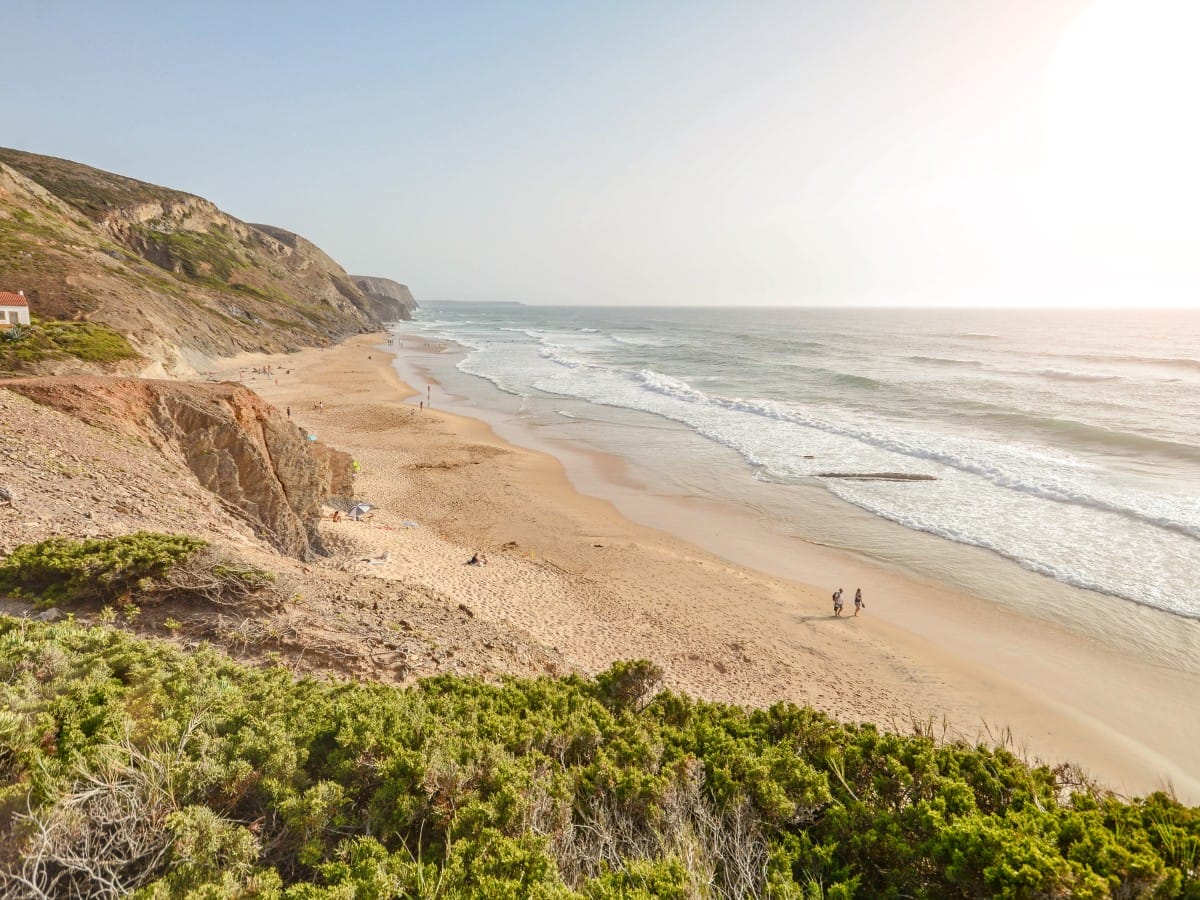
To get there, you follow a long, bumpy dirt road through rolling hills and eucalyptus groves until the land suddenly drops away to reveal a sweeping, cliff-lined beach facing straight into the Atlantic. There’s very little development. It’s just you, the gulls, and the ceaseless swell.
The sand is wide, the cliffs high, and the wave energy strong. I woudn’t swim here but the surf can be great, though be wary of rips.
The scenery is outstanding, especially late in the day when the cliffs turn copper and the beach empties again.
If you’re staying in Aljezur, this is one of the best adventure-style outings. It just feels far more wild than Arrifana or Monte Clérigo and rewards those willing to drive the last stretch of dirt track.
The surf? Highly dependent on swell size. On small-to-mid swells, it’s a great learner-to-improver beach break with forgiving peaks across the bay. When the swell gets big, Vale Figueiras transforms into a heavy, fast A-frame spot with chunky walls working off various sandbanks and reef patches.
Get insured. [ad]
I use SafetyWing. They’ve got two plans: Essential and Complete. Surfing is included as standard in both.
Things I like:
- Buy while you’re abroad. No penalties if you’re already traveling.
- Flexible packages. You can either get it as a subscription, so it rolls on until you cancel, or pay for certain dates.
- Surfing is included as standard in the Essential plan. No add-ons needed.
Bordeira
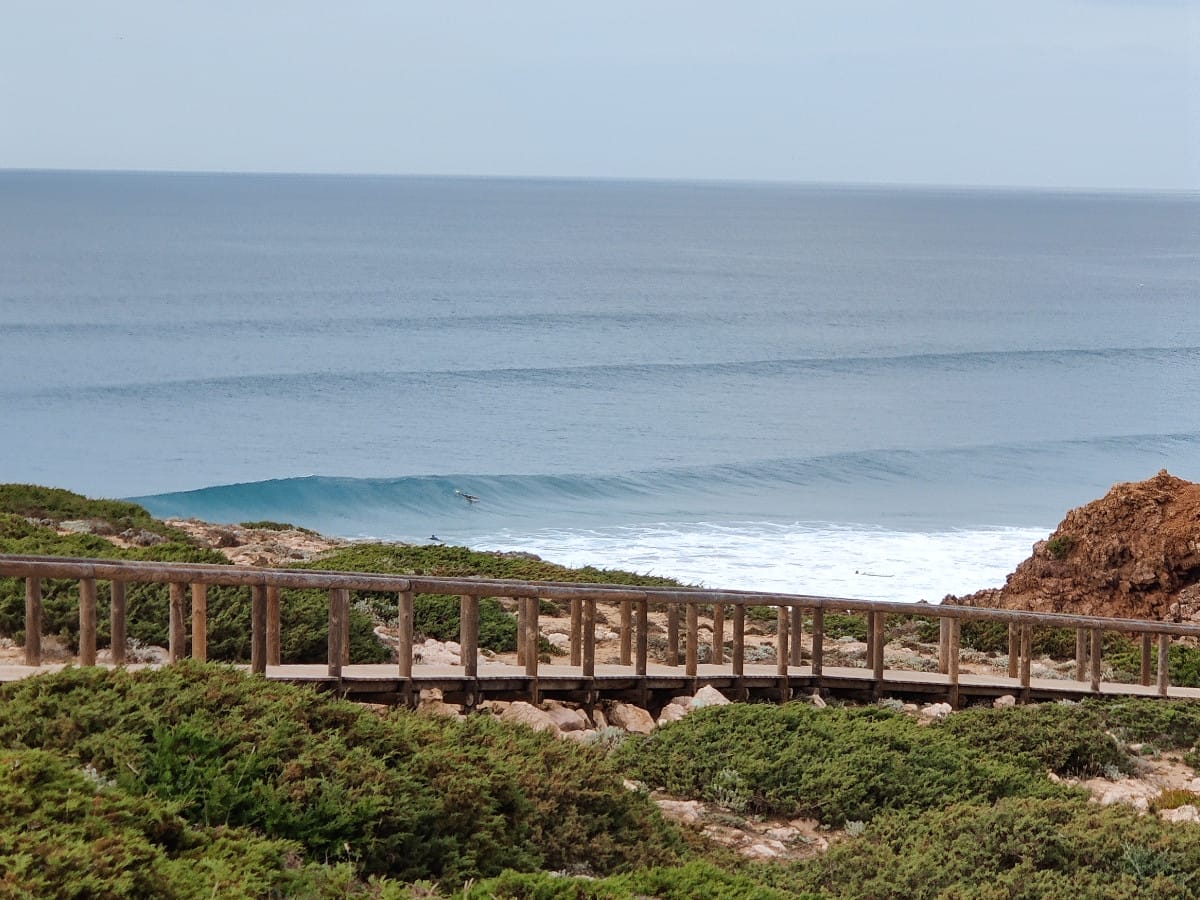
Bordeira is a giant, open sweep of sand that looks more like a Moroccan desert landscape than a typical Portuguese bay – honestly blink and you’d think you were in Mirleft or something.
The sand is really wide, stretching right back to the valley where a river forms beautiful lagoons as it winds under the cliffs. Theentire area feels untouched and elemental, with walking paths winding across the heather-topped headlands above.
Access is easy. Drive through Carrapateira toward the ocean, park near the boardwalk, and wander over the dunes or along the cliff edge. The views from the limestone cliffs to the south are some of the best in the Algarve, especially at sunset.
Carrapateira village just inland has a mellow, authentic feel with good cafés annd soem REALLY good surf stays if you like to be surrounded by nature.
The surf? Bordeira is a swell magnet and can get big – sometimes huge. There are powerful beach breaks across the bay and a quality left-hander that wraps around the southern cliffs, barrelling on bigger days.
Praia do Amado
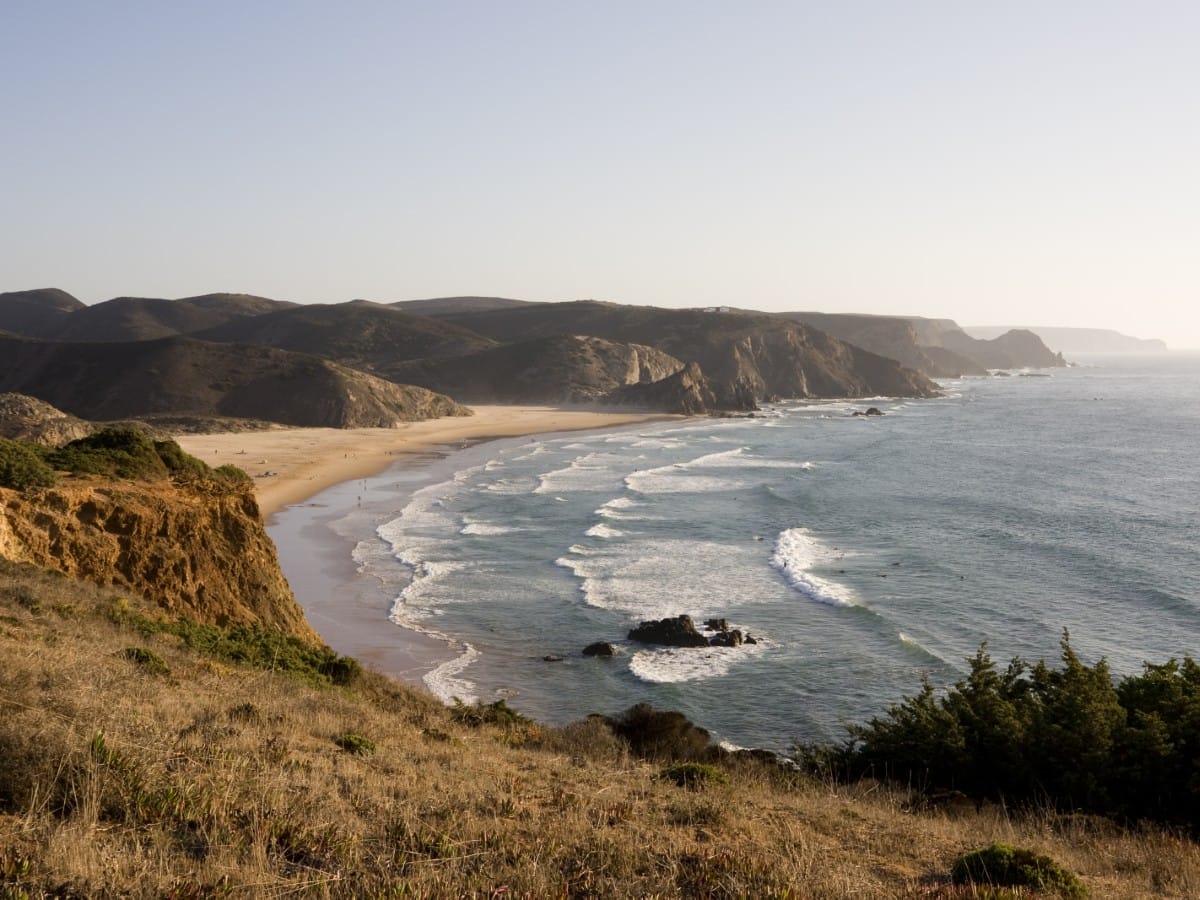
Praia do Amado is one of the most famous surf beaches in Portugal and a major hub for lessons, surf camps, and competitions. Set just south of Carrapateira, it’s a broad bay framed by reddish cliffs and reached by a winding road that drops from the coastal nature reserve straight toward the water.
Surfers will be everywhere if there’s even a whiff of swell, as there often is.
Facilities are very good for such a wild-feeling beach. You’ll find ultiple car parks, a little surf rental spot, and a café bar that’s usually open in the summer. The beach is big enough to handle crowds, though beginners can congregate heavily in summer.
Despite being a surf hotspot, Amado is also a great spot for non-surfers, with rock pools at low tide and long sandy stretches for walking.
The surf? Very consistent, picking up even small swells. A mix of lefts and rights, usually best mid-tide. It’s a solid option for beginners in smaller summer conditions and a fun, punchy beach break for intermediates the rest of the year. Because of the surf schools, it’s rarely empty.
Castelejo

Castelejo is a quintessential west Algarve beach. Enclosed by high, dark cliffs, boshed by powerful waves, surrounded by big views, and coming with that raw Atlantic feel, it sits north of the lovely surf village of Vila do Bispo and Sagres, accessed via a scenic road through windswept hills that eventually drops into a valley opening directly onto the beach.
The cliffs here are some of the most striking in the region. They’re stacked, folded, jet-black shale rising like ancient monuments fromthe sea, which comes right up close at high tide. It’s a great spot for photography, walking, and exploring rock pools. Crowds are usually modest except in mid-summer.
The surf? Very consistent and often powerful. Castelejo is one of the better surf beaches north of Sagres, picking up any northwest swell and delivering punchy beach breaks across the bay. The lefts near the cliffs can get really fun. Best on E–NE winds and mid-tide. Popular with surf schools in summer but often fantastic for intermediates the rest of the year.
Ponta Ruiva

Ponta Ruiva is a wild one – a rocky, hard-to-reach surf beach west of Sagres, famous for its reddish cliff and the long left-hander that wraps along its point.
This is one of the most remote-feeling surf spots in southern Portugal, accessed via dirt tracks that can get rough after rain and rarely treat the rental car too well. It’s not for casual beachgoers; it’s more of a surf mission or a photographer’s dream.
The coastline here is jaw-dropping. Look up to see jagged cliffs, look forward for big Atlantic swell lines. Of course, there are no amenities at all. Bring water, food, and whateever else you might need..
Sunbathing is possible but the beach is stony in places and space can shrink at high tide. Swimming is not recommended due to rocks and strong currents.
The surf? One of the best lefts in the Algarve when it’s on. Ponta Ruiva is a wave with long walls, punchy sections, and a lot of power. It works best on medium-large swells with easterly winds. It’s not really a beginner spot.
Praia do Beliche
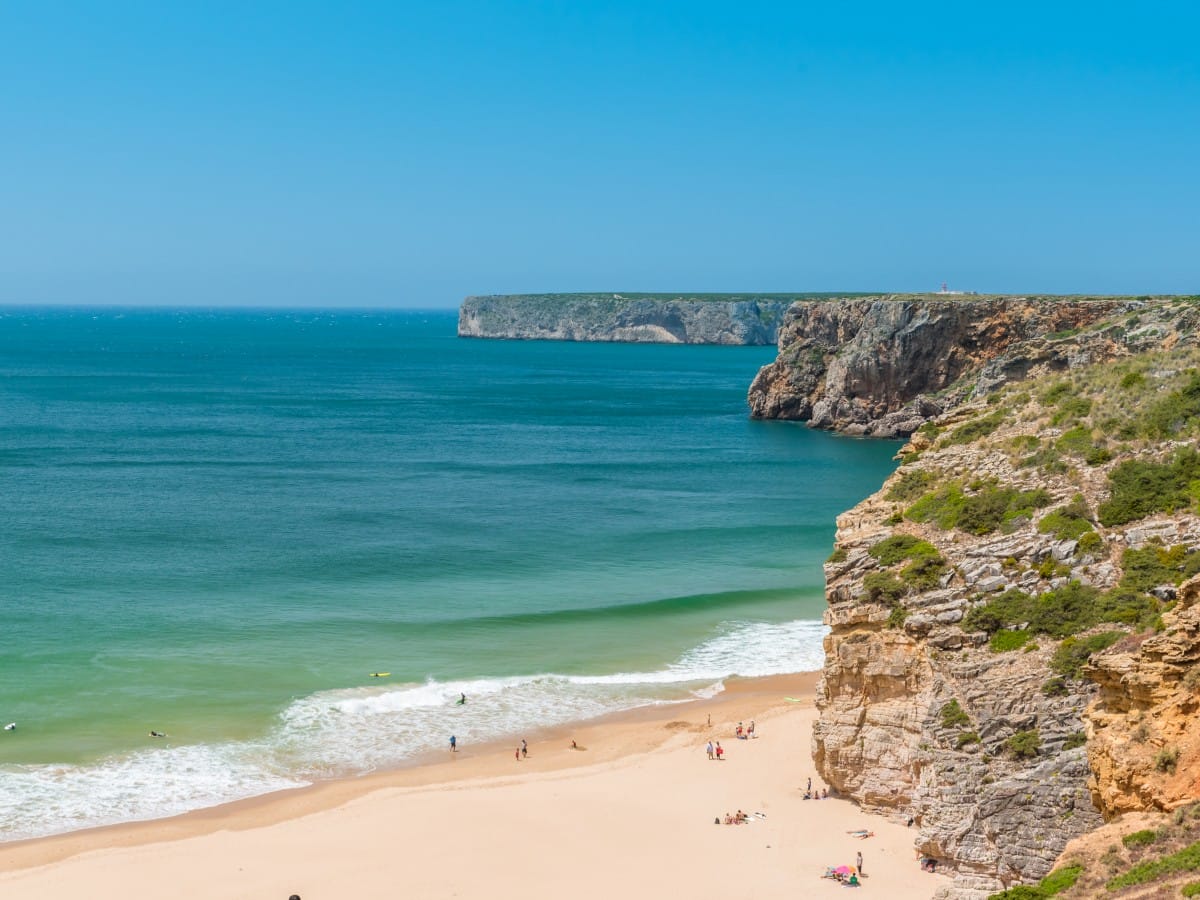
Praia do Beliche is arguably the most visually stunning beach in the Sagres area. It’s a south-facing amphitheatre of soaring cliffs and clean golden sand reached by a long staircase descending from a cliff-top car park. Cool, huh?
The drive from Sagres takes only a few minutes, and the place is popular with day-trippers, but the enclosed feel and dramatic scenery make it feel special every single darn time.
The cliffs provide shelter from the northerly winds, so Beliche can be a fantastic beach for sunbathing even when other nearby spots are blown out. The water is clear, and swimming is usually pleasant, though waves can still punch through in winter and there are rips, so be careful! At high tide the beach narrows considerably.
The geology here is impressive. Look for the streaks of ochre, orange, and white on the cliffs.
The surf? One of the best waves in Sagres when it’s on. Beliche can deliver fast, hollow beach-break barrels on the right winter swells. It’s a heavier wave than Tonel and often more hollow. Advanced surfers rate it highly, but it can be crowded and slightly localised (nothing too intense, just typical etiquette).
Praia do Tonel
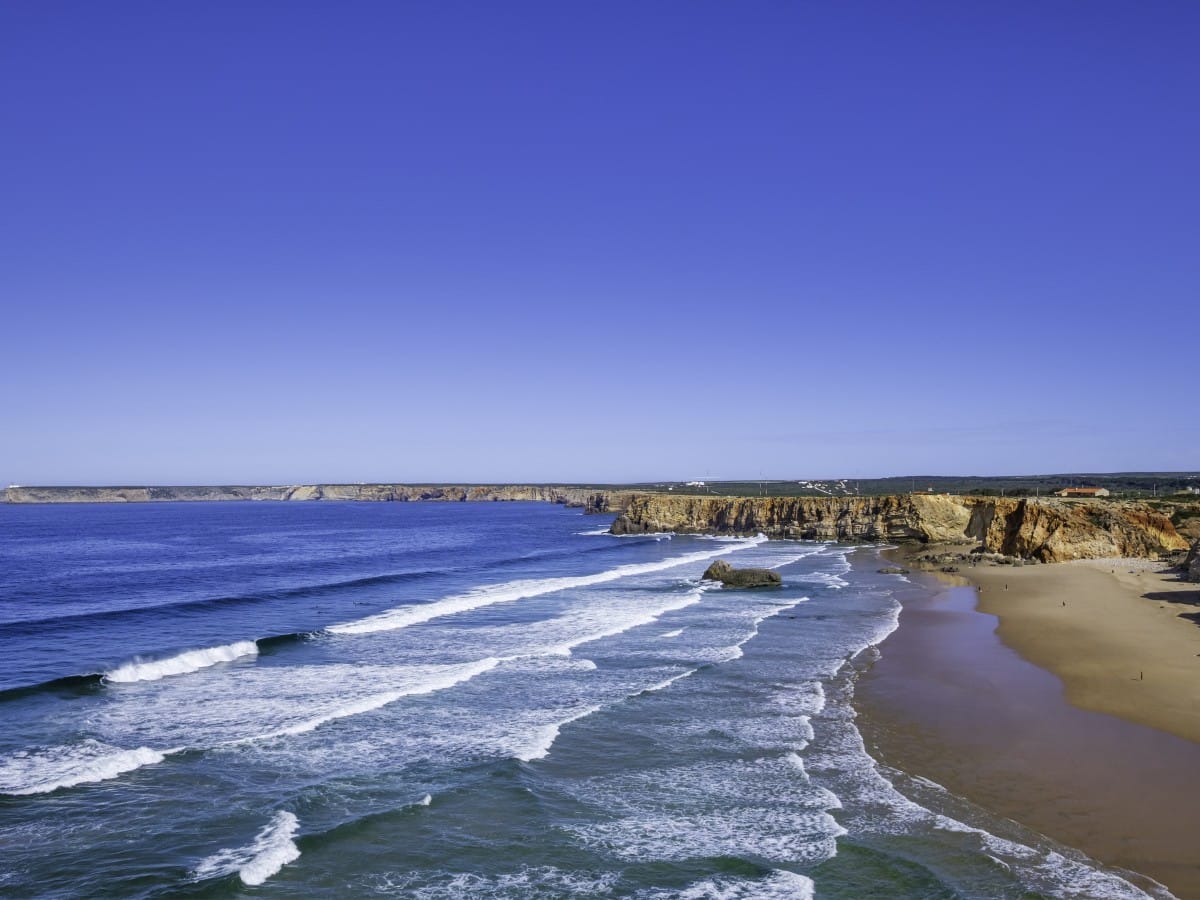
Tonel is the main surf beach in Sagres. Think of it as the go-to spot for lessons, for casual sessions, and for anyone staying in town who wants to paddle out without driving anywhere.
It sits west of the Sagres fortress, exposed directly to NW swell and W swell, with a wide sandy bay that handles shifting banks pretty well. The backdrop of the fortress walls gives the place a dramatic feel, and the rock stacks only add to it.
It’s very cool. Very cool and very popular. In summer, surf schools dominate the southern side; in winter, locals fill the lineup. But the beach is large enough that you can usually find a peak.
Facilities are solid: Good parking, a beach bar/café offering nearby to the lots, board rentals, and easy pedestrian access.
Tonel is a great all-round base – walkable from the centre of Sagres, consistently surfable, and backed by cliffs that offer good wind shelter on northerly days.
The surf? A consistent beach break with punchy left and right peaks. Works on a wide range of swells and tides, though mid-tide is usually best. It can get very crowded in summer. Ideal for intermediates on smaller days; a legitimate performance wave in winter. Can get huge too.
Beaches in South Algarve
Praia do Martinhal
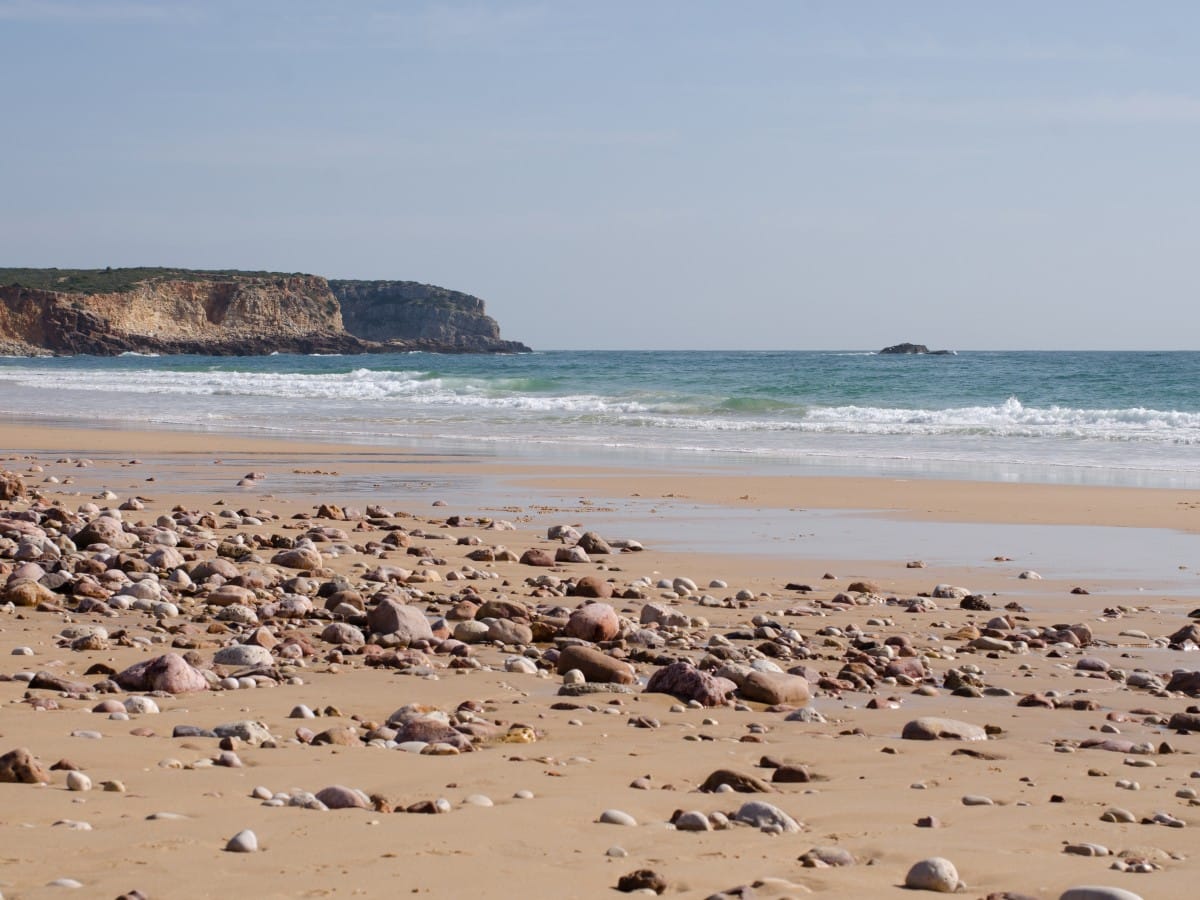
Praia do Martinhal is a calm, sheltered, family-friendly beach just east of Sagres, backed by upscale hotels and low-rise apartments that form the Martinhal resort area.
The sand is quintessentially Algarvian – soft and golden. The water clear and usually gentle, and the whole atmosphere feels more polished and relaxed than the west coast beaches, which are still only up the road.
From here you can walk into Sagres town in around 30 minutes, making it ideal for families who want a quieter base but still want the option of restaurants and bars.
Winds can pick up in the afternoons, which is great for windsurfing. The dark islets offshore add a scenic element, and the long promenade behind the beach is great for evening walks.
The surf? Usually small and soft, great for longboards or kids learning to paddle into tiny waves. Martinhal doesn’t get the punch of Sagres’s Atlantic beaches, so it’s not a top-tier surf spot, but is often used for learning by local surf schools.
Praia do Barranco
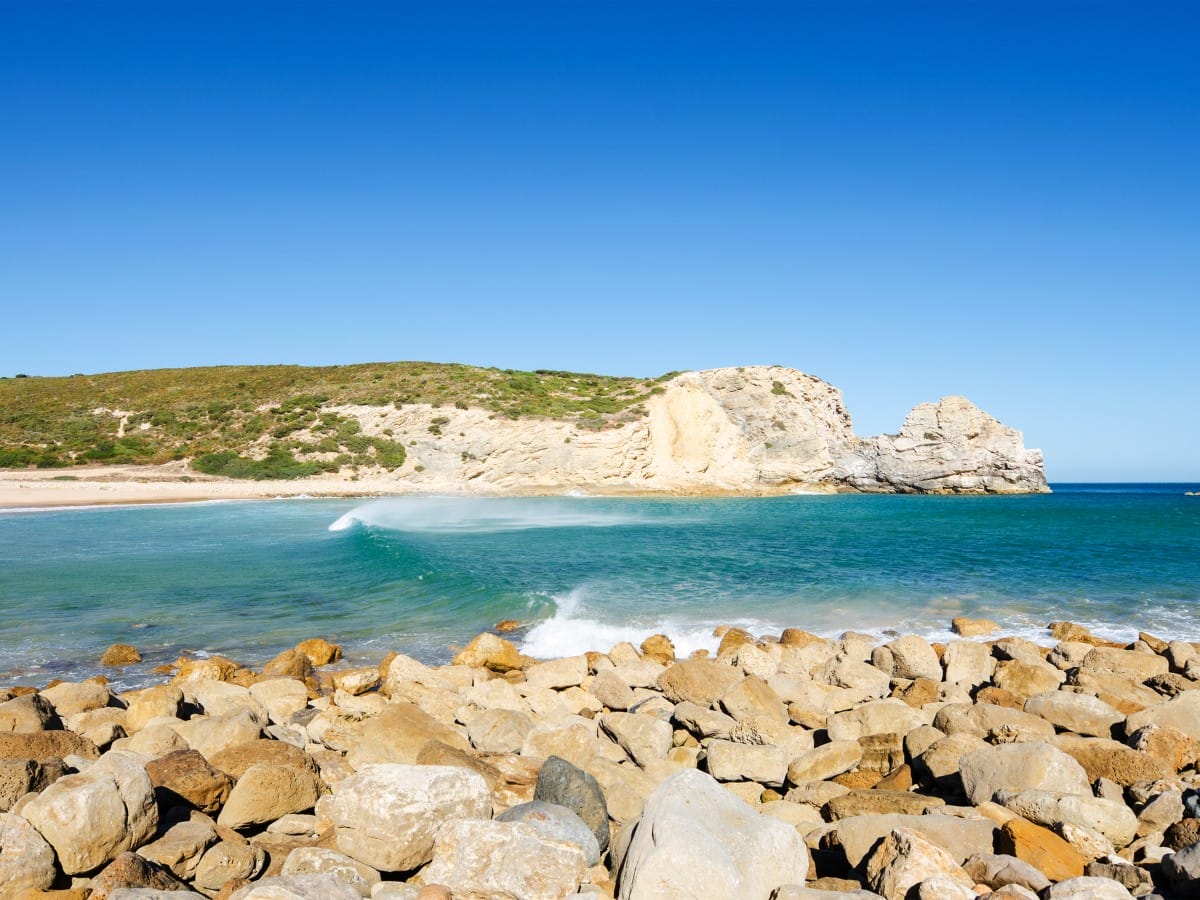
Barranco is one of the more untamed south coast beaches. It’s a remote, valley-cut cove reached by a rough, narrow road that winds through a steep green ravine. It feels far more like the west Algarve than the south, with rugged cliffs, scattered trees along the valley floor, and a river trickling behind the sand. Can you tell I really like it here?
The headlands on both sides give the beach a cosy, enclosed feel, and the scenery is absolutely beautiful. Because the access road is rough, Barranco never gets as busy as other southern beaches, which makes it one of the best spots for escaping the Lagos/Sagres crowds.
The surf? There is a wave here, but it’s highly inconsistent. Barranco’s angle protects it heavily, so only medium-to-large swells wrap in. On the right day, it can offer a soft, log-friendly wave.
Praia do Zavial

Zavial is a jewel of the south Algarve, at least as far as surfers are concerned. This beautifully clean beach with aquamarine water, fine sand, and dramatic cliffs at both ends. is famous for having one of the best waves on the south coast.
It’s also great for non-surfers. Think a cliff-cradled beach with nice golden sand, shady crevices in the rocks and lots of space.
Access is very simple: drive down through Raposeira (a lane diverts off from the main coast road just east of the town), park at the large lot behind the dunes, and stroll right onto the sand.
The vibe is relaxed, slightly bohemian, and very international. Many surfers base themselves nearby due to its winter surf potential but also closeness to the west coast options (which are 20-30 mins away by car).
The surf? A high-quality right-hander that breaks along the western point during stronger swells. This is one of the most powerful waves on the south coast – fast, wrapping, and hollow when it’s big. It suits confident intermediates and advanced surfers. On smaller days, the main beach offers playful peaks. On big winter swells, expect a full house of experienced locals.
Praia das Furnas
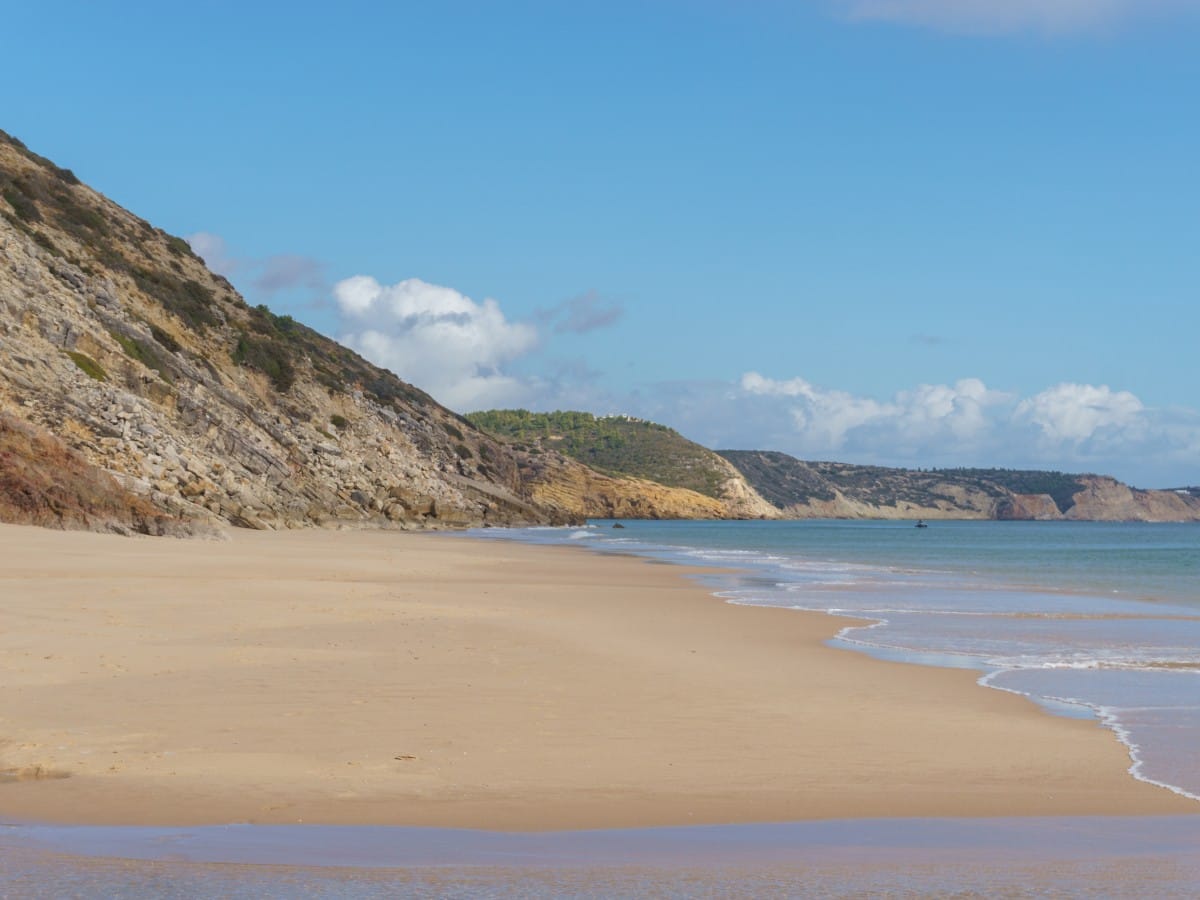
Praia das Furnas is one of the most pristine and undeveloped beaches on the entire south of the Algarve. Don’t confuse it with the Furnas near Vila Nova de Milfontes – this one sits close to Sagres and feels like a slice of untouched southern shoreline, with pale golden sand, clear blue water, and dramatic rocks and sea caves dotting the cliff edges.
Access is straightforward but certainly trickier than the more touristy beachs. You follow a small rural road and park above the beach, then walk down a path into the cove. There are no facilities, so bring everything you need.
The water can get beautifully clear, though the beach shelves fairly quickly so be wary of rips and things. The sea caves and rock formations make it a dream spot for photography and exploring when the tide is low.
Even in summer, Furnas rarely feels busy. The cliffs offer pockets of shade and protection from the wind, and the absence of development gives the place a wonderfully peaceful vibe.
The surf? Very limited. The beach faces a bit east, so it’s hard for swell to work in. Never say never, but Zavial is so close it’s a shame to skip that.
Salema Beach
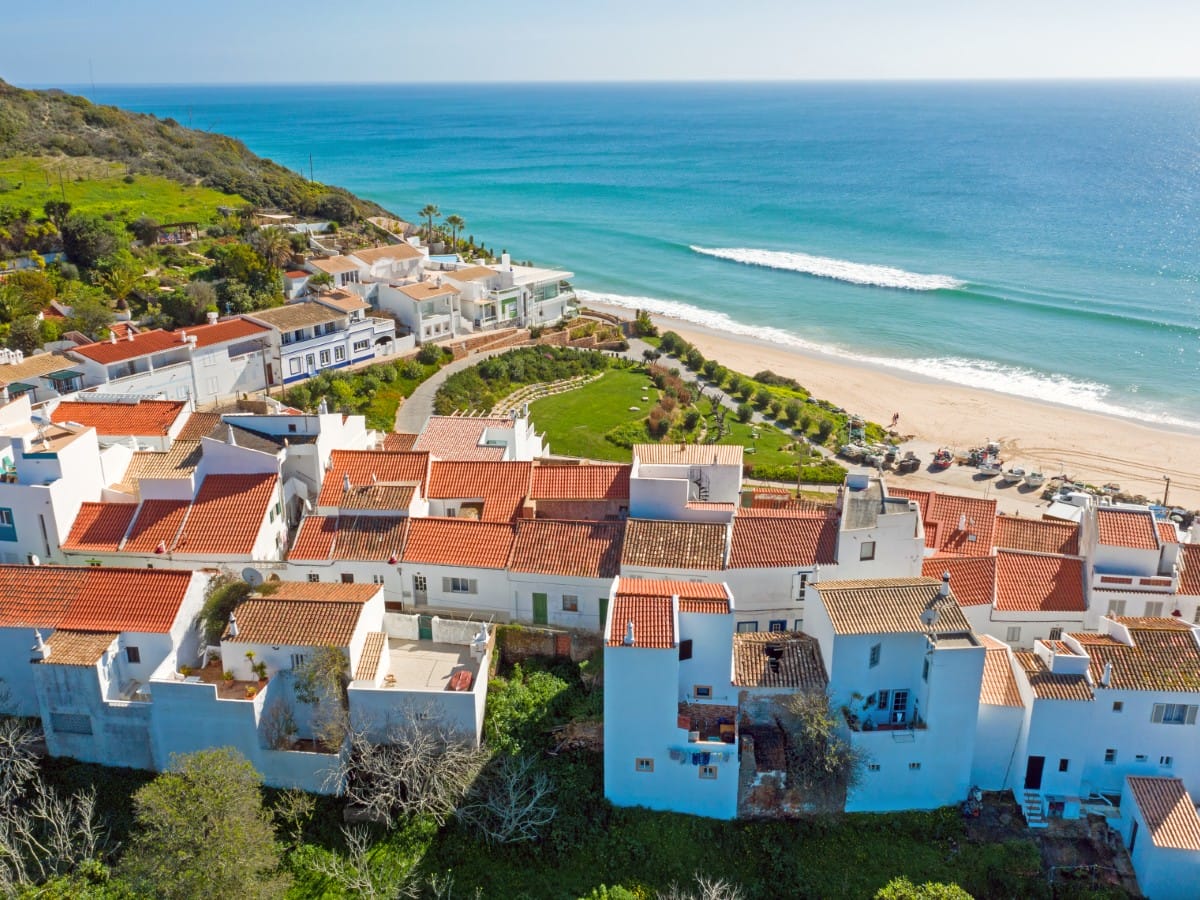
Salema is a charming, traditional fishing village with a lovely sandy beach that curves gently between two low headlands.
The town has escaped the overdevelopment found elsewhere on the south coast (well…almost), giving it a relaxed, quietly sophisticated vibe. I have to say, there’s a bit of what I call the Rick Steves vibe about it – like it’s a theme park version of the Algarve fishing village. Still…lovely nonetheless.
The beach is spacious, clean, and excellent for swimming, thanks to relatively calm water. Sunbeds and umbrellas are available in summer, and the town is famed for its seafood. I also reckon the town offers some of the finest sea-view aparthotels in the Algarve. They’re chilled and more stylish than what you get in Lagos or Faro.
There’s also some interesting geology – dinosaur footprints have been found on the rocks east of the village, and coastal paths lead to scenic cliff viewpoints between here and Burgau.
The surf? Salema picks up occasional winter pulses but is not a consistent surf beach. When waves arrive, they are generally small, playful A-frame reforms suitable for beginners or longboarders, but can also be nice and punchy.
Praia das Cabanas Velhas
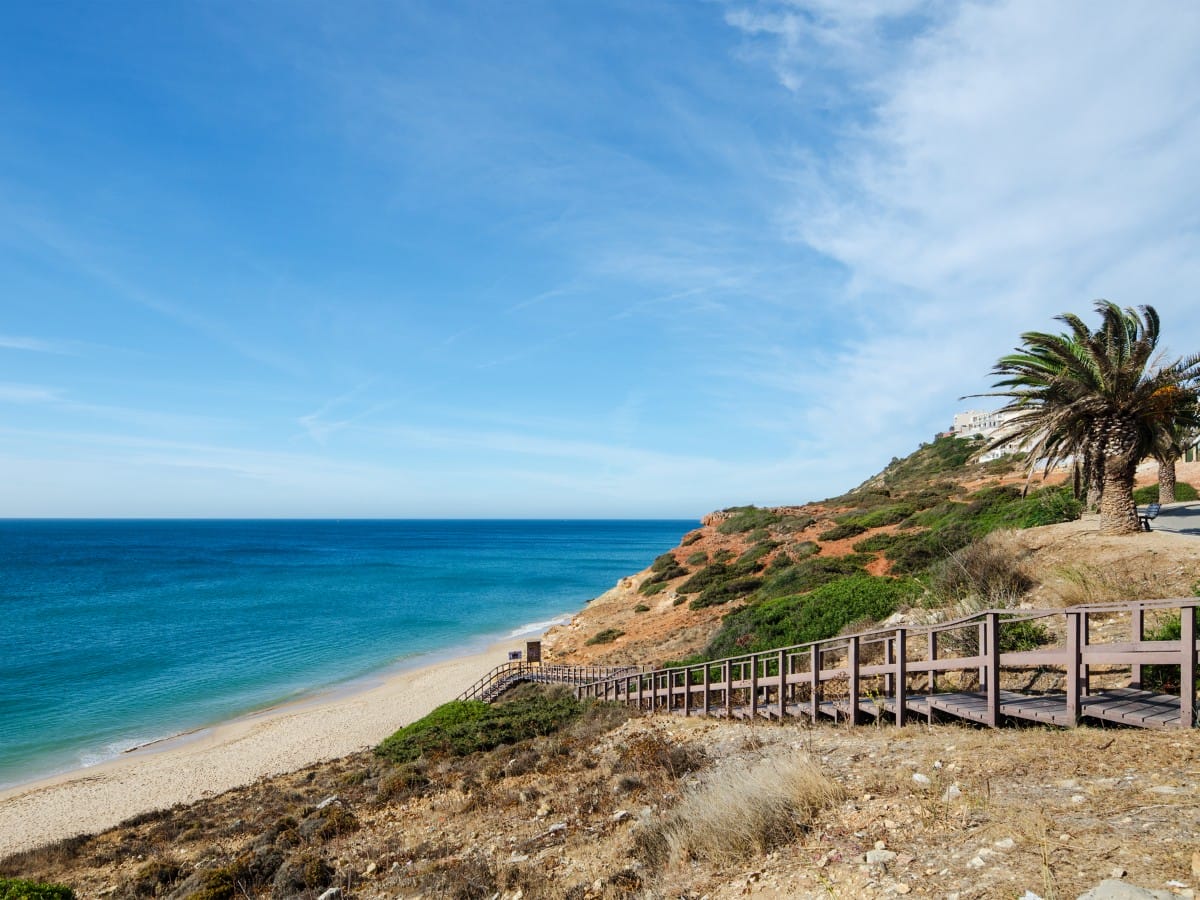
Praia das Cabanas Velhas is a gorgeous, lesser-known beach between Burgau and Salema, sitting beneath steep ochre cliffs that glow orange at sunset (it’s a personal fav for the golden hour).
The bay opens at the end of a sandy track that heads south from the village of Barrancão. If the tide allows, you can head along the beach on the soft white-tinged sand to get under the big rocky cliffs. It’s great walking.
It’s really a bit of a local secret this one, offering a decent wave on its day, almost total seclusion, and clear clear waters.
The surf? Generally small and sheltered, but Cabanas Velhas does get winter waves on the right swell and wind combo. It’s fickle, though – sometimes delivering clean, soft, longboardable waves, sometimes barely breaking at all. Worth a drive by if you’re headed west from Burgau and you think the swells might be lining up.
Burgau

Burgau is a delightful small resort town east of Salema, often called the “Portuguese Santorini” thanks to its whitewashed houses tumbling down a steep hill to a horseshoe-shaped beach.
The bay is sheltered, warm, and peaceful. A great spot if you want an R&R holiday of swimming and sunbathing. The village has a friendly, lived-in feel, with locals, expats, and families all sharing the same narrow streets and beach cafés. Okay, so it’s a little touristy now but hey ho.
The sand is soft and the water is usually calm, protected by the high headland to the east. At low tide, rock pools appear along the edges, great for kids to explore. Facilities are excellent – some of the finest seafood tavernas in the Algarve are here and in nearby Salema.
This is a great base for people who want quieter evenings than Lagos but still want easy access to beautiful coastline.
The surf? In winter, Burgau can get surprisingly fun little waves when south swells sneak into the bay. Nothing huge, but enough for longboards, soft-tops, and playful sessions. In summer it’s usually flat.
Praia da Luz
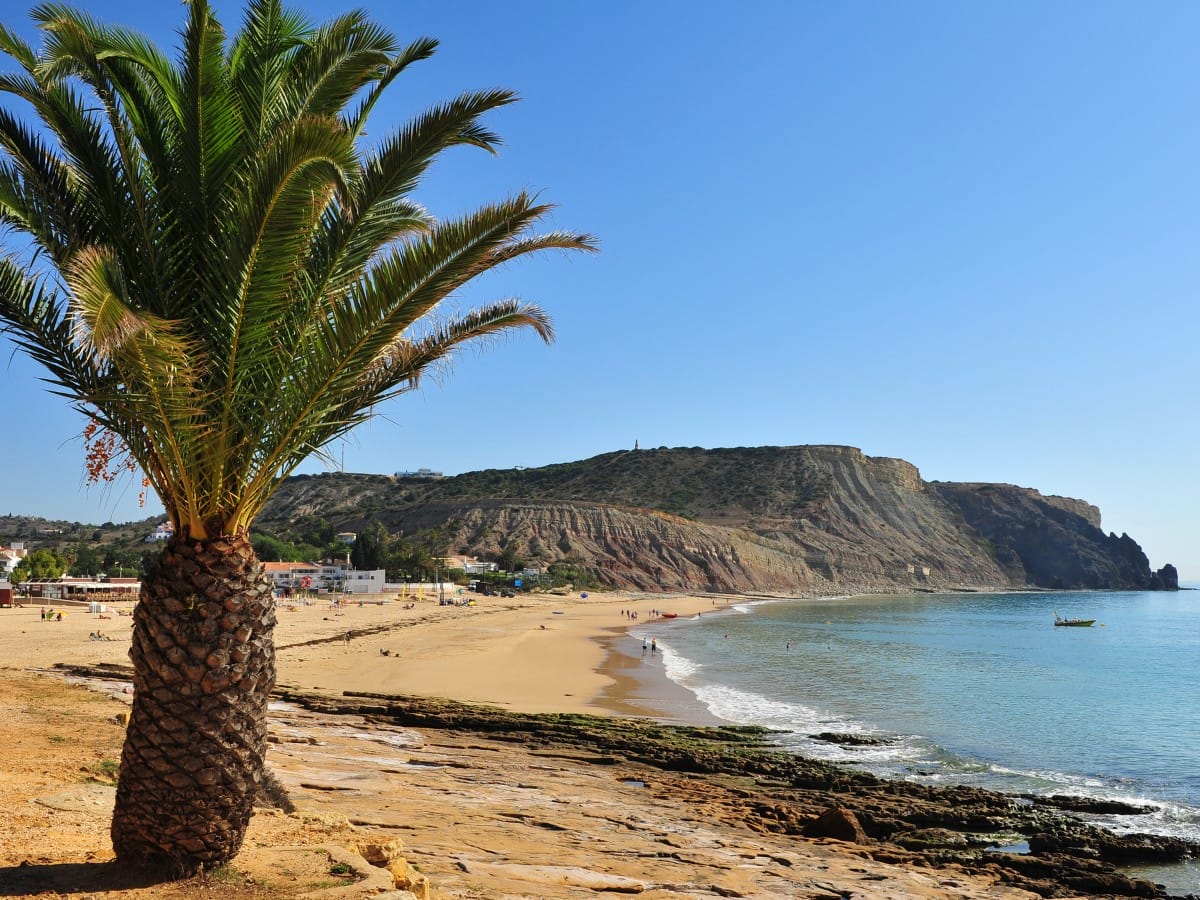
Praia da Luz is one of the big-name resort beaches in the southern Algarve, serving the relaxed town of Luz itself.
The beach is moderately wide, has that trademark Algarve golden color, and lined by a full spread of bars – enough to keep any Brit abroad happy for a good while.
It’s actually the classic Algarve family beach. You get easy access (literally down some concrete steps), calm water most of the year, sunbeds, umbrellas, lifeguards – you get the picture.
The cliffs at either end are spectacular. Rocha Negra to the east is a volcanic headland with hiking viewpoints, while the western cliffs offer sheltered corners and rock pools. Swimming is excellent, and the bay is ideal for stand-up paddling and kayaking on calm days.
The surf? Luz sees waves in winter when south swells reach the bay. These are usually soft, fun reforms rather than serious surf, great for beginners or longboarders. That said, there can be some real nice bowly rights on the reef below the volcanic rocks at the eastern end.
Praia de Porto Mós
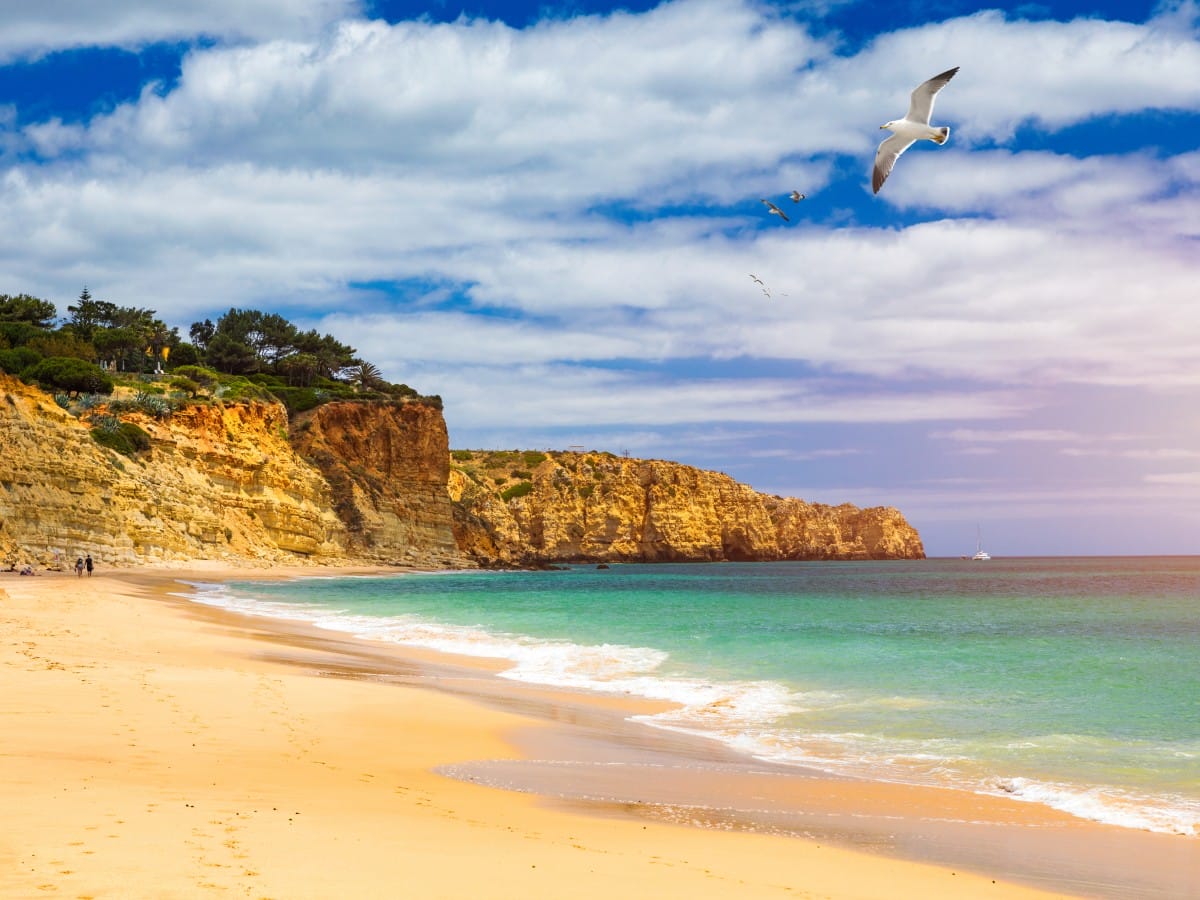
Praia de Porto Mós is one of the longest beaches on the south coast, a handsome sweep of sand backed by tall cliffs, all running westwards just outside Lagos. It’s popular but rarely overcrowded thanks to its size, and it’s a favourite among walkers, swimmers, and surfers looking for a semi-wild alternative to the Lagos town beaches.
I have a personal like for this one simply because it’s one of the first places you can get a decent wave after leaving Lagos town, at least in the winter.
The beach has two excellent beachfront restaurants, a big car park, and lifeguards in summer. The cliffs at the west end offer sheltered sunbathing spots, while the eastern side has more space and fewer people. At low tide, the beach opens up even more, revealing extra sections inaccessible at high tide, but be careful if you plan on walking to those – tides come back up, remember!
The surf? Porto Mós can get really fun in winter, with wedgy A-frames that offer rippable walls for intermediates. It’s one of the more consistent south coast spots outside Sagres proper. In summer it’s smaller, but small longboardable waves sometimes sneak in during south swells. Works best on mid tide with NE wind.
Meia Praia
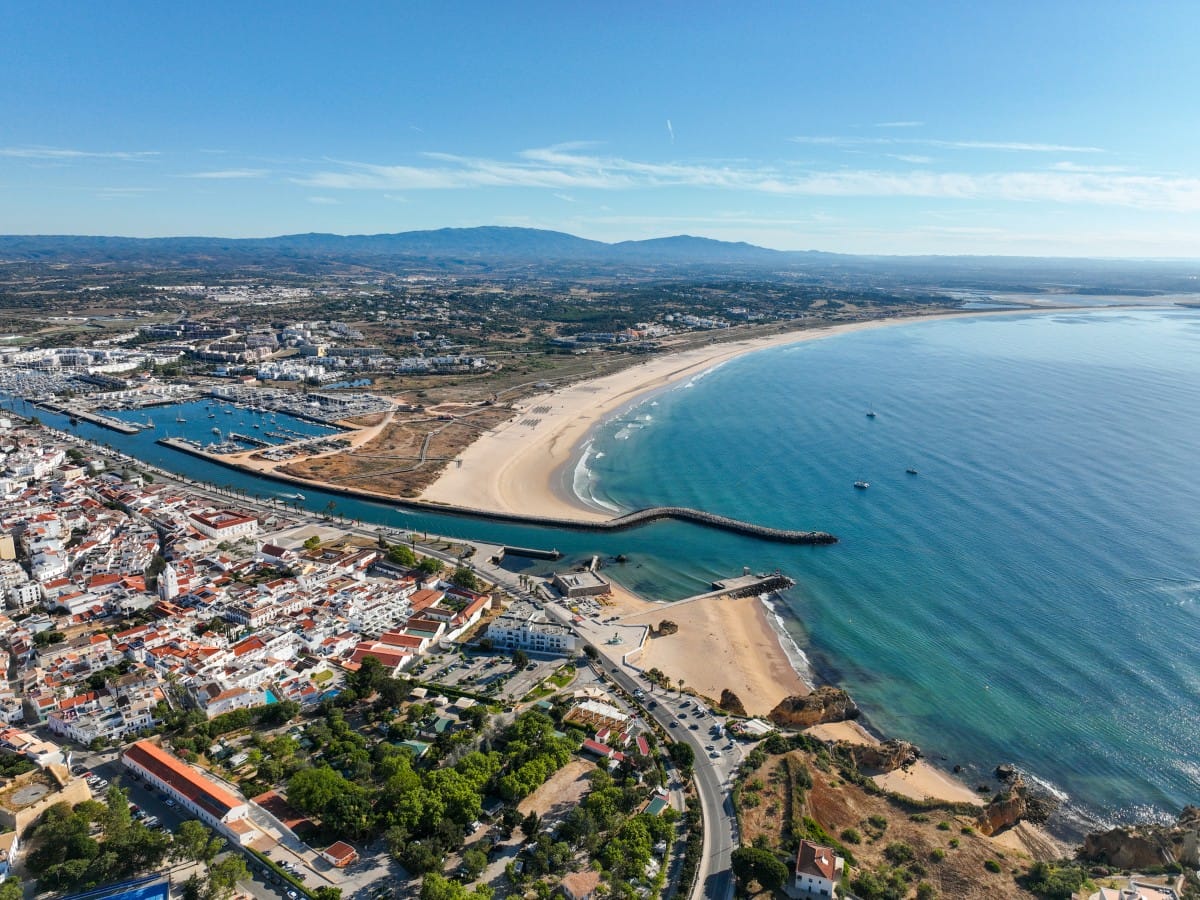
This one is almost a complete contrast to the Algarve’s famous cliff beaches. You’re looking at a huge, open, dune-backed crescent stretching for nearly 5km from Lagos to the Alvor estuary. It’s spacious, windy, and wild-feeling despite being right next to Lagos, which is pretty muych the closest the Algarve comes to having a city.
The beach is easily accessed by multiple car parks, a train stop, and the marina footbridge from Lagos. Facilities are good – several beach bars, equipment rentals, sunbeds all spread out down the sand – though do start to drop away the further you go from Lagos center.
Swimming is generally okay in summer but can get choppy when the afternoon winds rise. On calmer days, the long shallows are perfect for families.
The surf? Meia Praia does break – often with fun, wedgy A-frames in winter and the odd summer wave when there’s a pulse of S swell. It’s not a top-tier surf beach, but intermediates often enjoy uncrowded, playful surf here in off-season conditions. Windsurfers and kitesurfers also love it when the northerlies kick in. There’s also a good right off the harbor wall if you get a lot of S in the swell, but it’s a rare thing.
Praia da Rocha
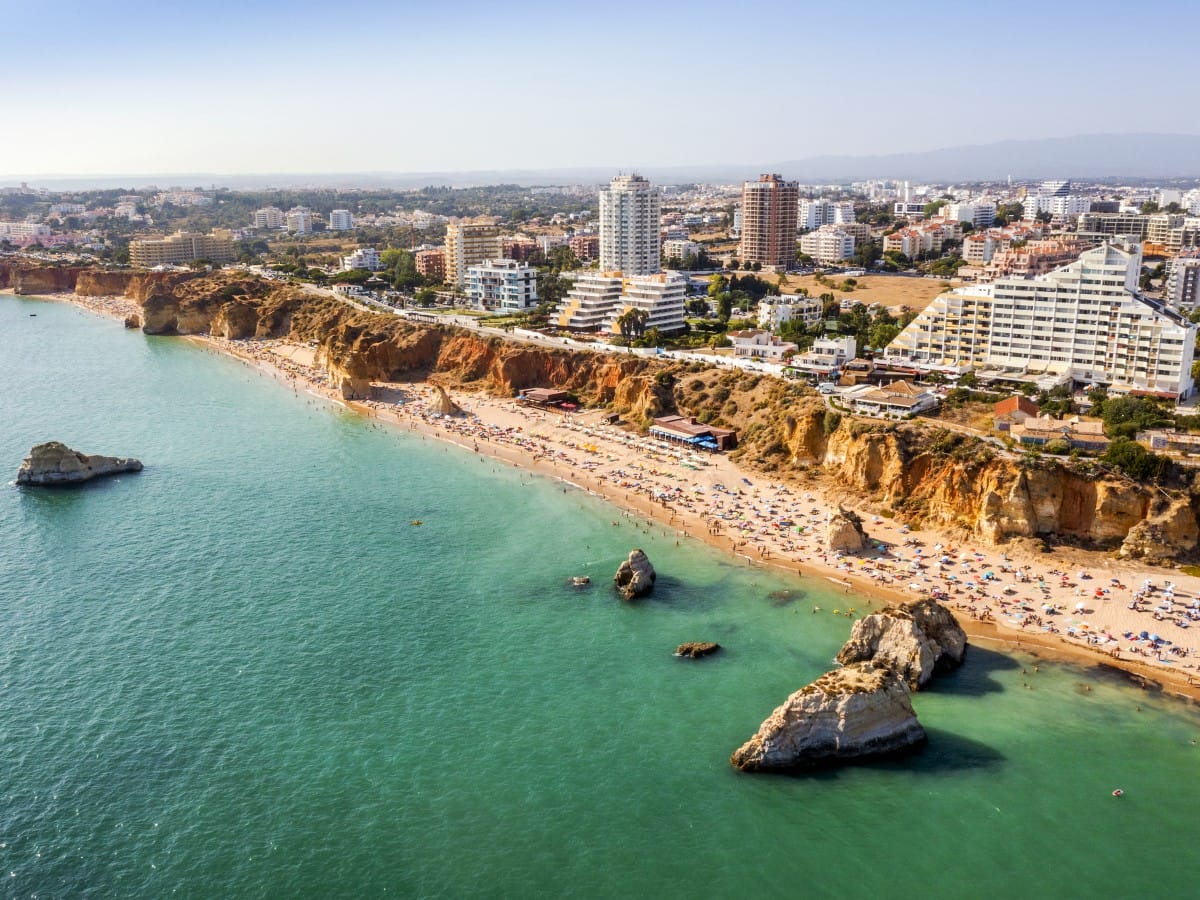
Praia da Rocha is definitely among the Algarve’s most famous beaches, mainly because it sits amid one of the area’s largest resort areas.
Plugged by tall golden-red cliffs at its eastern end, all topped with hotels and apartment blocks, it’s the classic travel brochure scene of the province.
The sand is wide. Wide enough for sunbeds, beach bars, water sports, and crowds upon crowds in July and August. But step slightly west toward the jagged rock formations and sea stacks and you’ll find quieter corners, striking views, and plenty of kayaking routes through caves and arches if you bring the paddle with ya.
Access is easy from multiple stairways and boardwalks. You can even walk here from the heart of Portimão in about 30 minutes.
Honestly, this isn’t my personal scene. It’s too busy. All the fricking time.
The surf? There’s generally no surf here. The bay is too sheltered from the dominant swells. Surfers staying in Portimão usually drive to the Sagres area or Arrifana for proper waves. That said, I have seen a left working on the harbor wall here in deep winter. Not sure how reliable it is mind.
Praia da Marinha
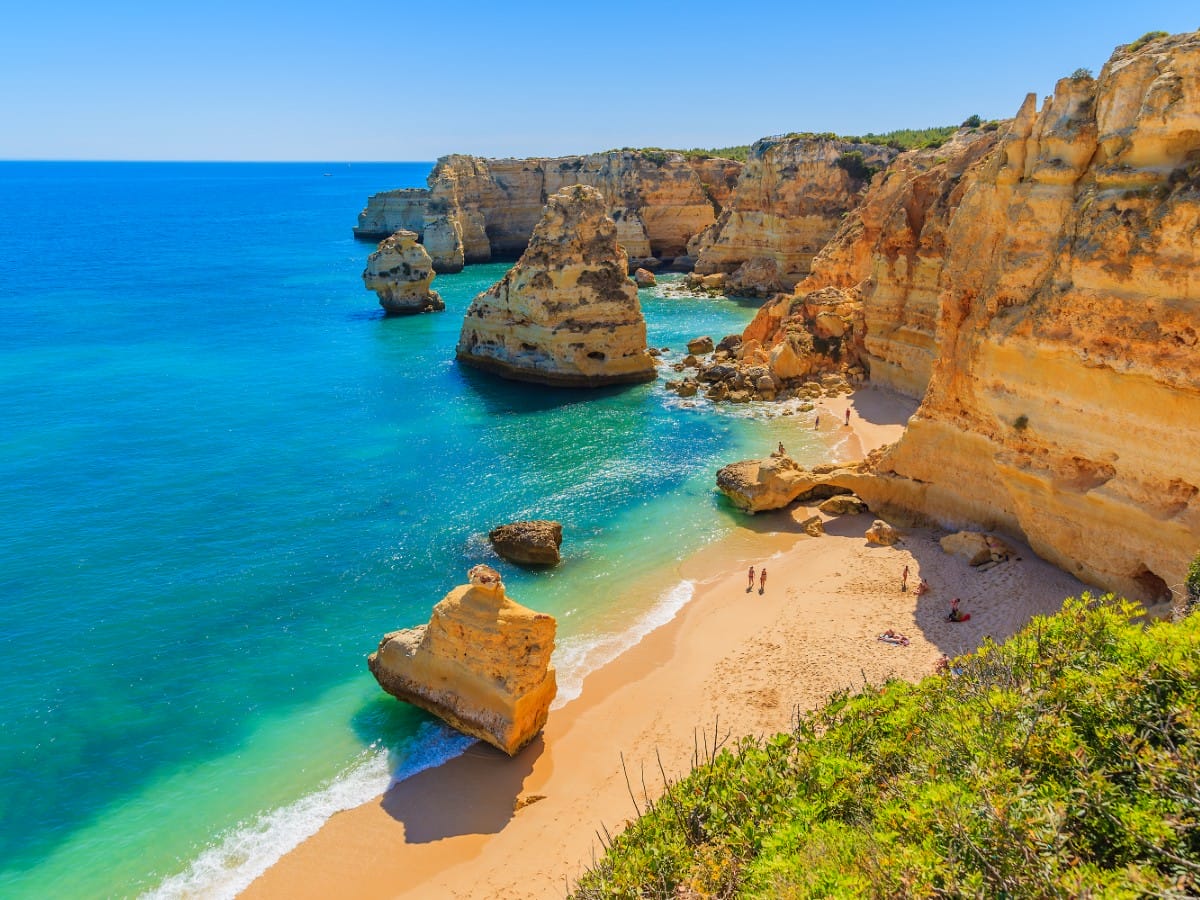
Praia da Marinha is one of those postcard beaches; one of the most photographed stretches of coastline in Europe, known for its towering golden cliffs, turquoise water, sea arches, and scalloped coves. You’ve probably seen it in the travel brochures.
The descent down to the sand involves a steep staircase, but the payoff is enormous – think a stunning beach framed by dramatic cliffs that glow honey and ochre at sunset.
It’s not a huge beach, so space is limited in summer. Most people come for the scenery, kayaking, snorkelling, and stand-up paddling through the caves and coves.
The water clarity is excellent. In fact, I’d say some of the best in Portugal (a combo of small waves and rocky surroundings help). There are no loud bars or major developments here, just a small kiosk and seasonal lifeguards.
Swimming is superb on calm days, but waves can bounce unpredictably off the rock walls. Get here early if you want space.
The surf? None to speak of. Marinha is too sheltered and too cliff-enclosed for surf. This is a pure scenery beach. Charge the camera.
Praia dos Salgados
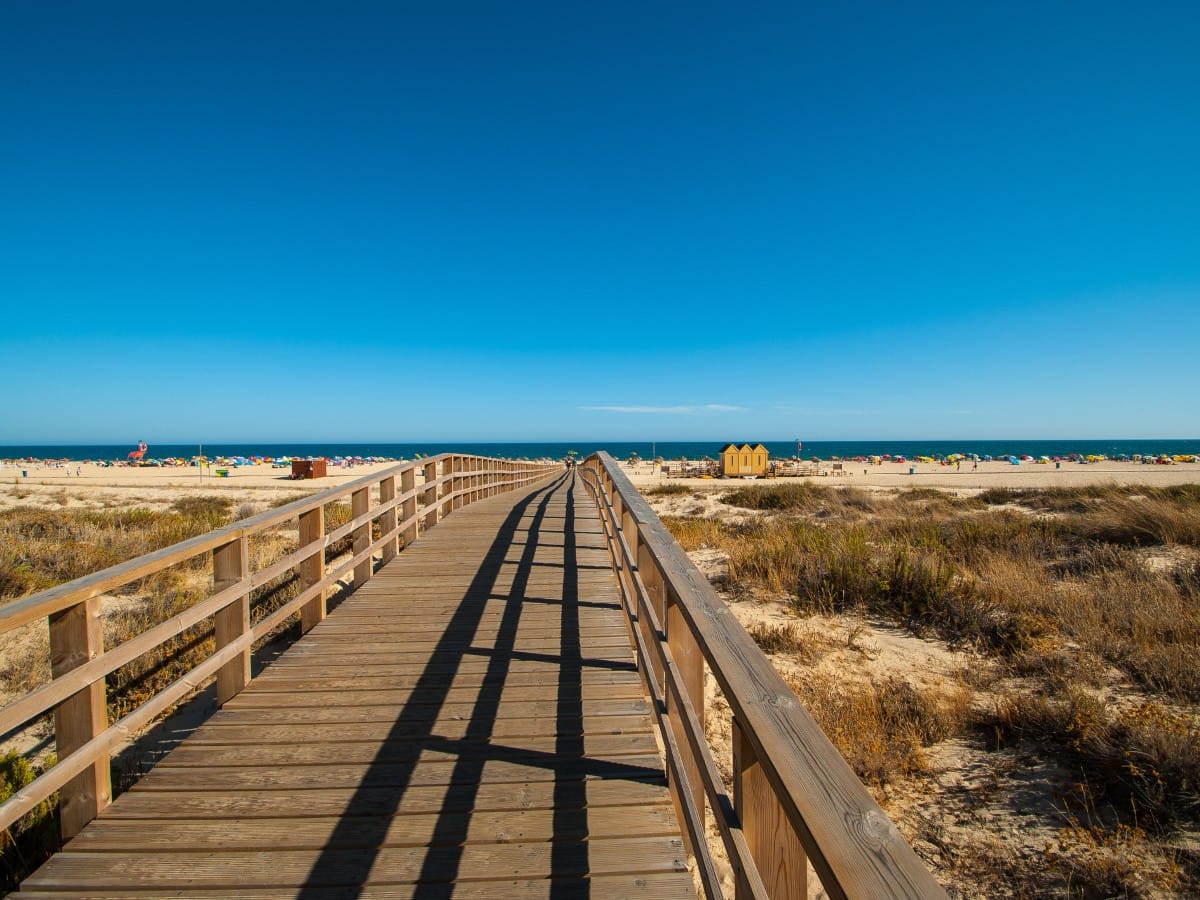
Praia dos Salgados is a long, open beach backed by dunes and a nature reserve between Albufeira and Armação de Pêra. It’s less dramatic than the cliff beaches you get further west (see the ones above) but wonderfully peaceful, with lots of space and that shallow entry that makes swimming nice and easy.
Oh ya, and it has a big lagoon behind where you can spot flamingos. A wooden boardwalk stretches through the dunes, ideal for morning walks.
The beach attracts families, walkers, and birdwatchers mainly. Swimming is usually safe in summer, though waves can get choppy on windier days and you should always be wary of rips. It’s far more relaxed than Albufeira’s main beaches and offers a calm, natural vibe despite being near major resorts and party hubs of the region.
The surf? Salgados gets occasional beach-break waves in winter, especially during any south swells. Nothing major, but sometimes fun for beginners or improvers. Don’t rely on it.
Praia dos Pescadores

Praia dos Pescadores is the central beach of Albufeira. And it’s EXACTLY what you’d expect of that. Think busy, lively, convenient, and surrounded by restaurants, bars (stupid amounts of them), and hotels.
This is the quintessential resort beach. You score a wide slice of golden sand, colourful fishing boats that I’m sure are just there for the selfies, sunbeds, watersports, and a promenade filled with tourists. If you want peace and silence, this isn’t the beach. If you want easy access and holiday buzz, it’s perfect.
Swimming is good on most days, and the bay is generally sheltered. Lifeguards are present in summer, and the sand is clean and well maintained. The escalators from Albufeira Old Town make access very easy. Yea, escalators to the beach, eh?
Because this is the beating heart of Albufeira, expect crowds and plenty of British stag-and-hen party energy in peak season. Off-season, it’s much calmer. What it is not is a great surf spot…
The surf? Very limited – this is a swimming and sunbathing beach. Small wind swells occasionally create knee-high waves, but nothing surfable with consistency. There are some outfitters offering surf courses in Albufeira that will usually drive to other beaches in the Algarve to catch some waves.
Praia da Falésia
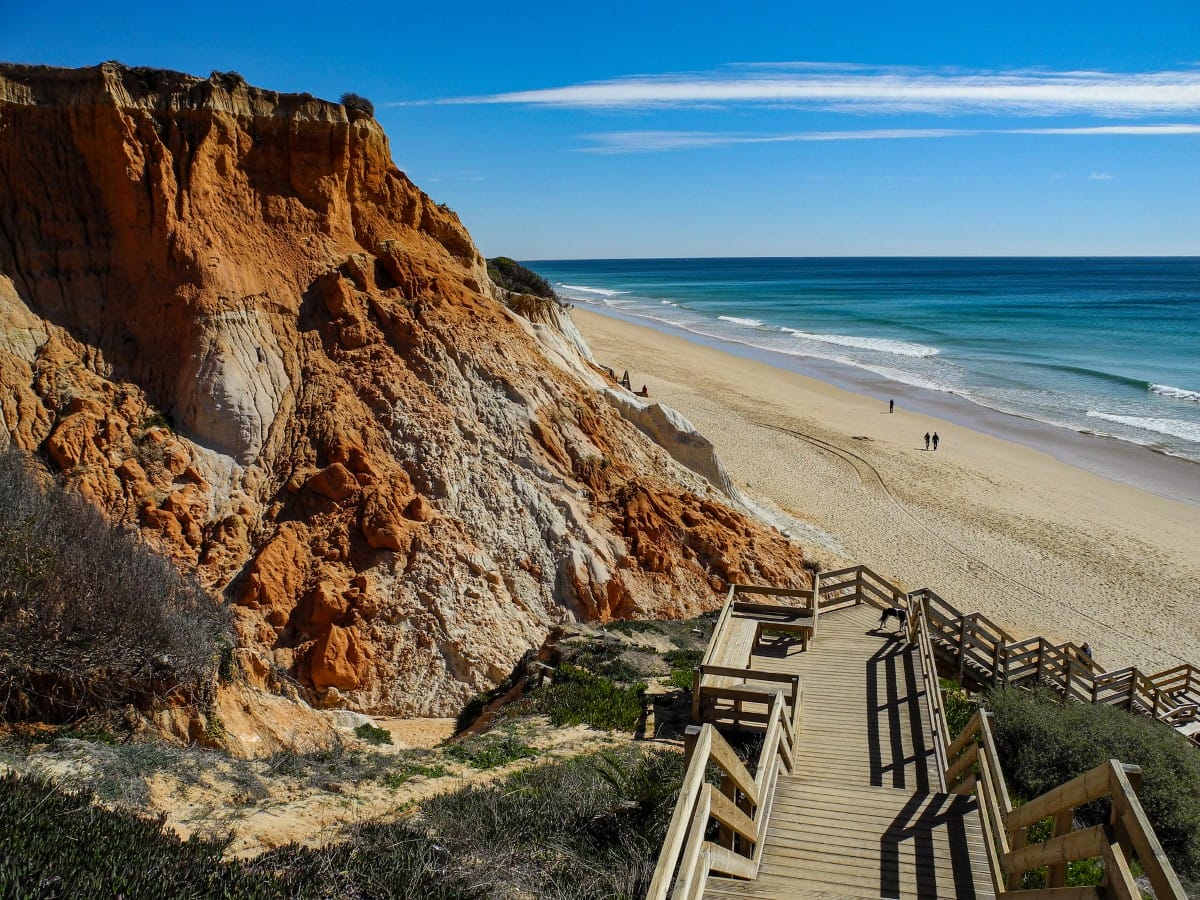
Praia da Falésia is one of the Algarve’s longest beaches, which wins it plaudits from folk who like to get away from the crowds, since there’s lots of space on offer.
It’s famous for its huge red and white cliffs that stretch for kilometres between Vilamoura and Olhos de Água. The colour gradient of the cliffs – rust, cream, and burnt orange – is unforgettable, especially around sunset when the whole place feels like a natural amphitheatre all lit up.
Despite being close to major resorts, Falésia never feels overcrowded because of its sheer length. The sand is soft, the water calm, and the beach ideal for long walks. Multiple access points make it easy to reach, and facilities include sunbeds, cafés, and lifeguards.
Swimming is excellent on calm days. The cliffs offer some wind shelter and plenty of visual drama. Photographers and walkers love this beach as much as swimmers.
The surf? Occasionally works in winter when south or southeast swells push in. The waves are usually mellow, fun reforms – great for longboards but rarely powerful. Falésia isn’t a surf destination, but the odd session can appear in the right conditions.
Praia de Faro
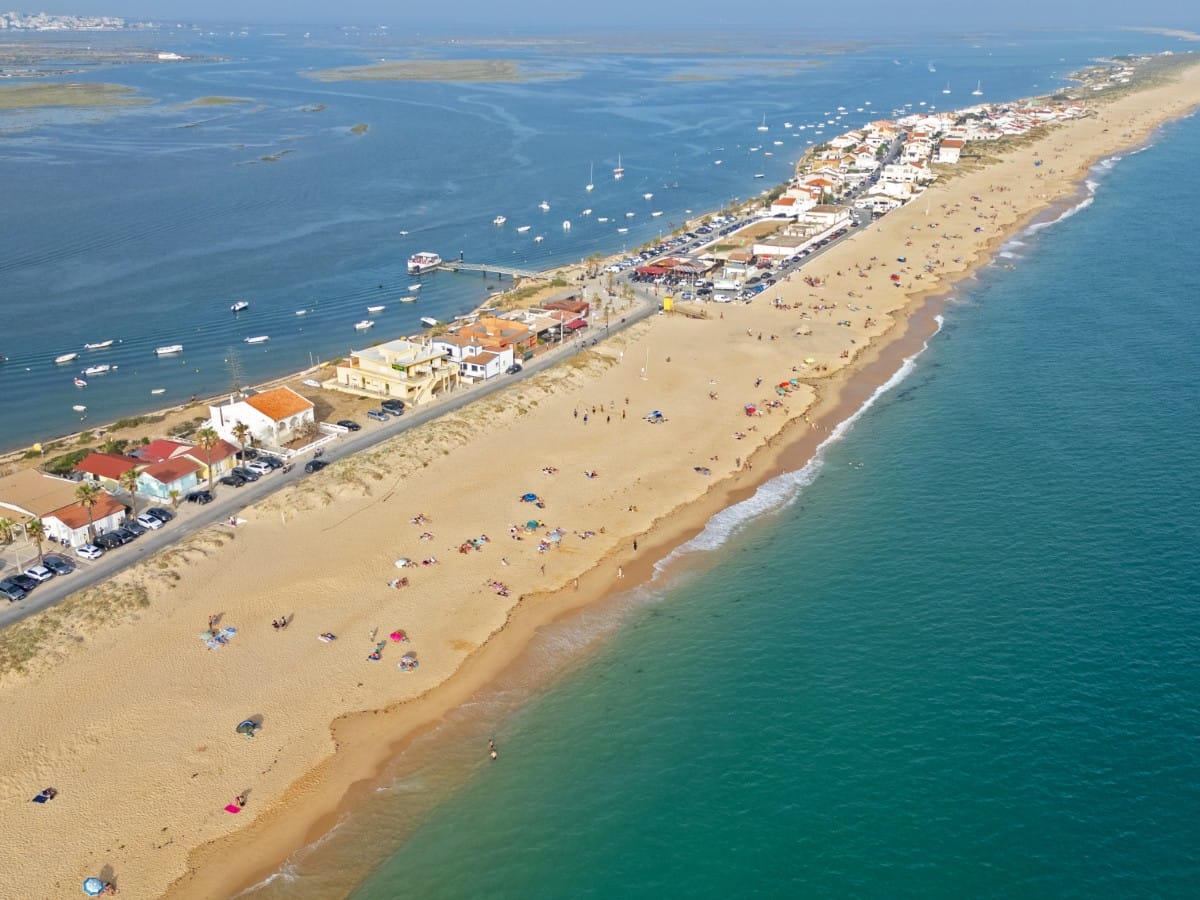
Praia de Faro is the main beach of Faro city, sitting on the long barrier island that separates the Ria Formosa lagoon from the ocean. It’s easy to reach by bridge, making it one of the best beaches for anyone staying in Faro without a car (which is quite common since this is also where the main airport for the Algarve is situated).
The beach stretches for miles. Like MILES. It’s all golden sand and dunes behind. Loads of space. Nice solitude.
On the lagoon side, the scenery is even more peaceful. You can step over the dunes to get calm water, birdlife literally everywhere, and boat tours to strange islets where I think you can see flamingos (or did I dream them?).
On the ocean side, swimmers enjoy long, shallow entry and warm summer water. Facilities are excellent: restaurants, cafés, sunbeds, public transport connections, lifeguards, surf schools, and long boardwalks. It’s very much a family beach.
Despite being close to the airport, it’s surprisingly serene, especially if you walk away from the central section. The lack of cliffs makes it feel completely different from western Algarve beaches; more open, airy, and spacious.
The surf? Small, soft waves suitable for beginners, especially in winter or during small summer pulses if you get swell from the south. Faro is not a powerful beach at all, but it’s excellent for first-timers and kids. Proper surfers head down to Zavial or the west coast for real swell.
