Peniche Surf Guide – A 101 To Portugal’s Top Surf Town

Peniche is perhaps the most famous of all Portugal’s surf towns. It’s got waves for all levels, all year round, is close to Lisbon and a solid option for just about any surf trip.
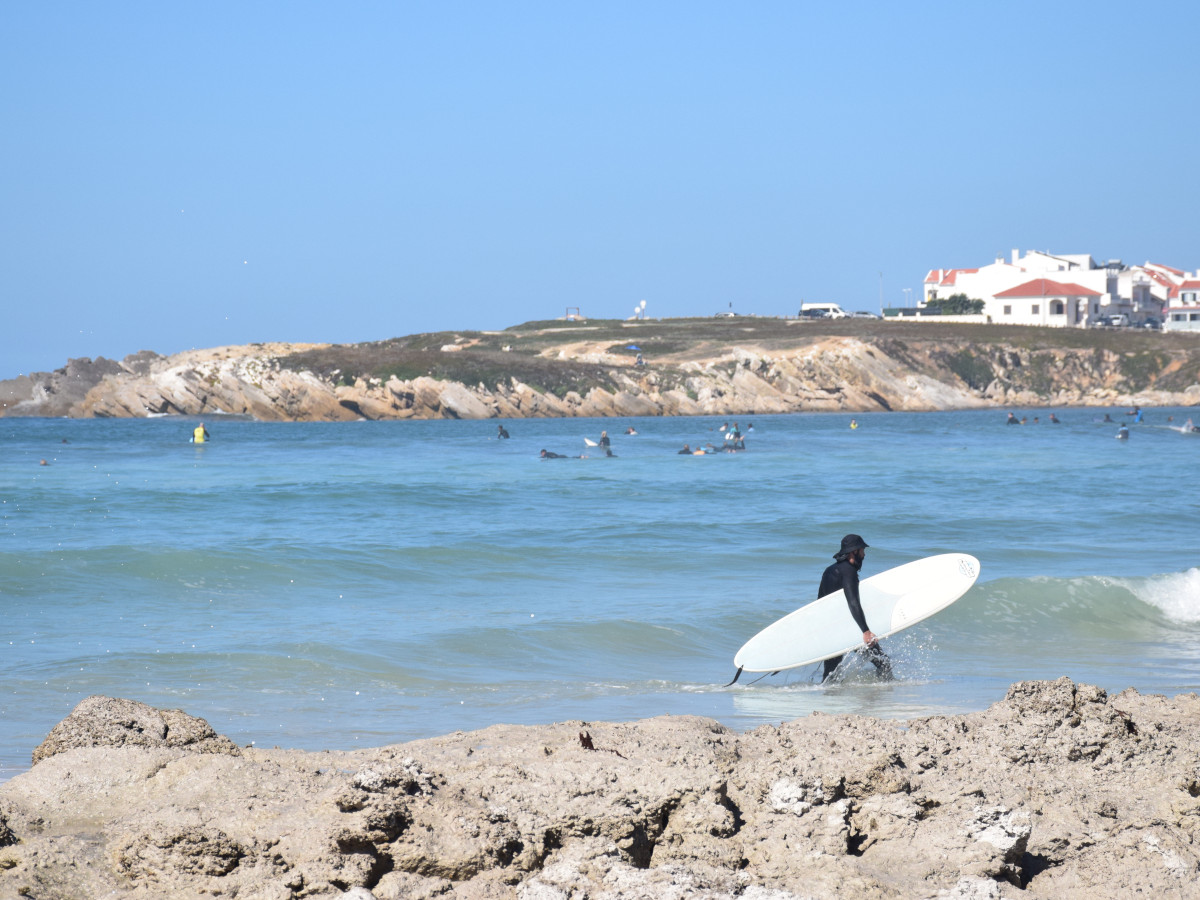
Peniche straddles a headland that pokes into the Atlantic just over an hour’s drive north of Lisbon.
Beaches arch out in both directions. Ranging from the wild coast north of Baleal all the way to Supertubos (Europe’s most legendary barreling beach break).
Importantly, Peniche’s beaches face in multiple directions – north, west, southwest. That means there’s almost always somewhere with a decent offshore and the town has one of the best swell windows in Europe.
And there’s variety, too. Within 20 minutes of town you can surf XL rock reefs (Papoa) or easy beach breaks (Prainha), longboard waves (Gigi) and sucking shorebreak barrels that will rival Puerto Escondido (Supertubos).
On top of all that, you’ve got an ever-growing array of surf hotels and surf camps, along with a pretty fun row of bars and restaurants that stay lively late into the night.
If we had to pick a downside to Peniche it would be that there’s now a bit of urban sprawl. The old town and Baleal village (to the north) are lovely, but many of the beaches are backed by ugly apartment blocks.
The crowds are also pretty bad but not crazy terrible.
We might use affiliate links in this post. Basically, you click em’ and we get a little something from your booking or purchase. They help us keep offering more and more in-depth surf guides to awesome places all around the globe. So, thanks for that!
>>This article is a part of our larger guide to surfing Portugal
Surfing in Peniche at a glance
Wave type: Beach breaks // Season: All seasons // Level: All levels
The good:
- A huge variety of surf spots.
- Supertubos – probably Europe’s most amazing barrelling beach break.
- Top bars and vibrant nightlife.
- Peniche surf lodge and surf schools options some of the best in the country.
The bad:
- This ain’t the prettiest town in PT!
- A touch of localism in the harder breaks.
- Gets busy
What you’ll find in this guide to Peniche
Surf spots in Peniche

One thing’s for sure: Peniche has no shortage of spots.
No one’s ever gone hungry for a knee-high swell, a classic Atlantic A-frame, or even a slabby beach barrel in these parts.
In this guide, I’m going to include every spot that’s within 20 minutes’ drive of Peniche. I think that’s a good cut-off because you almost certainly won’t need/want to travel any further than that.
I’ll begin to the north of town and move south through Baleal and then Peniche itself.
Pico da Mota
Pico da Mota is awesome for getting away from the crowds that can plague the north-facing beaches in the Baleal area (Gigi and Prainha). It’s 20 minutes’ drive through the lovely little town of Ferrel and then on past some rural farms to a parking lot beside a totally undeveloped beach.
It’s all beach break with a few patches of rock here and there. Generally nice peaky A-frame waves with shouldery lefts and faster rights.
Because it faces northwest then big winter swells can be too much but when they are smaller (3-7 foot) this spot can get very good because it loves an easterly winter offshore wind. Sadly, the Nortarrda wind is right onshore here, so midsummer months are often a bit messy.
Almagreira
Praia da Almagreira is kinda exactly the same story as Mota (see above) in that it’s a great spot to escape the crowds, doesn’t do well on big NW winds and loves a S wind.
Look out for the boils in the middle of the bay on higher tides. They show where the rock reef is. Most of the waves are just to the left of that as you look out at sea.
Can be nice and peaky with longish rides of 50-100m on a mix of sand and rock. Often only a few people out. There’s parking on the cliffs just above.
Gigi
Running beneath the dunes on the north bay just along from Baleal is the longboarder fav of Gigi (or Gigi’s).
This one’s top in a rising tide with a SE wind, or any wind with some S in it really, which to be honest is quite rare here.
It gives both left and rights, with some nicely sculpted flatliners for those who want to sit in the pocket and enjoy the views.
Not often crowded and great for beginners on smaller days. Just be wary of some sand-covered rocks.
Prainha
If you’re heading to Peniche as a beginner surfer, Prainha is likely where you’ll first get wet and where you’ll do most of your surfing.
Protected from the biggest swells and winds by the Baleal Island, this one rolls nicely onto an open beachfront.
There’s not much to say apart from the fact that it’s a decent beach break with short rights, longer lefts and a sand bottom. Likes S winds but can also handle choppy windswell pretty well.
It can get pretty busy with surf schools and things but it’s by far the easiest wave in the area and often small, manageable and fun. It’s also within walking distance of any hotel in Baleal village or close to the main road there, so people can get there quick in the morning.
Baleal Sul
Baleal Sul is one of the reasons that Peniche is so popular with learners and improvers. It’s the beach that links Baleal Village to Peniche town, running for about 2.2 miles in all.
The crucial thing to note is that it arcs in an almost complete semicircle, which means the north end has a different aspect to the middle and the south end, helping the dominant summer Nortada wind be ever so slightly offshore as you get close to Baleal village.
That’s key because it’s rare in Portugal, where much of the coast faces directly west to have somewhere angled to channel the Nortada into the wave faces. As a result, Baleal Sul’s top end often has clean lines.
In addition, the closer you get towards Baleal village the smaller the waves tend to get as you add protection. That’s perfect for learners, becuase you can just head south along the beach to add power and size to the waves as you get more confident throughout your stay.
Praia da Baia
This is the name for the south end of Baleal Sul. It’s the kilometer or so that’s closest to Peniche town. There’s parking access at loads of spaces on the road that runs behind and it’s a good, solid beach break option.
South winds are more offshore here though and NW swells will hit head on so it can get wompy.
Papoa
Papoa is the big wave of Peniche. This bad boy is for jet-ski pull outs and big drops only. It rolls right across the reef that lines the town itself. Don’t even think about it if you’re not a pro big wave surfer. Probably won’t even be working anyhow.
Molhe Leste
The first wave south of Peniche town is Molhe Leste, a right hander that comes off the harbor. It’s not very consistetn becuase it needs the biggeste NW swell pulses on offer.
They’ll wrap around in winter, bounce off the breakwall and give some of the best right barrels in the region. It can be a super good wave on those days.
It can sometimes work nicely in the summer but it turns into more of a beach break as the inside section likes a SW swell and there’s nice shelter from the Nortada wind, so can stay glassy.
Only for advanced surfers on the biggest days, okay for all levels when it’s smaller.
Bananas
Bananas gets big in winter, and often closes out. In the summer, it can be the best wave in Peniche, offering glassy walls break over the sand thanks to the angle of the bay here, where the north winds can often be offshore.
Supertubos
One of the most legendary beach breaks in the world, Supertubos is a mini version of Zicatela in Puerto Escondido.
It starts super sucky, dragging back off the sandbanks to give steep peaks. Loads of the spots will simply close out but the ones that don’t will barrel like clockwork, with better lefts than rights.
Drops are fast and you have to know how to tuck in for the cover ups but the really challenge is wave choice. Get the wrong one and you’ll be thrown over the lip in seconds. Usually busy when it’s on. Has competitions too.
Consolação
Consolação is the small town on the headland on the south end of Supertubos beach. It’s only 10 minutes’ drive from Peniche and it’s really pretty, with a long sandy beach out front and a fortress dating from the 17th century.
There are a few waves here but the most famous is the right hander that breaks on the south side of the fort.
It’s a reef point break that likes bigger swells but works on pretty much anything. Under 3 foot and it will be much mellower. Over 8 and you’re looking at big, punching shoulders that go all the way from the point to the inside for more than 200m.
This is not an easy wave. It’s for advanced surfers only even when small because it’s over rock and ends on rock. It’s even tricky to get out because you have to clamber over the rocks below the fort.
The beach break on the north side of Consolação is fun for beginners on smaller days and there’s a nice left that loves south swells there too.
Praia da Areia Branca
Praia da Areia Branca is about 20 minute’s drive south of Peniche. the breaks aren’t actually any better in quality, but there’s usually way less of a line up.
It’s another classic PT baech break with lots of punchy peaks. Works well on a westerly but not too strong because it will close out. All levels okay but not on the biggest day.
We’ve got a complete guide to surfing Areia Branca
When to surf in Peniche?

Peniche has waves all year round. The summer is generally better for beginners and the winter for more advanced surfers, with fall and spring offering a mix of bigger days and more beginner-friendly days.
Swell direction is predominantly from the north in Peniche. The various outcrops and sandbanks help to filter that into different spots for different levels.
However, the changing of the seasons can shift things just enough to have a huge impact on the wave shere.
The barrels at Supertubos can look positively tame if you come in August, for example. Come December, you can rest assured they’ll be roaring and overhead. The good news is that Baleal is often protected from the biggest swells/winds, so it often has conditions favorable to beginners.
May-October
All levels
Surfing in Peniche in August is uber-popular. The town draws everyone from surf campers to families.
Months like July and September are similar in terms of waves, but much quieter (and cheaper).
From spring to early autumn, you can expect much smaller swells. That said, this is the Atlantic, which means there’s always the chance of an overhead when things get pumping.
The major downside of the peak summer is the wind. Portugal gets hit by the Nortada wind (from the north or northwest) in June, July, and August and it can be really bad for surf spots up and down the coast.
The good thing about Peniche is that is has beaches that angle different ways, with some where the Nortada is even a touch offshore. The other trick is to surf early and later on in the day. Midday is usauly the windiest.
November-April
Intermediate+
Winter can alter the prevailing swell direction a little to the northwest. That channels stronger groundswells straight into Peniche’s main bays.
It converts spots like Papoa into mini Nazares but only on the biggest of the big swells.
When they come through, even the easy beach breaks at Baleal can become pretty big, while less protected beaches like Gigi and Lagide will be blown out.
The sweet spot for us here is the autumn in November. I’ve been to Peniche twice in November and both times have been really, really good. Light offshores and 2-6 foot swells kept Baleal Sul working like a charm throughout and there weren’t too many people around.
It might not always be that good but it’s probably more reliable than the depths of winter.
Surf camps in Peniche
Of all the surf towns in Portugal – and there are LOADS – we think Peniche is in the top three for learning to surf.
A lot of that is down to the protected but consistent beaches of Baleal. But there’s also a lot to be said for the overload of surf camp packages that happen here…
You’ve got thousands to pick from. A lot are great but some are lacking in what we think are the key aspects: Quality of surf tuition.
That’s what we’ve focused on here with our picks…
- The Salty Peniche – Wow, wow, and wow again. A lot of people were very excited about the opening of the new Salty Pelican in Peniche. This is the bee’s knees of surf camps here. It’s got dorm packages for budget travelers and provate doubles for couples, a super slick rooftop terrace, and excellent tuition from qualified surf instructors. If you can, book this.
- Balili Surf House – Chilled, small-group, and just wonderful. This cozy surf lodge is located on Baleal island, and is perfect for beginners who want access to Peniche’s most protected waves.
We have a guide that outlines all the best surf camps in Peniche.
And for more inspo, check out our guide to the best surf camps in Portugal.
Best hotels (for surfers) in Peniche
Because Peniche is undoubtedly one of the most popular surf towns in Portugal, there are oodles of places to stay, from deluxe coast cottages and villas to party hostels.
If you come without a car hire, the main thing is picking somewhere that puts you close to the break that suits you the most. Usually that means going for accommodation in either Baleal or Peniche town itself.
I’ve stayed in my fair share of places, some I’ve really, really liked…
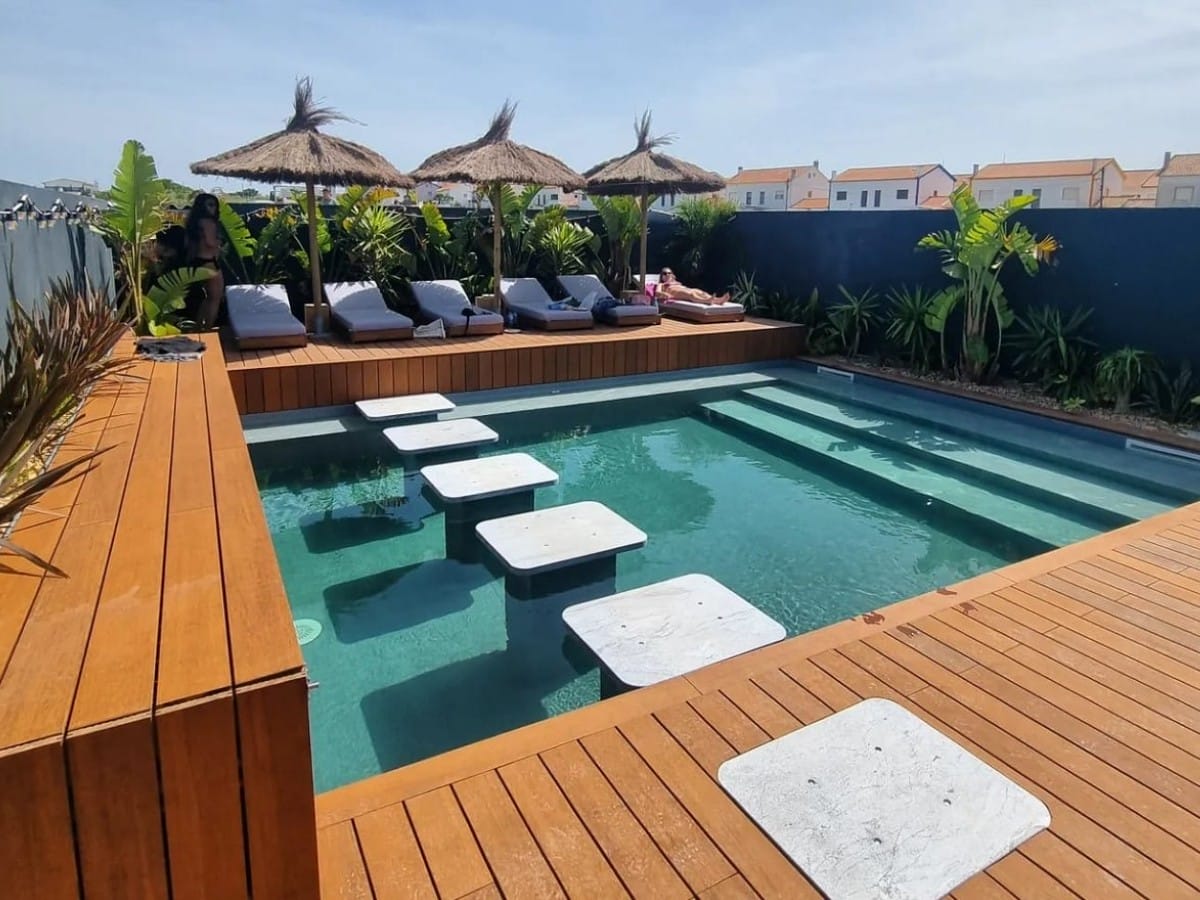
- Surfers Lodge Peniche – One of the most loved surf stays in Peniche, Surfers Lodge is actually in Baleal, which is great if you want access to the most beginner-friendly waves in town. Highlights are the rooftop pool and chillout area and offering of on-site surf hire and lessons.
- Vitamin Sea – A fantastic self-catering option for groups who want that Portugal villa vibe. It’s got a pool and can sleep up to eight people at once. Walking access to Baleal Sul and Prainha, two of the best all-level breaks in town.
- Pineapple Surf House – This chilled surf hostel with its own pizza oven faces straight over the dunes back from Supertubos. You couldn’t stay any closer to Europe’s most iconic beach break. Good people and good vibes, plus it’s cheap.
Surf lessons in Peniche
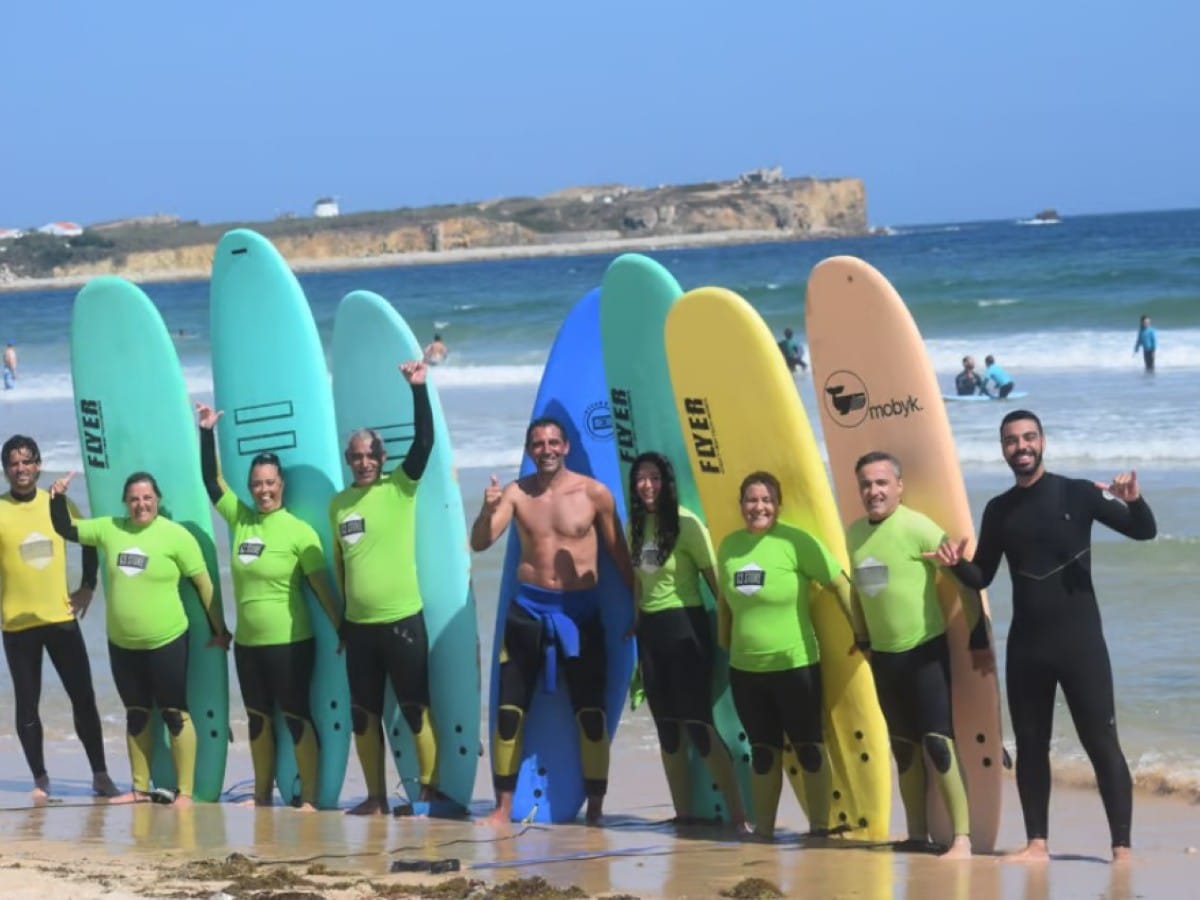
If you prefer to plan your whole trip yourself and not do a complete surf camp, then you can always give your holiday a little structure by adding in surf lessons.
Peniche is one of the best places to do them in Portugal, with one of the highest selections of surf schools.
There’s no reason you can’t just book these when you arrive. Well, there MIGHT be in summer, when we have seen big waits for lessons because it’s so busy.
Most of the year, you’ll be okay, though, as there are plenty of places offering walk-in sessions along the main road to Ferrel and around Baleal Beach, the main learner area.
If you did want to pre-book for piece of mind, then check out the lessons we recommend below…
- G3 Surf School – A very highly rated surf school (4.8/5 with over 60 reviews), these guys do well-balanced 90 and 120 minute lessons for all levels.
- Baleal Surf Camp – Specialising in beginner surf lessons from thier base in Baleal, which has some of the easiest waves in the area.
Surfboard rentals in Peniche

You won’t have to look very far to find a surfboard rental in Peniche.
There are little cabanas set up just behind the sand. You’ll find them both in Baleal and in Peniche itself, but also strung along the windy road that links the two.
Expect to pay between €15-25 for a surfboard and wetsuit rental for two hours. That’s the going rate in Portugal as of 2024/25.
There are also some full-on surf shops in Peniche that will sell you boards, including second-hand boards that can be found at a good reduction
Most surf hotels and hostels here offer packages that include use of boards and gear in the price. Just ask when you book to see if that’s something they do as the rates for boards in hotels are often the same or cheaper than a rental spot.
You usually won’t have to worry if you’ve opted for a planned surf camp in Peniche. You’ll be suited and given a board the first morning you get in the water, all included in the price.
Remember – Peniche is wetsuit territory. The Atlantic is rarely warm enough for a rash vest and board shorts. I wear a 3/2 or a 2mil in the summer and a 4/3 in the winter, which is enough to see me through all the way to March.
Peniche travel essentials
Where is Peniche?
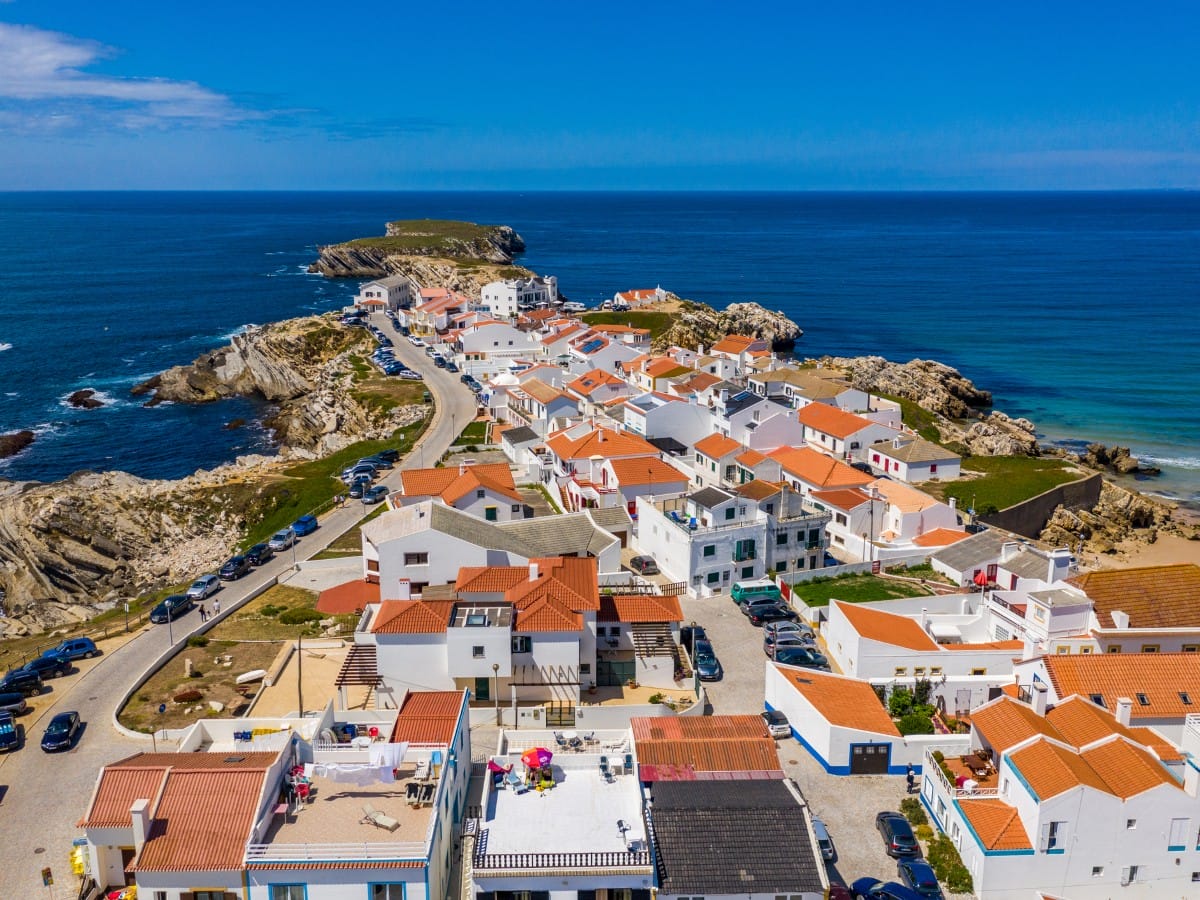
Peniche is around 1h10 hours’ driving from Lisbon. It sits on a bend in the Portuguese coast, with a headland (once an island) pokes out into the Atlantic Ocean. There are more protected surf beaches to the north (best for beginners) and less-protected bays to the south (hello Supertubos) that are open to the main Atlantic W swell channels.
These days, the Peniche surf territory also sort of links up with the nearby village of Ferrel, which is just 3.5 miles inland – a taxi between the two costs 15 EUR.
How to get to Peniche?
Your first step should be getting to Lisbon Airport. That’s the gateway to the whole Silver Coast and central Portugal. It’s an hour’s drive from Peniche. Pick between:
- Low-cost airlines: These days, there are oodles of budget airlines offering links into Lisbon Airport. That sits around 1.5 hours by direct drive from Peniche. Carriers like Ryanair and EasyJet share most of the routes, with connections to London Stansted, Bristol, and Edinburgh to name just a few. You can rent cars with roof racks for the surfboards in the terminal.
- Premium airlines: Being so close to Lisbon in Peniche means you can make use of a wide variety of the country’s premium airline arrives. TAP Portugal is one to watch. It has loads of connections landing at Humberto Delgado Airport in the capital. You’re talking as far afield as Chicago, Stockholm, and Rio!
How to get to Peniche from Lisbon?
Honestly, the best way to do this is by bus…
Buses and coaches come in from lots of major cities in Portugal. You can arrive from Lisbon in 1.5 hours. Connections with Rede Expresso leave from the Sete Rios station on the north side of the capital. Flixbus also run connections out of Oriente.
It’s such a popular route that departures go like every 30 minutes or something. We’d probably air on the side of safety and book in advance for travels between May and September, when this route is popular.
We use Omio for all our coach bookings in Europe these days. It’s simple, trusty, and can be done 100% online…
We should also note that you can get the train from Lisbon to Dagorda–Peniche station. That puts you inland at Obidos. From there, a car rental or a bus connection will take another 30 minutes to the beaches. (Overall – we don’t recommend this as the most convenient option – especially if you’re bringing surfboards).
Do I need to rent a car to surf in Peniche?
No, not really.
In fact, we’d say that Peniche is one of the few surf towns in the country that can be enjoyed to the full without your own wheels (it’s probably this, Ericeira, and maybe Santa Cruz).
That’s all because very regular buses leave from stations in Lisbon itself to connect with the town in about 1-1.5 hours in total. Train is also an option, but does mean a changeover in a nearby town. Check above for our guide to public transport to Peniche from Lisbon.
Having said that…Don’t be in any doubt that having your own car rental will add more freedom to the trip. It will let you surf all the breaks in Peniche (which is quite a spread-out town) and other spots up and down the Silver Coast. It’s also great for dodging the busier spots and finding places that are offshore when ones near the center arent,.
The good news is that Portugal actually has some of the cheapest car rentals in the whole of Europe. We recently scored a whole month here (for a surf trip that included both Peniche and Ericeira, in fact) for under 300 euros (about $320).
You’ll want to get yours from Lisbon Airport as that’s the closest arrival point, under an hour’s drive. Be certain to book as early as you can via RentalCars, which we find to be by far the best tool for comparing all the top deals. We booked our latest car with Centuaro and the whole thing was pretty fantastic. You can pay a little extra to add a roof rack to bring along the board if you want.
Getting around Peniche

Once you’re in Peniche itself then getting around shouldn’t be too much hassle.
If you’ve opted – as we recommend most beginner surfers do – for a surf camp, then you don’t have to worry a jot. Your camp will probably take care of all your transport to and from breaks. And they’ll usually visit a good mix of them, both in beginner-friendly north Peniche and in the more challenging south of the town.
If you’re going it alone, then it’s probably a good idea to consult our spot map below and choose the area you want to surf most days. Except, of course, if you were planning on renting a car. If you get your own wheels, it’s no biggie driving from A to B at all – the whole town can be covered in like 15 mins.
A few taxi drivers serve the Peniche-Baleal areas. They tend to be a bit pricier than their compadres in Lisbon. Expect to pay around the 20 EUR mark to get from Peniche town to Ferrel.
Cashpoints and currency in Peniche
Peniche is in Portugal. The currency is the euro (€).
There are cashpoints on offer in Peniche town itself. A whole load of them are concentrated around Rua Dom Luís de Atayde. One or two more are by the Parque do Baluarte.
The smaller fishing town of Baleal doesn’t have any cashpoints. In fact, there’s not even room for a bank between it’s cute little whitewashed cottages. However, you can just walk up to Ferrel (a nearby inland village) on the busy Av do Mar to get an ATM. That takes around 20-30 minutes.
We might use affiliate links in this post. Basically, you click em’ and we get a little something from your booking or purchase. They help us keep offering more and more in-depth surf guides to awesome places all around the globe. So, thanks for that!
