
Lanzarote Surf Guide – All You Need To Know

Lanzarote might look like a desolate desert, but it’s got rich pickings when it comes to waves.
Yep, they call this one the Hawaii of Europe.
Rugged walls of volcanic rock descend straight into a lashing ocean. Along the coast, some seriously awesome swells entertain everyone from the complete novice to the barrel-hunting pro.
The mainstay of the scene is in Caleta de Famara. Once a quaint fishing town, it’s rise has been astronomical in recent years. That’s mainly down to its 3-mile long length of sand, which braces the Atlantic and gets regular swells throughout a long season.
It’s also been designated a sort of localism free zone. That’s RARE in the Canaries but traveling surfers can generally enjoy its waves unharassed for the most part.
Of course, there’s much more than that. You’ve also got the brutal tubes of La Santa and all the lesser-known point breaks of the east coast, not to mention the rocky bays up north. The isle is small enough to drive around, hopping break to break.
With such variety, it’s easy to see how something is pretty much always working in these parts. Whether it’s the dominant W swells or the strong Sirocco winds that make the waves, you very rarely get skunked.
Off the waves, Lanzarote is a stunning place to be. Evenings of volcanic-grown wine and spicy mojo potatoes can take over. Elsewhere, there are hiking adventures to cloud-haloed mountains and trips to lava fields. You’ll love it.
We might use affiliate links in this post. Basically, you click em’ and we get a little something from your booking or purchase. They help us keep offering more and more in-depth surf guides to awesome places all around the globe. So, thanks for that!
This is a part of our greater guide to surfing in the Canary Islands
Lanzarote surf at a glance
Wave type: Beach break and reef breaks // Level: One spot for beginners, many for experts // Season: All year but winter is best
The good:
- Always sunny and warm.
- Pretty consistent.
- Some hardcore breaks – it’s not the Hawaii of Europe for nothing!
The bad:
- Some localism, especially in the more advanced Lanzarote surf spots.
- Still not warm enough to surf without a wetsuit.
- Those touristy resorts on the south coast.
FAQs about surfing in Lanzarote
The prime surf season in Lanzarote runs from October to March, when consistent Atlantic swells hit the island’s reefs and beaches. Winter brings the most powerful waves, while autumn and spring can offer a balance of size and clean conditions.
Yes – while the island is famous for heavy reef breaks like La Santa, there are also mellow, sand-bottomed spots such as Famara Beach that are ideal for learners. Several surf schools operate in Famara year-round, making it easy to find lessons and rentals.
What you’ll find in this guide
Surf spots in Lanzarote
Lanzarote might just be the most surfable of the Canary Islands. It’s got beaches, reefs, point breaks, and whitewash up its sleeve. But all that’s spread right across the island, so you’ll need to know where to go to find the waves you want the most.
Caleta de Famara
Caleta de Famara is the surf capital of Lanzarote. It sits at the end of long Playa de Famara. It’s the longest beach on the island, coming in at nearly three whole miles.
It also gets swell from both the north and the west, so it’s perhaps the most reliable spot going in Lanzarote. That shows. There are surf schools everywhere, and not a morning goes by that you don’t see a crowd with their foamies and rash vests playing in the whitewash.
But don’t go thinking that Caleta de Famara is only for beginners. It’s definitely not. There can be some very punchy swells here, particularly if you make for the middle of the beach where things are stronger.
The wave is a peaky beach break that suffers a lot from cross shore wind. But when the trades die down, you can get long rides that go both and left. Works on both low and high tide, but watch out for seaweed when the water’s in.
The real draw though is the fact that it’s been designated as the island’s de facto international surf place. You can come here and not worry about being hounded by locals, which is sadly common in other spots to be frank.
To put it simply: If you’re surfing in Lanzarote, Caleta de Famara really should be your base. It’s the main surf town, has the best beaches (without – too much – localism) and fantastic consistency to boot.
>> Read our full guide to Caleta de Famara surf right now!
San Juan
San Juan is only 5 mins’ drive out of Caleta de Famara but it offers a totally different challenge to the endless beach peaks of Famara beach. This one’s a high-quality left-hand reef that can barrel like nobody’s business.
Needs a bit of size, a low tide that sucks water off the reef shelf, and a dip in winds since there’s no protection at all. When all that happens it can be a beast to watch, and a real beast to surf. The take off is fast, the wall is almost straight up vertical, and you need to make the first section or you’ll land on dry rock.
There’s also a kinda rubbish right hander in San Juan that can work on higher tides. I mean, it’s okay, but not the world-class tube over the other side of the small beach.
Caleta de Caballo
The small fishing village of Caleta de Caballo is about 15 mins drive from Caleta de Famara and just around the corner from La Santa.
It’s got a tight opening in the coastal rocks with reefs on both sides. They give short, fast waves – a left on one side and a right on the other. It’s not easy but also not mega hard like La Santa, and can often be empty.
Good shout for solid intermediates and up looking to graduate from Caleta. Just beware of rips and rocks.
La Santa
La Santa, on Lanzarote’s northwest coast, is one of the island’s best-known and most powerful waves. It breaks over a shallow volcanic reef, producing fast, hollow rights (and occasional lefts) that are best suited to experienced surfers. The wave works on a solid northwest swell with easterly winds, and while it can offer world-class rides, the shallow reef and strong currents make it a spot for confident surfers only.
The waves break just off from the health club here, where there’s a manmade lake and a little beach area. The reefs are either side of that beach.
>> Read our complete guide to surfing in La Santa here (coming sooon)
El Quemao
El Quemao is a total thunderer of a wave that can hold massive size. It’s probably the most famous wave on the island, and is now host to the Quemao Class, an annual invitational that draws some of the best from around the world. It’s sometime in winter but dates change.
I’ll say this: Do not surf El Quemao unless you’re really, really good. This is a fierce barrel that sucks up off a jagged reef beside the town of La Santa. Thread into the left and it’ll feel like Teahupo’o.
Orzola
Like Caleta, Playa de Orzola is a beginner-friendly beach break. It sits on the northern end of the island, but is a tad more exposed than its compadre. That means the surf schools tend to desert the place when the waves and the wind get high, especially as the rides aren’t as long and the swells not as consistent. For an extra challenge, move to La Canteria. It’s just around the headland, forming into a nice, fast left when the tide comes up.
Jameos del Agua
Jameos del Agua might be better known for its caves and cacti plantations than its surf, but the waves here are probably the best on the east coast. Pretty exposed and breaking over a relatively deep reef, the wave is a point break in essence. When the stars align it’s a lovely left-hander that can actually be a long ride of over 100 metres or more. Be wary of localism.
When to surf in Lanzarote?
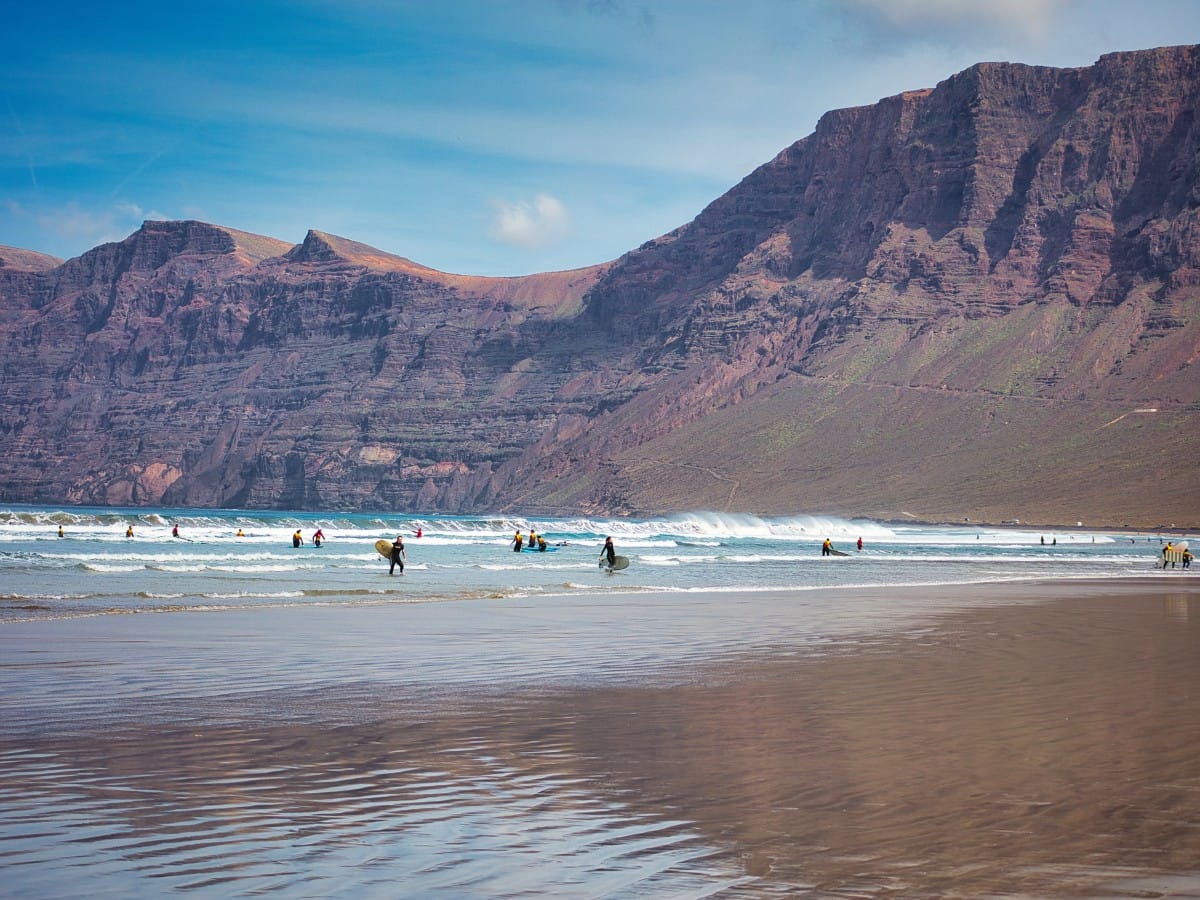
Lanzarote’s best surf arrives in autumn and winter, from about October to March, when strong Atlantic swells light up the island’s reefs and beach breaks. This is when you’ll find the most consistent waves, with warm air, mild water, and generally lighter winds earlier in the season.
Spring can still deliver fun swells, though it’s a little less reliable, while summer is the smallest and best for beginners or longboarders. Water temperatures stay comfortable year-round, so you’ll usually only need a 3/2mm wetsuit in winter and can surf in a shorty or even without in summer.
- Beginners – May to September – Smaller swells and plenty of mellow conditions at spots like Famara Beach, with warm water and gentle winds.
- Intermediates – March to May & September to November – Shoulder seasons bring a mix of manageable size and more consistent swells without the full winter power.
- Advanced surfers – October to March – Peak Atlantic swell season lights up the heavy reefs like La Santa and El Quemao, with challenging, hollow waves.
Surf lessons in Lanzarote
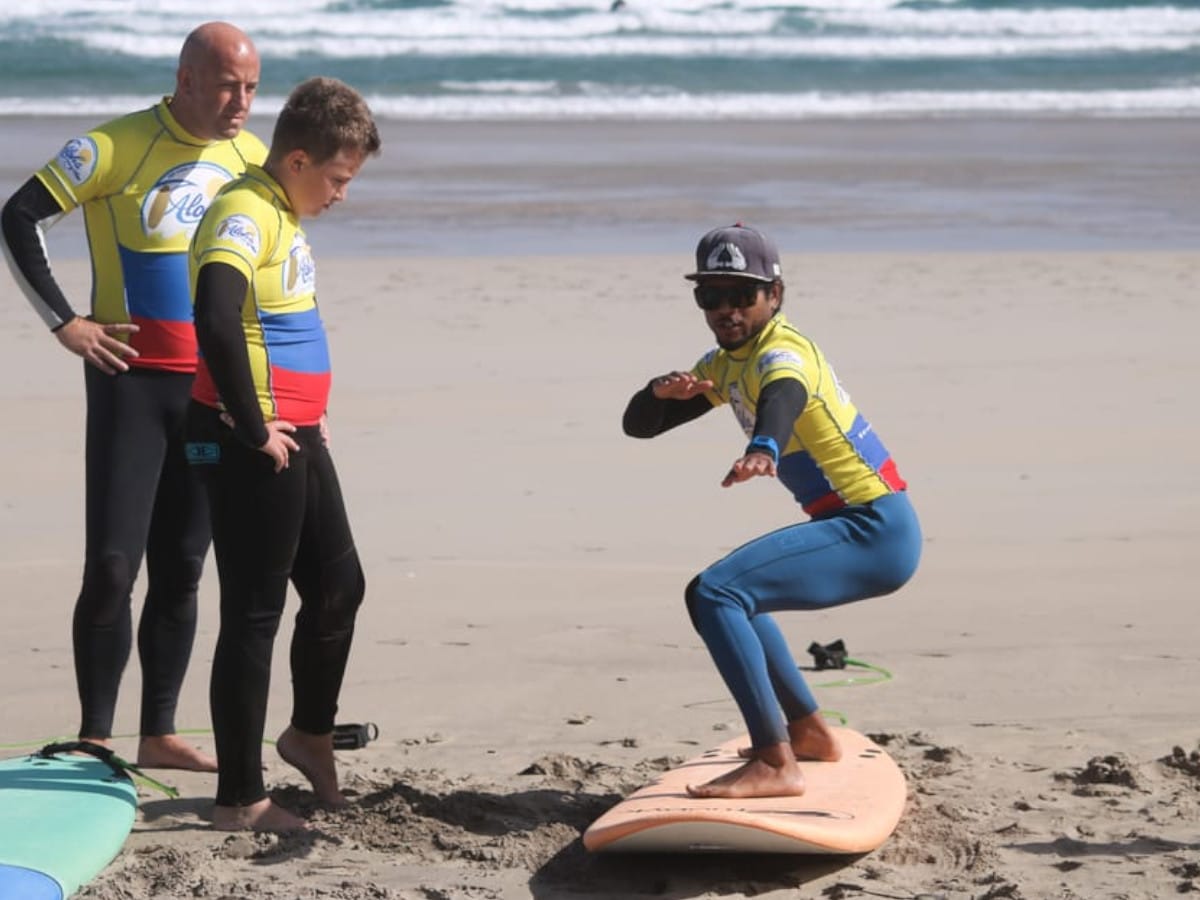
We’ve said it like 10 times by now, but Lanza is actually one of the best places to learn to surf in the Canaries. That’s almost solely down to Caleta on the west coast, where you’ll find easy waves and easy-going people. The schools that are based there – and almost all the schools in the region are based there – offer lesson packages that last 2-4 hours and can be joined by anyeone on the island.
We reccomend…
- Lanzarote: Famara Beach Surfing Lesson for All Levels with Red Star Surf – The guys who run one of our top picks for surf camps also run a 2 or 4-hour package at Caleta. It’s one of the best-rated packages on the island, with out-of-water warm ups followed by ISA-level surf guiding in the water. It’s the best one around to be frank.
- Lanzarote: Famara Beach Surfing Lessons with Alohayolas Surf School – Another great pick in Caleta comes from Alohayolas Surf School. They do much the same as Red Star only tend to be a bit more experienced with family groups and groups with little ones.
How difficult is the surfing in Lanzarote?
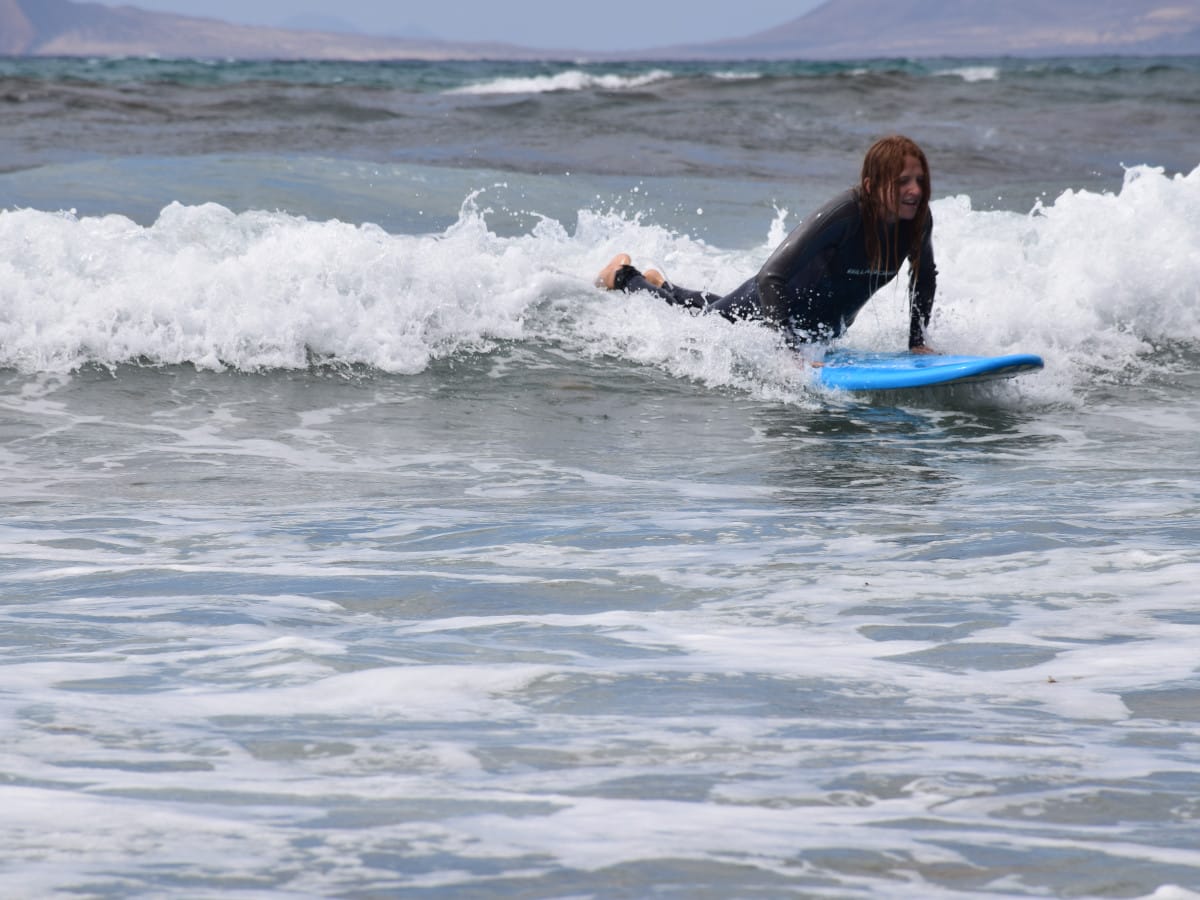
Lanzarote is a whole island, so there’s no hard and fast rule about how hard the surf is. That varies from spot to spot and season to season. The good news is that there’s something for basically all levels here, though overall we’d say that it’s skewed towards the more experienced end of the spectrum.
Don’t let that put you off coming for a surf camp. It really shouldn’t, mainly because Lanza still happens to play host to arguably the very best learner spot in the whole Canaries chain: Caleta de Famara. It’s now packed with surf camps and surf schools and has waves virtually all year for everyone from total newbies to experienced intermediates.
Thing is, Famara is actually one of the rare beach breaks here. Away from that fantastic learning town, the coast is more rocky and reefy. It gives harder point breaks and even mega XXL waves like the one in La Santa. They are breaks that you won’t want to mess with, especially on those heavy winter NW Atlantic pulses between November and March!
Surf camps in Lanzarote

There’s one hub for all the surf camps in Lanzarote: Caleta de Famara.
The beginner-friendly beach and its adjoining surf town is just about perfect for learning. You can surf and stay there on one of the reccomended packages below. Or you can drop in for a quick surf lesson and then drive back to your hotel elsewhere on the island (see below for surf lesson recs if that’s you.)
The benefit of a surf camp is that it’s WAY more intense and a proven way to improve. We’d also add that we can hardly think of a more beginner-suited spot than this in Europe. It’s got consistent waves all year, loads of whitewash to get you started, and an all-round great vibe.
- Lanzasurf – This is a fully-fledged surf camp package that’s run by what we’d say is the leading lodge on the island: Lanzasurf. It includes five days of surfing and four hours of surf tuition. You’ll stay in the uber-fun surf house that’s right on the beach. The vibe is usually great fun and the instructors are all internationally qualified.
- Red Star Surf – The other top school and camp in Caleta is Red Star. We’d say these guys run a bit more of a lively surf camp. It’s great for the younger crowd who want good vibes and company for post-surf beers. They also take it serious, though, with ISA-qualified teachers and 5x lessons throughout the stay.
Check out the following camp options for the best around or head to our complete guide to the best surf camps on the island right here…
Hotels in Lanzarote
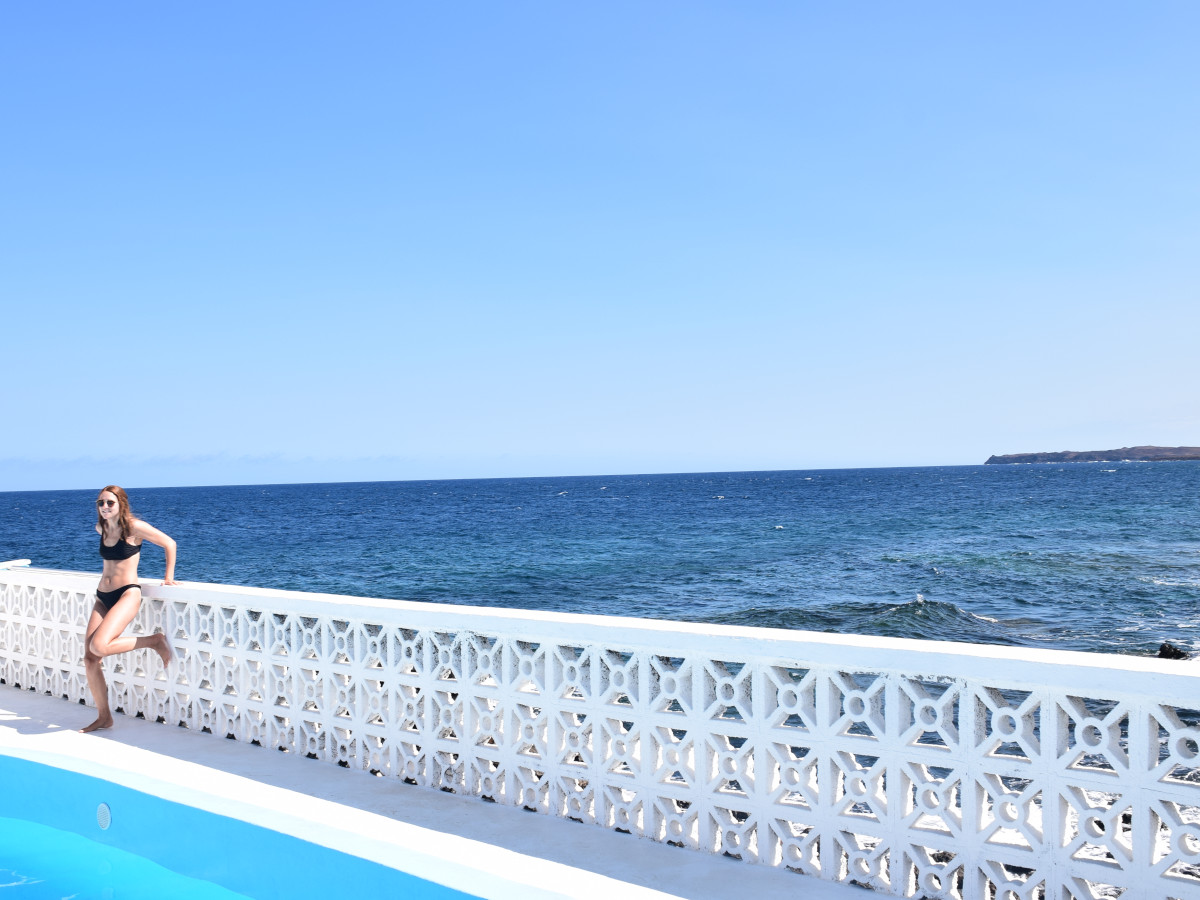
Lanzarote was a holiday island long before it was a surf mecca. That means there should be all sorts of accommodation on the menu, from family villas with glinting pools to salt-washed fishing cottages right by the beach.
My tip: ALWAYS base yourself in Caleta de Famara. It’s the best place to surf for all levels, and still has good road access to the rest of the island. It also happens to have the best accomodation for surfers, loads of which is within a 30 second walk of the beach…
- Canaryislandshost I Marquesa – For families or groups of mates, you cannot top the offering at Canaryislandshost I Marquesa. This stunning house sleeps up to six people and it’s just a walk off the main spots on Caleta da Famara beach. It’s lux, too, with a come-laze-by-me pool under the rugged cliffs. LOVE ITTT.
- El Loft – This is such a cool place. Big windows open to the massive Lanza cliffs, while inside is a mega-stylush but also undetstated piece of luxury. I can’t really come up with the words to describe how cool it is to be honest. You’re close to San Juan beach south of Famara, but also only five mins’ drive from the main beach.
- Finca Daniela – Treat the whole family to a pad in the stylish urbanization area of Caleta. There’s enough to sleep up to 10 people. It’s got a large living space and fitted kitchen, along with big gardens, a private pool, and sea views. The best part? The waves of Caleta de Famara beach are literally just down the street.
Travel essentials for Lanzarote
Where is Lanzarote?
Lanzarote is the easternmost of the Canary Islands.
It’s only 75 miles or so from the coast of Africa at the closest point, which means it picks up the same uber-reliable Atlantic trades and swells as Morocco.
The island of Fuerteventura is its nearest neighbor (apart from the tiny isle of La Graciosa) – you can even catch a ferry there from Playa Blanca in the south.
How to get to Lanzarote?
Lanzarote is an island, which means the best way to get in is by air or by sea. Thankfully, it’s also a super-popular place for holidaymakers, so there’s almost always a good deal on low-cost flights into the main local airport in Arrecife.
There are also ferries that come across from Morocco. But it’s generally accepted that only masochists go for those long, wobbly rides.
Should I get a hire car?
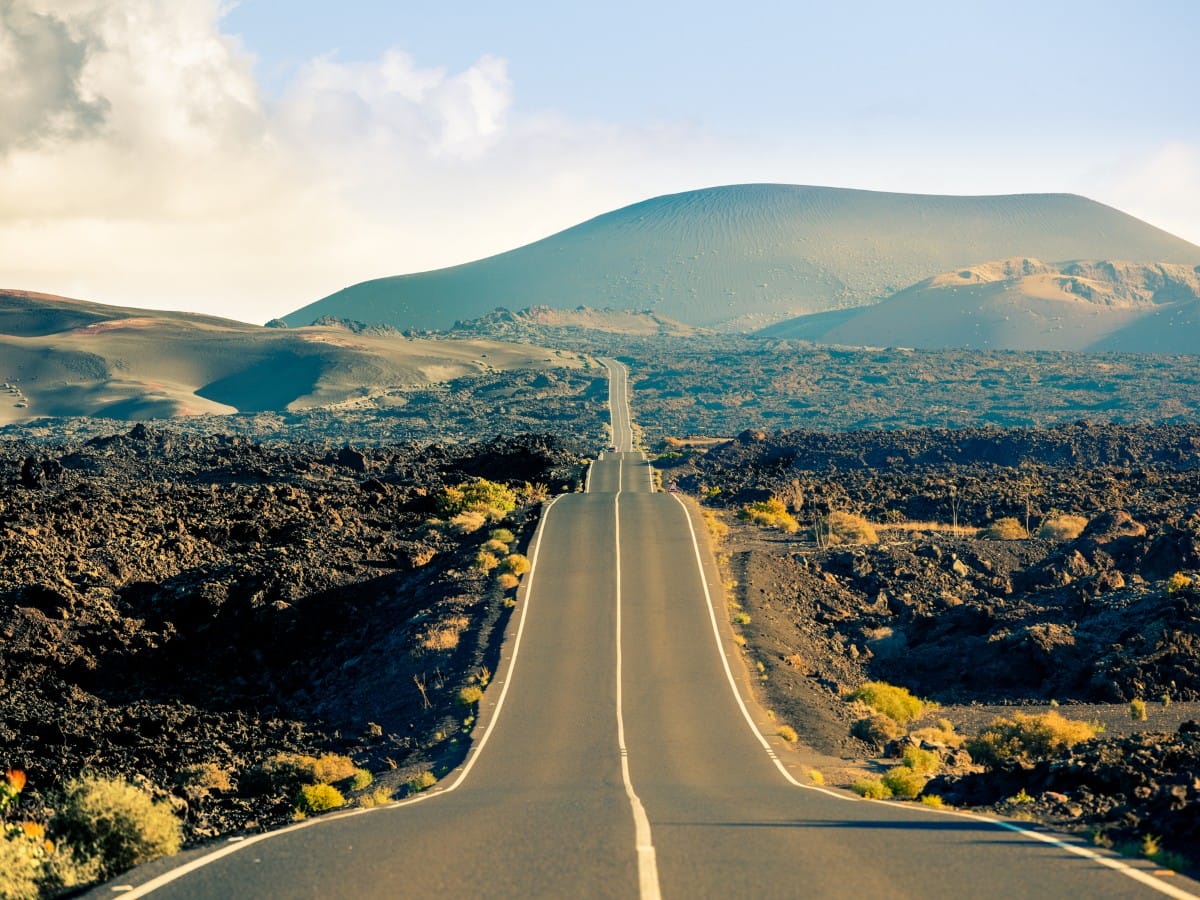
There’s really limited cross-island transportation links, so we always recommend getting a car.
Thankfully, in Spain and the Canaries, hires tend to be super-cheap. A recent month-long rental out of Lanzarote airport, complete with a surfboard rack and bigged-up boot space, cost us in the region of just €350/$350! Yep, a month of car rental for 350.
Now that’s actually a VERY good deal so don’t go counting on that every year. Plus, the pandemic seems to have cranked up the cost of car hires in Europe across the board. Either way, the best chance of getting a good deal on car hires in Lanza will likely be with DiscoverCars, who are now my go-to in the whole region.
Where to eat in Lanzarote?
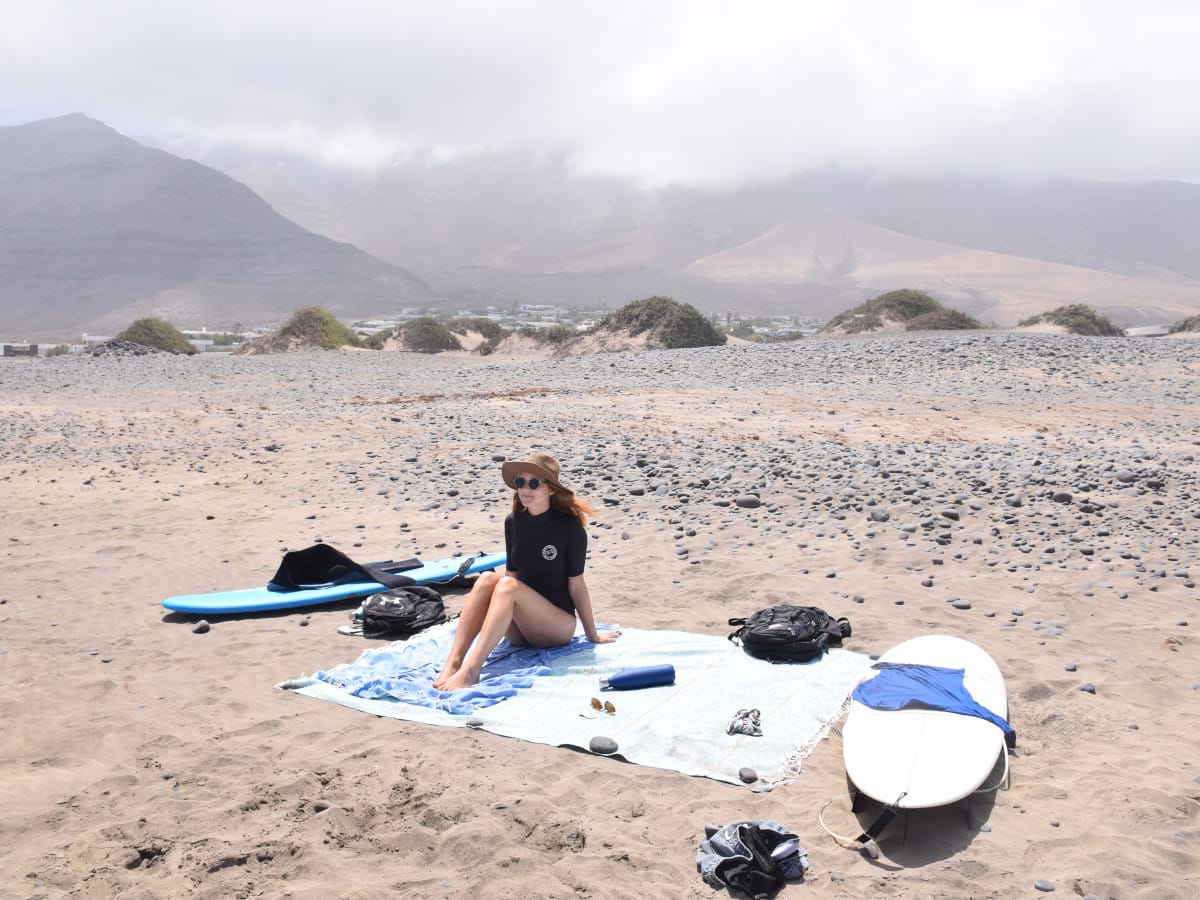
Lanzarote is all about the Canarian food and wine, with a touch of Spanish tapas and a few good pizza joints thrown in for good measure.
- Beach Food Las Bajas – Chilled and easy-going Las Bajas is a cyclist’s and surfer’s mainstay in Caleta de Famara town. There’s a mix of sliders and salads on the menu, along with cold beer and local wines. A few choices for veggies add to the mix. On sunny mornings, grab a coffee and sit outside to watch the surf schools prepping for a day on the water.
- Mama Africa – A mix of Mediterranean meat and salad joins with some eastern and African dishes in this lovely eatery in La Santa. The vibe is pretty gourmet, so be sure to dress up nice (no wetsuits allowed). Service is sleek and efficient. The setting is cosy with a dash of the romantic.
- Matula’s Bakery – If you happen to drive coast to coast then stop off in the stunning town of Teguise. It’s got a charming square and weekly market, but also the excellent Matula’s Bakery, which has the best croissants and banana bread in the Canaries.
Things to do when you’re not surfing in Lanzarote
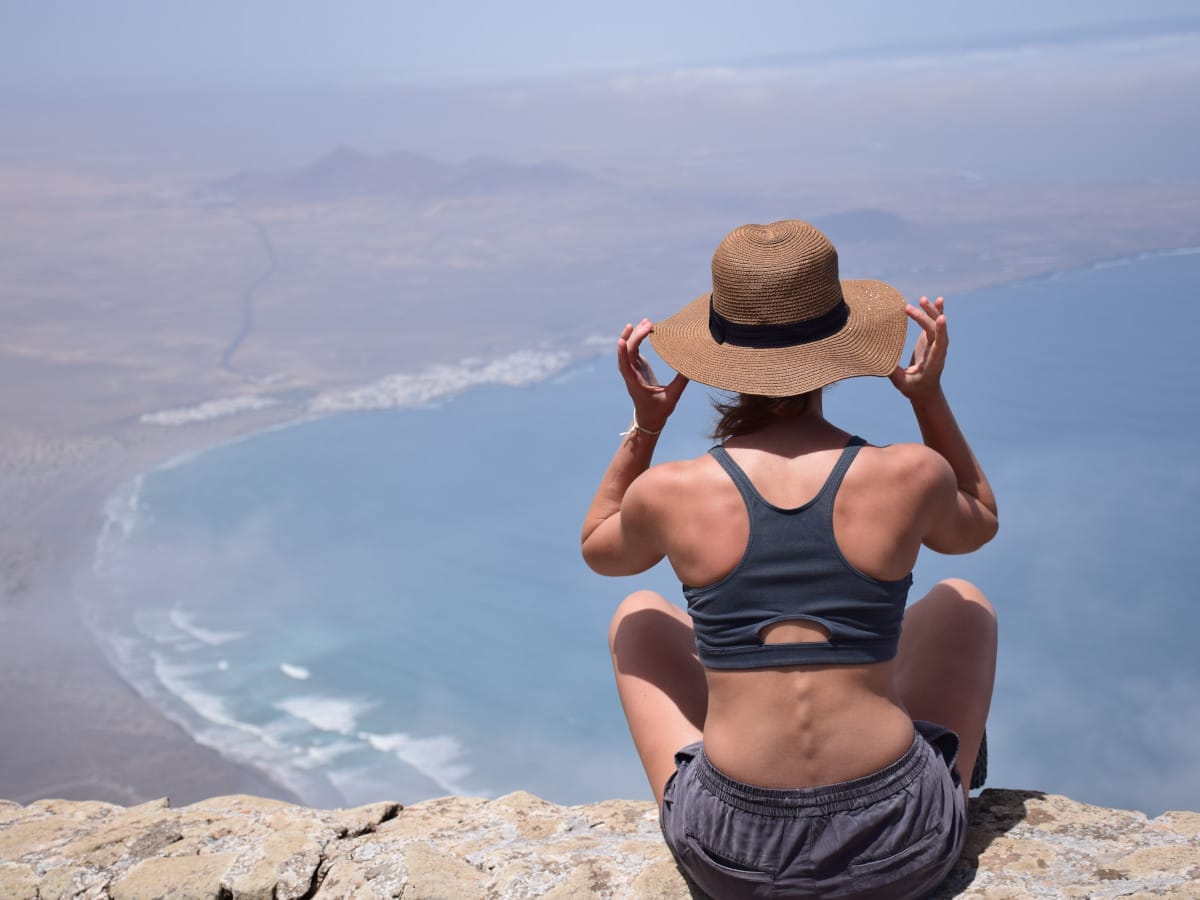
You don’t have to twiddle thumbs when waiting for waves in Lanzarote. There’s plenty to do, from trekking up volcano cones to driving under hulking mountains made of fire. Here’s just a taster…
Risco de Famara
Pull on the walking boots and hike the cliffs of Risco de Famara. The trailhead is in the town of Caleta de Famara, so most surfers should find it easily. The trek is an awesome one. It zig-zags through a deserted valley, past wild cacti and shrubs, then over a rocky ridge onto a plateau where you’ll see the highest point on the island and the observatory. The reward? Sweeping panoramas of the surf beach and the volcanos inland!
Timanfaya National Park
No trip to Lanzarote could be complete without a day at the amazing Timanfaya National Park. A desolate land that looks plucked from the surface of Mars, it was formed by the eruptions of volcanos centuries ago. These days, you can head there for scenic drives around the craters and even taste Canarian meats grilled above open magma chambers.
The whole place can be explored as part of this pretty awesome craters tour, all for just $35 per person or so.
Playa del Risco
Simply stunning Playa del Risco is only accessible after a long hike down a hair-pinning trail. That means it’s often deserted. But if you’re up for it, the result is a spot to call your own on glistening white sand that’s lapped by acquamarine water, all facing the beautiful island of La Graciosa.
We might use affiliate links in this post. Basically, you click em’ and we get a little something from your booking or purchase. They help us keep offering more and more in-depth surf guides to awesome places all around the globe. So, thanks for that!

Other recommendation in Lanzarote since 1996, surf school and surf camp with differents activities (surf, yoga, dive, kite and trekking) with comfort surf house just 100 meters from the paradise Famara beach. http://www.lanzarotesurf.com
Cheers Maike! Hope you’re finding time to surf during lockdowns!