Complete Algarve Surf Guide – Portugal’s Best Region?

The Algarve is quite possibly our single favorite part of Portugal to surf in.
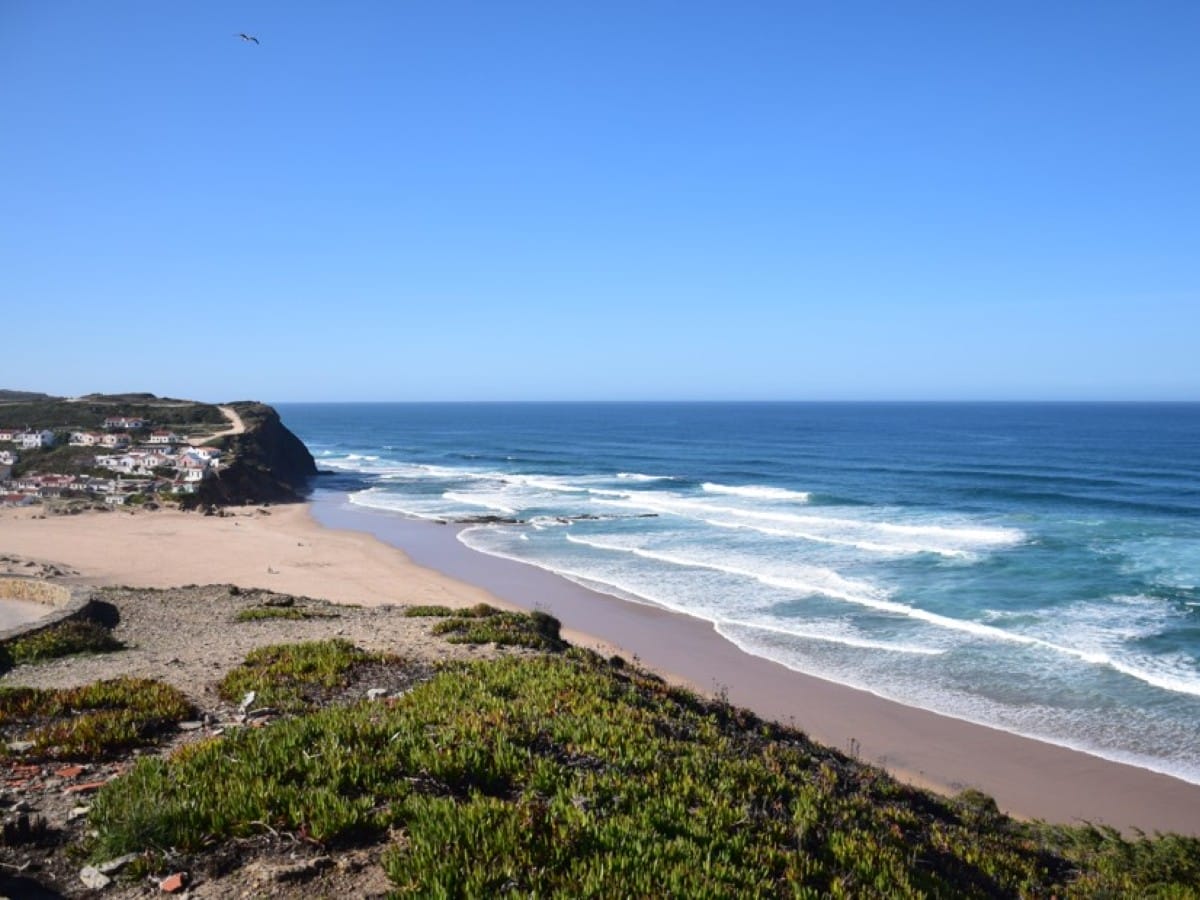
Sun-kissed beaches, high cliffs, green-blue sea waters, and salty towns that ooze character are all part of the deal here.
There are endless beaches and coves on the whole western coastline – a land that’s pure, pure quality.
What’s more, the south-facing shore works well for total beginners when it’s small and can be a gift in the midwinter as the NW storm swells get to triple overhead on the Atlantic-facing coast.
Sagres leads the way in the west. Together with the Aljezur–Arrifana duo, it’s one of the two real out-and-out surf towns in the region.
They all have access to spots with west-facing beaches that hoover up swell and almost always have a wave. Some are good for learners; others for chargers who want big reef setups – it’s a good mix.
The Algarve really shines for novices as you head south. The coastline there hosts popular holiday towns like Lagos and Portimao and Albufeira. But the golden beaches aren’t only for lazing with a Super Bock in hand. They can offer some top waves that are glassy and green.
There’s a very good surf-camp scene in the Algarve now. People have realized the sheer potential of having south- and west-facing spots for leaners, plus the other draws for would-be surf campers: Endless sun top of the list.
More than just the surf, I’d add that the Algarve has REAL atmophere. Whitewashed towns like Aljezur sit amid wild hillscapes of heather, where rivers are threaded with hiking paths and dashed with pine woods. It’s one of Europe’s most beautiful corners and surfing here is all the better for it.
We might use affiliate links in this post. Basically, you click em’ and we get a little something from your booking or purchase. They help us keep offering more and more in-depth surf guides to awesome places all around the globe. So, thanks for that!
This is a part of our greater guide to surfing Portugal
Key takeaways for the Algarve
The good:
- This is a super-pretty region
- Fantastic array of surf camps and surf stays
- Two coastlines that face different directions
- Great for all levels
The bad:
- West coast can get HUGE in the winter (but you can always head south)
- Some rank resort towns (but you can avoid them)
Surfing in the Algarve FAQs
The west coast has standout breaks like Arrifana, Amado, and Castelejo, all great for different levels. The south coast has mellower waves at spots like Zavial and Praia da Rocha when west swells wrap around.
Yes, the Algarve is one of Portugal’s top surf destinations, with waves all year and options for every skill level. The west coast gets more consistent Atlantic swells, while the south coast offers shelter on windy days.
October to April is prime time, with bigger and more consistent swell hitting the west coast. Summer is smaller but still surfable, especially for beginners and longboarders.
Surf spots in the Algarve (west and south)
The Algarve has two coastlines – one to the west and one to the south.
The first faces the brunt of the Atlantic Ocean, so expect the waves there to be pretty heavy and hard, with reliable sets coming in most months of the year. It’s the most consistent surf zone for sure, with something for all levels.
On the south, meanwhile, rideable days are less common, but there’s way more shelter that makes for some good beginner locations and excellent protection at key spots, which can fire with world-class waves when the heavy NW winter sets wrap around to come in.
Let’s take a look at both regions in a bit more depth…
Surf spots in the western Algarve

The western Algarve is arguably the best surf territory in the whole of Portugal. Big words, we know.
It’s got miles upon miles of stunning bays, most of them pretty remote, some accessible only on dusty country tracks.
But there are also fantastic surf towns here that are basically set up entirely with surf travelers in mind – Sagres, Arrifana.
The waves are really reliable, because they have a swell window open to anything in the NW down to the SW channels. It can get big, but there’s also plenty for beginners when it’s smaller, and the region reigns as a fine summer surf camp destination; one of the best in Europe.
Odeceixe
Odeceixe is a whitewashed town with another small segment of the village set above a beach a few clicks to the west. The beach is where you want to be. It’s a fine intro to proper south Portgual beach breaks, with good rivermouth waves and high consistency.
Not the best wave in the region but never the worst. Highly consisent and not to busy. Good for beginners in summer and can get heavy with a cap H in winter.
>>Read more about surfing in Odeceixe
Arrifana
Arrifana Beach is probably the most famous beginner-improver spot in the Algarve, and for good reason.
It offers two distinct breaks.
There’s a pretty reliable beach break that can often be a closeout on bigger days – kinda dumpy but fun. That’s host to surf schools and everyone up to intermediates trying to improve their take offs.
At the northernmost end of the bay is the harbor reef break. It’s always busy with local surfers when its working and is a very challenging right hander over a cobblestone bottom.
My two cents? This is the perfect place to come in summer to learn to surf. Just steer away from the harbor reef right if it does happen to be working, which is very unlikely between May and September.
>>We have a complete guide to the awesome breaks at Arrifana
Aljezur
Aljezur is a lovely little town in the northern Algarve. It’s become something of an international surfer’s hub in recent years.
There’s access to a handful of fantastic beaches, most notably the famous breaks at Arrifana (see above) but also wide Praia da Amoreira, which has biiggg outside rights and a rivermouth, plus some inside beach breaks for learners.
You’ll need a car to explore the area because Aljezur itself is like 15 mins inland. That’s part of the fun, though – you get to stay in old cottages under a Moorish castle and drive to whatever surf break you like.
>>Check out our full guide to surfing in Aljezur
Carrapateira
The cliffs of Carrapateira can fire off some of the best lefts in the region. Can handle a lot of size and power but are mainly for experienced surfers from Autumn onwards.
The beach here – which is huge, long, wide, swell-sucking Bordeira Beach – also has multiple breaks that can get peaky and hollow on harder days, but there’s plenty of easier stuff for beginners when the swell is smaller May through to August.
The whole place is also downright stunning! The beach is gold-white sand and backed by a wiggling river. It’s a top place to base yourself if you a) have a car to get around and b) like being away from the towns.
Where to stay? Hortas do Rio – Casa de Campo is so, so nice. It’s a boho boutique hotel with a pool overlooking the dusty hills, 10 mins from the beach, great terraces. Kinda heaven tbh.
>>Check out our guide to the Carrapateira surf today
Praia do Amado
Praia do Amado is a genuinely fantastic spot. It’s a beach break with some attitude, picking up lots of swell thanks to a NW orinetation.
Throughout the summer, Praia do Amado is seen as a good hangout for surf schools. But they mainly come for the whitewash and secondary swell.
Out back can be quite big and it can hold up to about 12 foot. I’ve seen bombs dropping here; big, frieght train rights peeling from the middle to the outside of the bay.
I’ve also seen it super mellow; longish log waves with fat walls.
Check the forecast and plan a trip in for the conditions that suit you.
Hazards are the crowds in summer and the rocks that are under the water – some aren’t even spottable at low low tide so be careful where you go. If in doubt, follow the lineup or ask at the local surf shop that’s on the beach.
>>We have a complete surf-travel guide to Praia do Amado
Praia da Cordoama
Praia da Cordoama is longer than its near neighbor of Castelejo and generally a bit more popular, though it offers a similar combo of consistency and sandbar waves with the odd rock poking out here and there.
Level here depends on what swell is kicking. It can be pretty big with nightmare paddles or it can be super easy and for beginners, usually in summer.
>>Read our full guide to Praia da Cordoama
Castelejo
Castelejo can be a super-nice beginner A-frame with small, knee-slapping practice waves. Or it can be a heavy spot with steep right and lefts coming off a central peak.
It all depends on the swell and the wind. Both of which this beach gets by the bucket load.
It’s a summer stomping ground of a few of the surf schools out of Sagres and even Lagos, offering neat little green waves and good consistency.
Autumns crank up the size and it gets kinda hard, though I’ve seen lovely mid-high days that suit midlenghts and single fins as much as shorties well into November here.
There are a few rocks around but it’s mainly sand bottomed.
Most of all it’s a seriously gorgeous place to surf.
>>Read more about Castelejo Beach in our complete guide
Vila do Bispo
Vila do Bispo isn’t a surf spot but a little village that’s primely located for accessing almost all of the west-facing beaches in the Algarve, espiecally Castelejo and Cordoama.
We now rank it among the best surf towns in the region because it still feels authentic and real, at least for the time being.
If you do stay here, I’d reccomend a rental car to get about.
>>Read more travel to Vila do Bispo
Ponta Ruiva
Ponta Ruiva is a pretty epic wave when it works.
It’s a long left hander pont that comes off the jagged rocks you can see poking out from the western end of the bay (the bay is kinda north facing, so the western end is out at sea).
Does best in SW swells but can also work on NW swells, when it will generally be more sectiony and a lot heavier. The reef here is a patchwork of set rock and loose cobble and it will get shallow as the tide retreats so watch where you lip out.
I’ve surfed this one on some sweet days, with like 3-5 foot SW and light winds (it was autumn, which is prime because the northwesterlies dip a touch) and it was so fun. Rippable and trimmable if you brought the log.
The only issue is bad – like super bad – access on a dirt track. Some don’t mind it but my hire car wasn’t one of em’.
>>We have a complete guide to Ponta Ruiva
Beliche
You’ll find Beliche beach huddled under dramatic cliffs to the north of Sagres. It’s a gorgeous setting, far enough away from town never to be busy.
And it has one of the classiest waves in the whole region; pretty much the only proper wedge in the Algarve.
It sucks off a really shallow shelf of beach on lower tides to give some super-fun shapes. They’ll hollow out on bigger days to give mini cover ups and are always home to a big crew of local.
It’s a beach break, yea, but it’s not for beginners really.
>>Read a full guide to surfing in Praia do Beliche
Sagres
This is the kingpin of Algarve surf culture.
Perfectly situated right at the end of the region, where it pokes straight out into the Atlantic Ocean, Sagres has three workable surf beaches.
Tonel is the one that most intermediates+ will head for, but also beginners in summer. It’s a good beach break with reliable surf at low tide, though there are some rocks.
On the flipside of the headland is Praia do Martinhal. Have that on the radar if you’re a beginner or elsewhere is blown out.
Basically, Sagres is the Algarve’s surf capital. It’s the place to go when you want surf classes or a full-on surf holiday, great access to both coastlines, and some good nightlife to match.
>>Have a look at our complete guide to surfing in Sagres – the surf capital of the Algarve
Surf spots in the south Algarve

The south Algarve has nowhere near the same consistency as the west Algarve. However, we would never write it off. There are actually some onerously quality break in the area, like the hollow walls of Zavial (hotly contested, mind you). When the winter is battering the Atlantic seaboard, it can also be one of the best places to seek shelter and catch some nice waves. The water’s warmer, too, and the weather is fine…
Zavial
Arguably the single best wave in the south Algarve, Zavial is a right hand barrel that goes off on the huge NW winter swells. It’s a magnet for the best surfers in the area in the depths of winter, and honestly the localism is baaaddd.
However, there’s also a long beach section that can have some nice A-frames and knee-high waves on mid-sized swells. It’s about 200m away from the performance wave and has none of the localism. It’s a common go-to for surf schools nowadays and good fun.
>>I have a full surf-travel guide for Zavial if you’re keen to surf this spot
Salema
Salema is one of the few authentic fishing towns still around on the south side of the Algarve. Though it is now quite touristy, it still has white-painted cottages on cobbled lanes right beside the beach,
It’s mainly for sun vacationing, but the location means it’s an undeniably good base if you want to have a holiday of chilling with some surf on the side – there are some local breaks but you’re also only 20-30 mins from those top-quality west coast breaks.
>>Check our full guide to Salema
Burgau
If you want sun, sea, sand and proper Algarvian slow travel then come to Burgau. This idyllic fishing village is right on its own beach, which is stunning, and it does have a wave, usually in the winter with big NW swells, though it’s a good beginner spot in summer too.
The real ace here is the fact that you can drive out to pretty much any of the west coast beaches of the Algarve in 20-40 minutes.
I use it as a base and venture out to find surf if the town is flat, which it often is.
>>Tempted by Burgau? Read more about staying and surfing in Burgau right here
Praia da Luz
Mostly a holiday town but facing a gorgeous big beach, Praia da Luz has two point breaks. One goes left and is fast and shallow. The other is a little easier going. Both waves hold up to around 5ft. Hazards include the reefs that ring around the big Rocha Negra rock. Only a short drive from the city of Lagos for easy access.
Lagos
Lagos is a lovely town of cobbled streets and old churches. It’s fricking fun too, with a good nightlife scene and cafe culture.
That’s actually why it’s one of my personal fav bases for surfing in the autumn and winter, when the Algarve’s south facing beaches can get good swell.
Come here, enjoy the vibes and hope you can surf the two local beaches. If not, the western Algarve and it’s ultra-reliable breaks is only ever 30 mins’ drive away.
>>Read more about surfing in Lagos
Albuferia
Albufeira is better known as one of Portugal’s buzzy resort towns. In the summer, it’s a party and R&R mecca.
Access to some of the most stunning beaches in Europe is a major draw. However, surfers can enjoy lots of surrounding breaks, which tend to be suited mainly to beginners.
>>Read our full guide to surfing in Albuferia
Faro
Faro is the home the main airport in the Algarve. It also comes surrounded by long, wide beaches where the surf can sometimes sit up on a SW swell in the winter. It’s mainly beginner stuff, but there are some faster lefts on the harbours of Praia da Falesia for more experienced boarders.
>>Read our full guide to Faro surf right now
Surf camps in the Algarve

If you’re coming to the Algarve simply to surf and nothing else, then there’s really no better way to plan your trip than with a full-on surf camp.
There are over 60 available in the region. You can search the lot here. However, there are a few that’s we’d recommend for what they include and the accommodation that’s available…
- Russo Surfcamp – Our top pick in the Algarve this year. Super-cool spot near the cream of the west coast beaches. They have a pool AND a half pipe. Great instructors. Lots of surfing. Just all-round a cracking option.
- Tiny Whale Surf Lodge – We ADORE the Tiny Whale Surf Lodge. Seriously, it’s fantastic. Super chic and very nicely designed, it’s away from the hubbub of the southern resorts. There’s an in-house yogi guru for your morning chi and a top pool to chill at. The surfing takes place on both the west and south coasts, with instruction that lends itself to intermediates.
We’ve got loads more tips on the top surf camps currently running in Portugal right here. Plus we have a guide to the best surf camps in the Algarve as a whole.
The best hotels for surfers in the Algarve
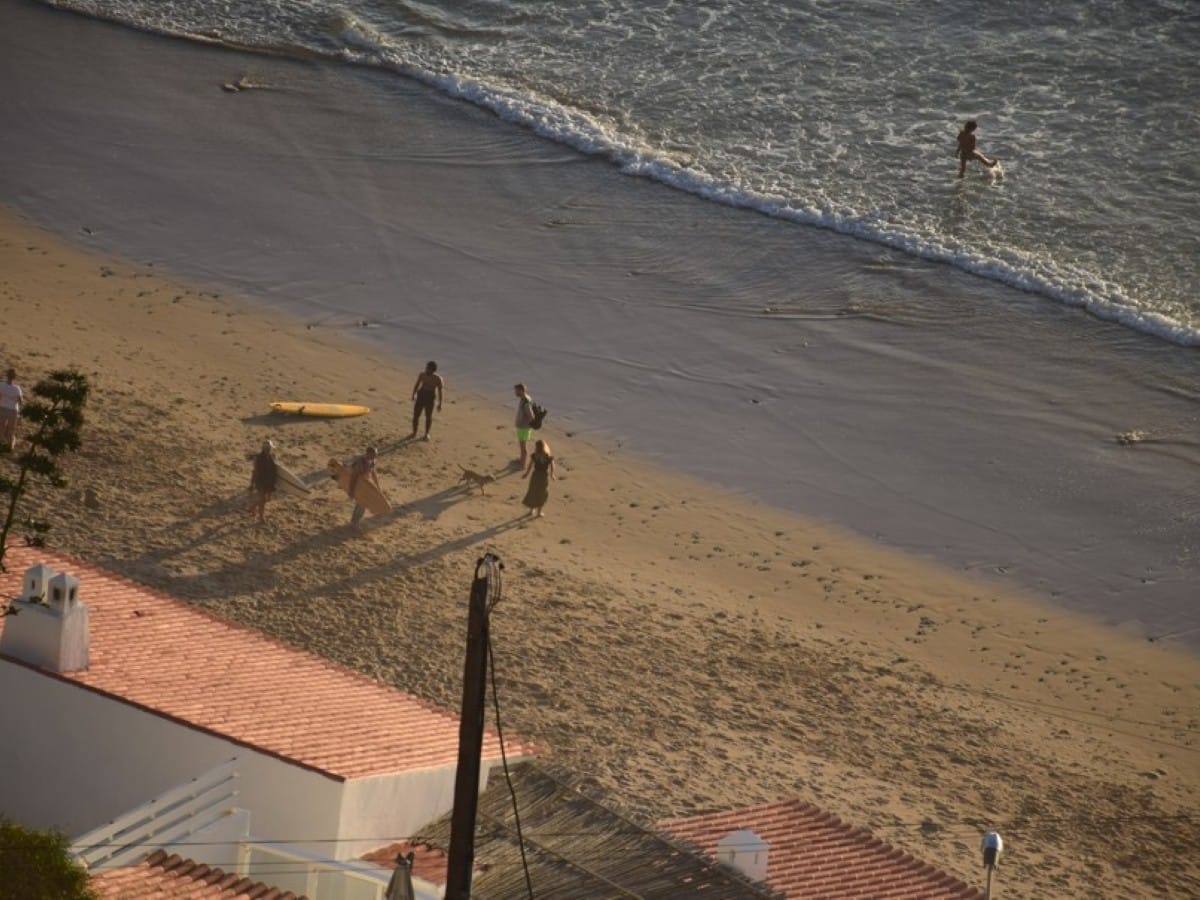
The Algarve is no stranger to hotels and resorts. This is the most holiday-friendly corner of Portugal, remember? These days, you’ll also find places that are either out-and-out surf establishments or really well located for waking and hitting the waves…
- Endless Summer Surf House – This one gets you into the heart of the prime surf territory of the Algarve, above the beaches of Arrifana (great for beginners) and Monte Clerigo (intermediates+). It’s a stunning accommodation. The style is sort of boho boutique and there’s an on-site pool. It really is a corker. Book early for the summer – it usually fills up!
- Aldeia Caiçara Surf House – A very cool new addition to the line up of surf stays in Sagres is this boutique surf lodge. It’s small enough to feel like your hanging with friends, has a lovely garden for chilling, its own surf rack, and they do all sorts, from yoga to pub crawls to movie nights.
- Good Feeling Hostel & Guesthouse – If you’re on a tigher budget, this hostel-surf lodge combo could be the best pick. It’s perfectly located for driving to both coasts – south and west. It has loads of amenities for surfers like outdoor showers etc and is just all-round nice vibes. There’s a pool too.
Surf lessons in the Algarve
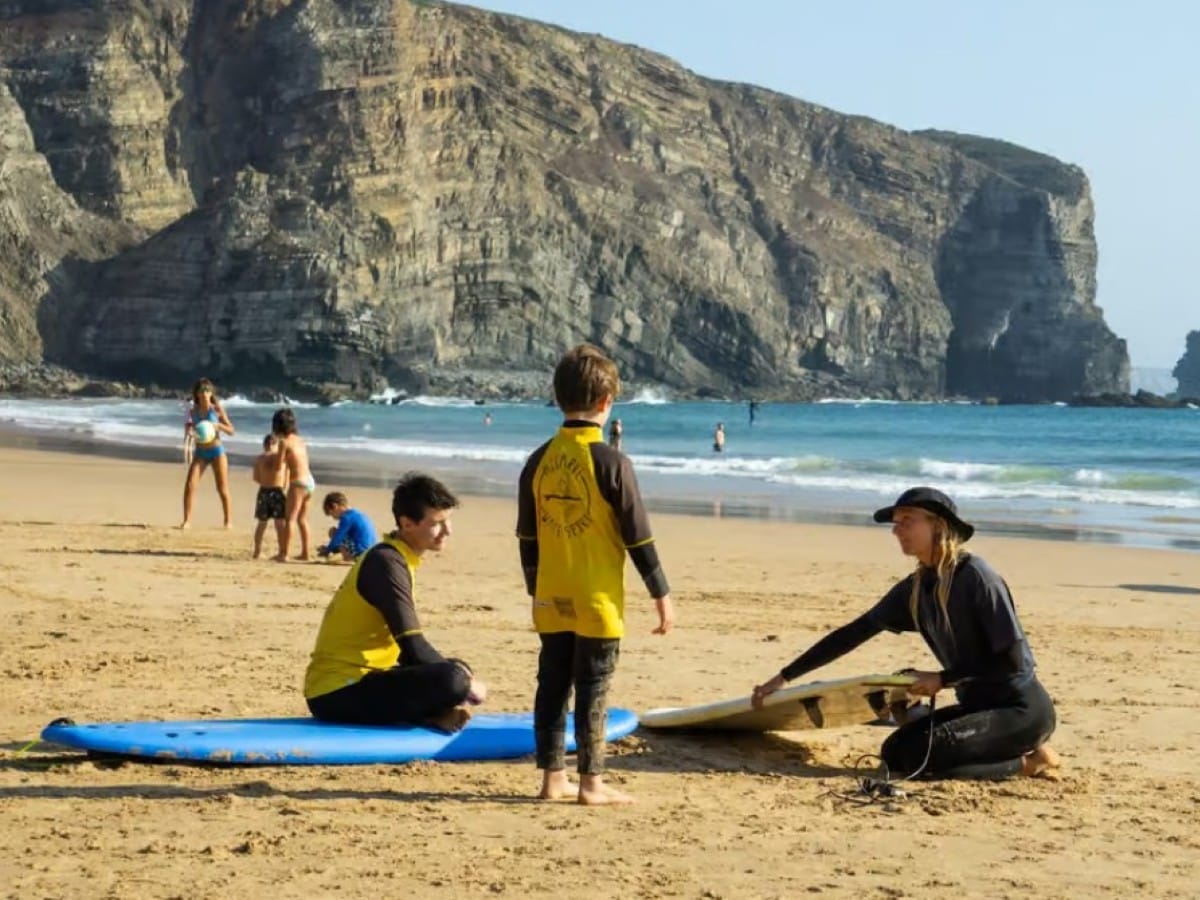
If you don’t go for a surf camp and you just book accommodation somewhere, or if you’re just on a holiday in the Algarve and fancy trying surfing, then there are plenty (like – PLENTY!) of really great surf schools that offer short lessons for about $30-60 a pop.
Most of them are around two hours and include initial out-of-water training followed by help catching at least whitewash in the water. If you’re a more advanced surfer, then these are still good options but be sure to make a note of your level when you come to book.
As we say, there are tonnes to pick from in towns like Sagres and Aljezur. You can usually just walk into the surf school and book a lesson on the spot. However, if you’re the organized type or like to ensure you’re getting something quality, you can prebook the ones below…
- Algarve: 2-Hour Beginner Surf Lesson – The quintessential 2-hour package that total beginners need to get started, this one takes you to the fantastic surf area of Sagres. The equipment they use is top quality and it’s never more than eight in a group, so you should get plenty of attention.
- Albufeira: Surfing Lesson at Galé Beach – A surf package that’s squarely aimed at family and group holidayers in the town of Albufeira, this 2-hour lesson is on the best beach in the area (Galé Beach) and includes all your gear and equipment. You’ll need to meet on the beach itself.
When to surf in the Algarve?
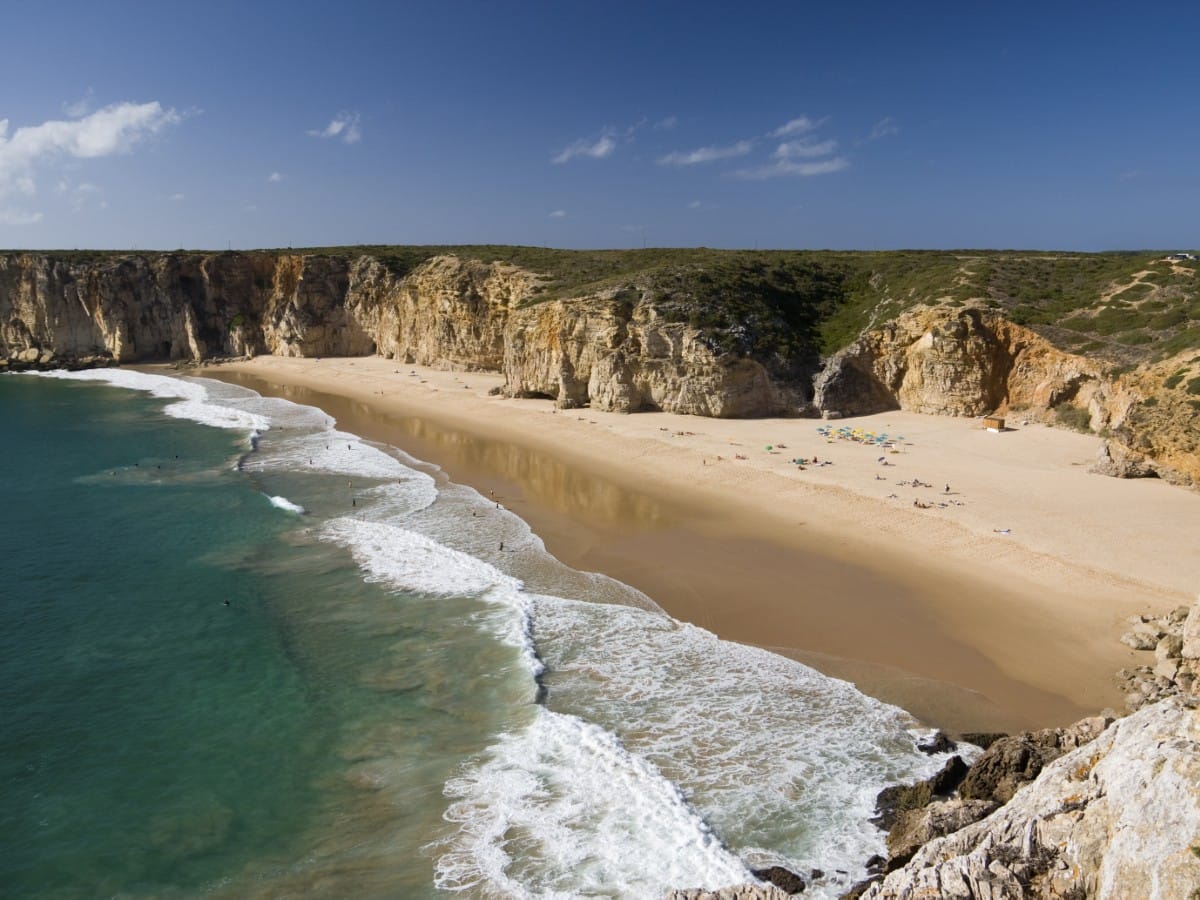
The Algarve has one of the longest swell seasons of anywhere in Portugal. That’s thanks to its unique geography; one foot southwards, one foot westwards.
Summertime generally sees things mellow out and the Algarve surf schools draw more beginners. Winter can be big, but it’s no Nazare – there’s usually something going for intermediates in the more sheltered bays.
October – March
The best time to come to surf Algarve’s shores. When the ocean starts putting swells up through that all-important N-NW channel, there’s really nothing better than a morning session down on the southern Algarve or in the big beach bays that filter away from Sagres. They can go overdrive sometimes, true, putting closeouts into the unsheltered spots. But, generally speaking, the conditions are reliable, with more rideable days than not.
The seas do cool in the winter, but they are still the warmest in the country. A wetsuit and booties are probably needed. Winds come offshore to help with wave shape, and the weather tends to be mild and spring-like, save in the height of winter – Dec, Jan.
Wear: 4/3 – that’s enough to see you through the whole season unless you really feel the cold. We’d also pack boots and gloves for December and Jan.
April – September
The start of the busiest season in the Algarve means the coming of the tourist crowds. Places like Luz and Lagos will fill to bursting with sun seekers. Resorts like Albufeira will be nigh on unbearable. What’s more, the Atlantic slackens its power from autumn onwards. There’s not the same day-to-day surf hitting the south coast, and even the west coast can be unpredictable. Still, there are great sessions to be had, especially for novices who are keen on mellow beach breaks in warm, clean conditions.
Wear: 3/2 is the wetty of choice. Nothing else needed. Apart from a good sunscreen, of course!
One thing we wouldn’t skip on is sunscreen.
I use Suntribe’s blocks because they’ve made a real effort to strip out any unneccessary chemicals.
Plus, they offer Surf Atlas readers 10% off orders with code Surfatlas10.
How difficult is surfing in the Algarve?
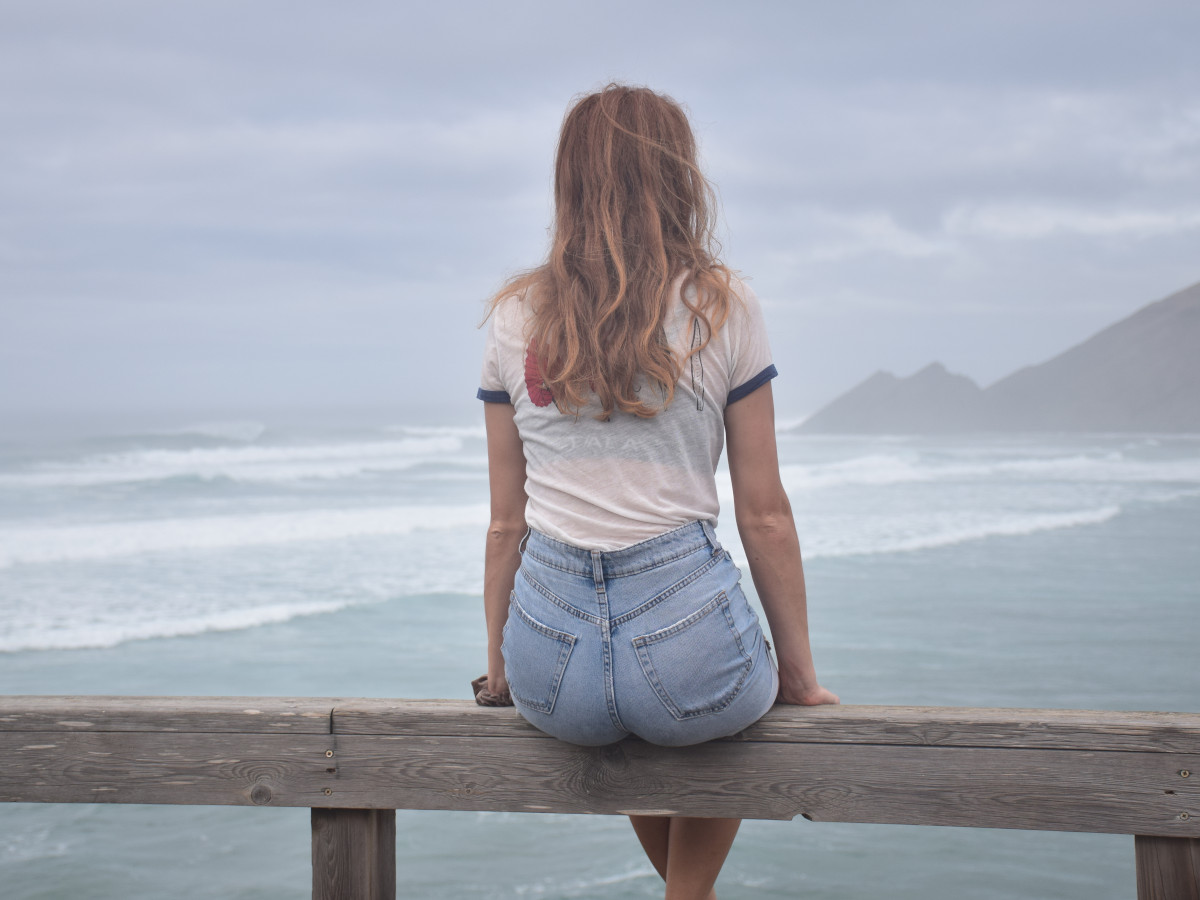
The beauty of the Algarve is that it has two very different coastlines. Facing south, the one that runs from Sagres to the Spanish border is WAY less exposed than the one out west, which goes north from Sagres all the way to Odeceixe.
When the waves are pumping in autumn and spring, it’s common to find one stretch (the west) firing off huge overheads while the other (the south) is suited to beginner surfers. That’s why you often find many of the surf schools and Algarve surf hostels are near to the bigger resorts of the south coast.
The downside is that those southern beaches aren’t very reliable. To put it another way, the easy-level surf of the Algarve can often totally disappear. When that happens, the surf schools tend to move to other towns and beaches (which are rarely more than 40 minutes’ drive away) that are known for more forgiving waves – Arrifana, especially.
On the top end of the spectrum, the Algarve can fire out some seriously gnarly conditions for the rippers. Even the west coast’s easier beaches like Arrifana have right-hand barrels that come alive on big winter storms. The season really is key, though. From November onwards, there are many more intermediate+ only sessions to be had out west. Learners need to stick to the south coast when that happens.
Travel essentials for surfers in the Algarve
Where is the Algarve?
The Algarve caps off the southern end of Portugal. It’s right on the south-western tip of mainland Europe as a whole, which means it faces the straight out to the Atlantic Ocean. That’s where the swell comes from. To the north is the lesser-known and huge region of Alentejo. To the east is Spain, and the surf towns of Cadiz and the south coast.
How to get to the Algarve?
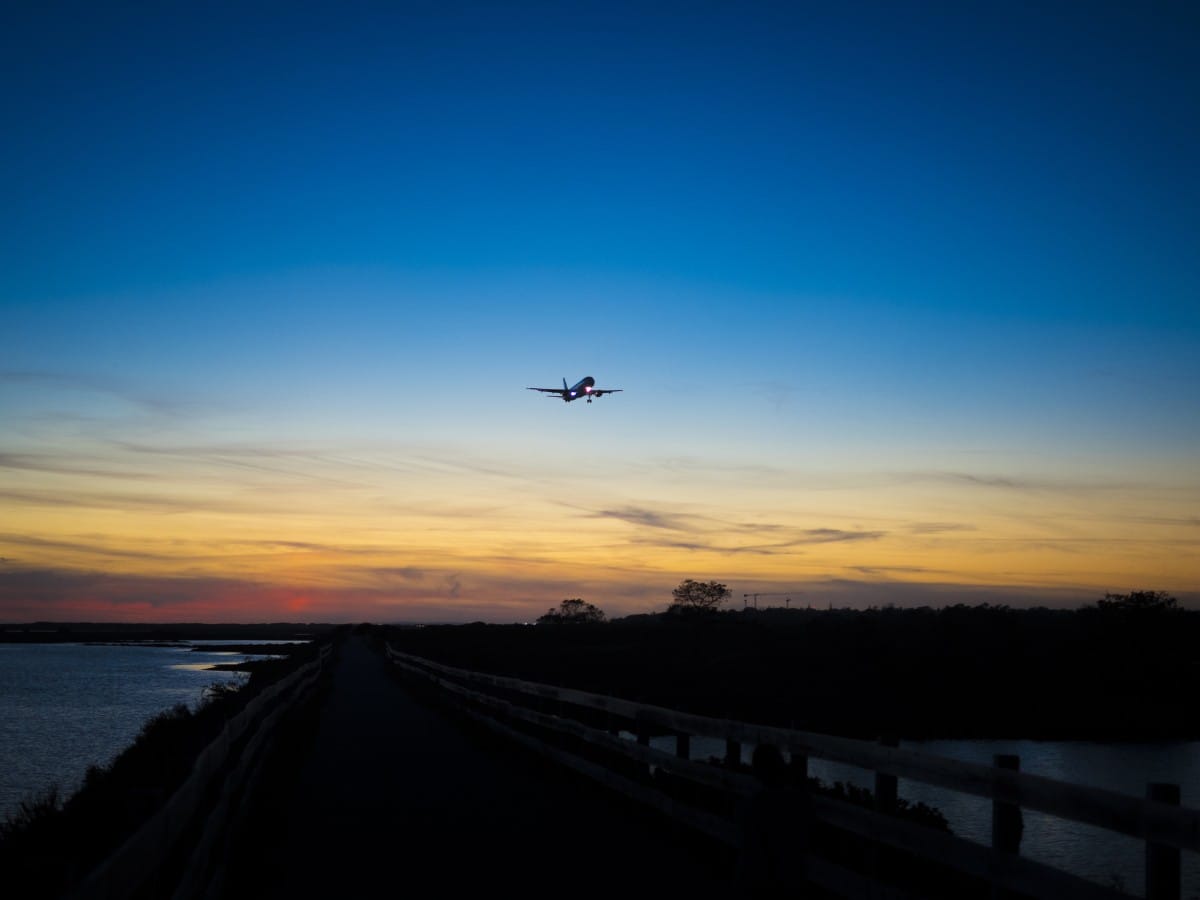
Because the Algarve is such a big tourist hotspot, you shouldn’t find it hard to get in – either by air or overland.
Faro Airport is the main gateway. It’s a top arrival point for low-cost carriers coming from all over the continent (with loads of connections on Ryanair and easyJet from the UK, BTW).
Most those run seasonally, which means fewer dates during the peak Algarve surf season of the late autumn through to spring but LOADS in the summer months. Annoying, but you can still find connections.
Buses can take you to towns like Lagos, Sagres, Faro and Albufeira straight from Lisbon. They take a just shy of four hours in total and cost in the region of €20. There are also bus options straight from Faro Airport to Sagres, taking maybe 1h20 in total.
You can search and book those using Omio, which offer pre-book tickets with most major Portuguese bus companies.
Should I rent a car to surf in the Algarve?
That’s totally up to you.
The way we see it, there are two types of surf trips possible in the Algarve.
There’s the trip where you pick one beach or surf town and make do with that wave for your whole 4, 5, 6 days, whatever you come for.
Then there’s the surf trip where you plan on surfing multiple spots around the region.
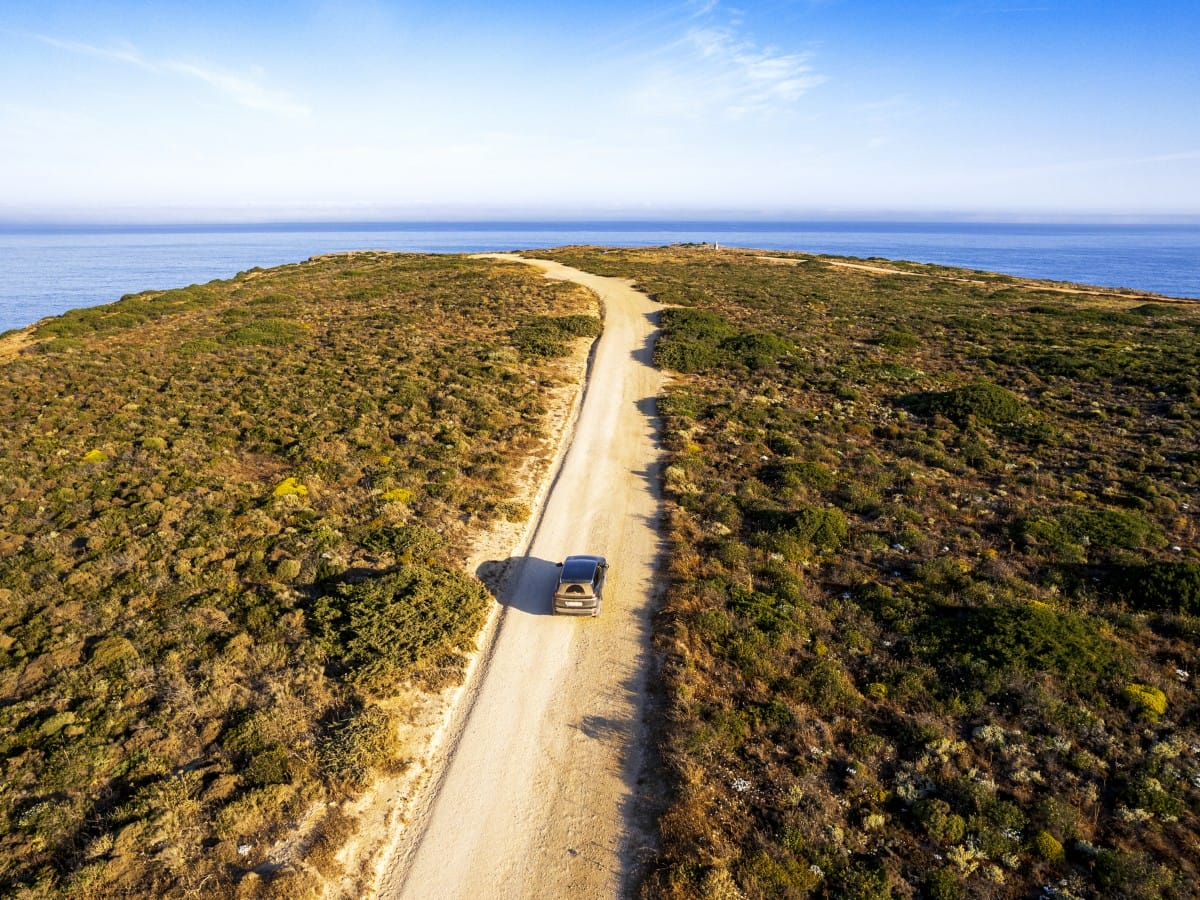
The latter option is actually something that the Algarve – particularly the western Algarve – is uniquely well suited to, because it’s linked up by excellent roads that are rarely busy.
(Oh yea, and car hires in these parts tend to be cheap by US and European standards – think around $250-400 for the WHOLE MONTH, depending on the season.)
Our two cents is that if you’re looking to move around a little and surf various spots, then the Algarve is one of the best regions in Europe to do it.
You can base yourself in Aljezur or Sagres and hit 20+ spots within 20 minutes’ driving. Or you can plan an itinerary that includes four or five separate surf towns in the same week.
We now use DiscoverCars because they’ve proved the cheapest for us in Europe on our last few trips.
(We’d really appreciate if you book through our links here – it’s just a bit of extra $$ to help us keep surfing and writing these guides!)
What to do when you’re not surfing in the Algarve?
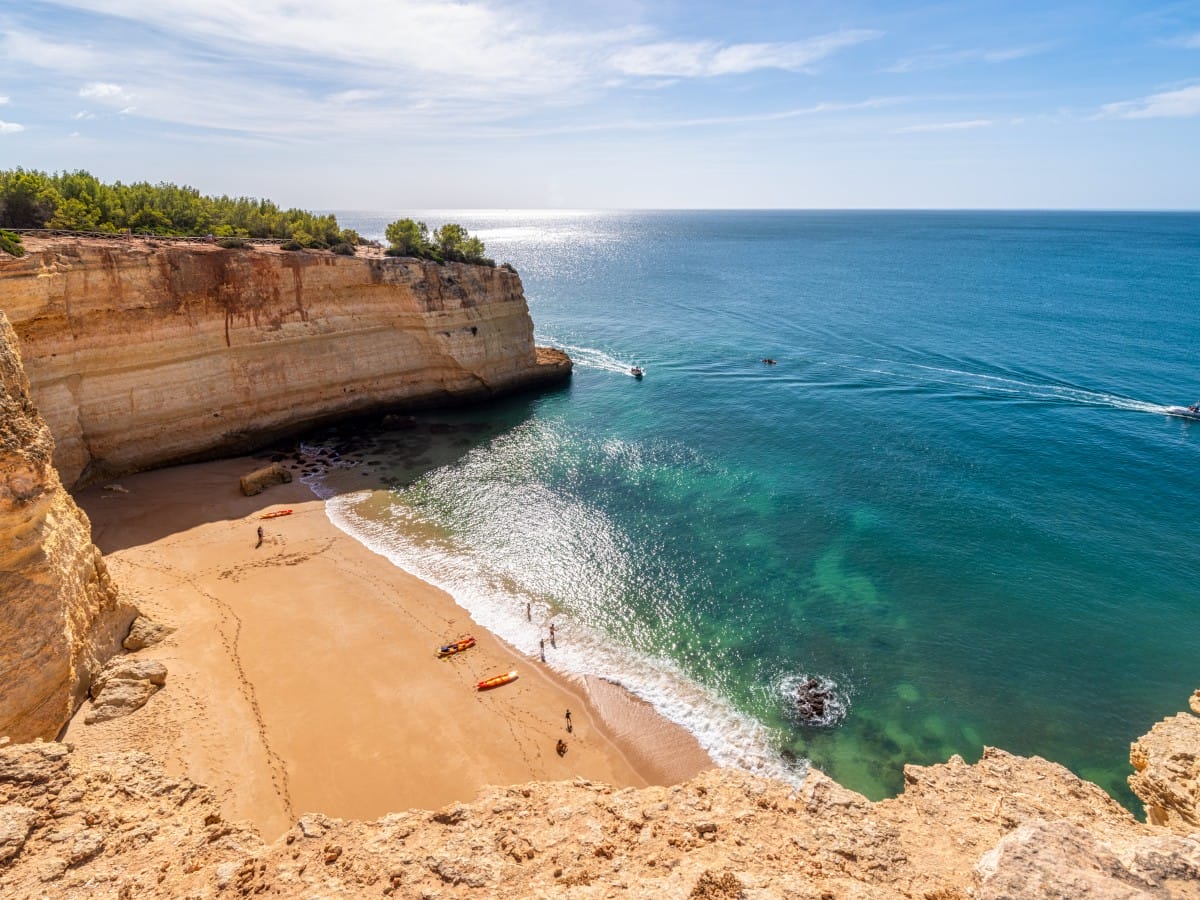
The Algarve is pretty fantastic as a destination, even without the surf. It’s known for its big party towns (which aren’t my personal scene but hey ho), spectacular beaches (which very much are my scene) and loads of other history and food culture.
The things I try to get through when I’m not surfing would usually include…
- Praia da Rocha – Perhaps the most stunning of all the seriously stunning beaches that fringe the Algarve, Praia da Rocha is one you’ll want the camera at the ready for. It’s framed by high cliffs of ochre and orange, washed by seas of see-through blue. There’s a big rock arch at one end and high stacks of stone that seem to jut straight out of the water. It’s simply beautiful.
- Party in Albufeira – Sagres might have some great après surf bars, but there’s no match for the hedonism of Albufeira in the midsummer. Think about bookending your Algarve surf trip with a few days in this pumping resort. Be warned: It’s proper 18-30s stuff. Like free shots at disco bars.
- Wander the amazing Lagos Old Town – The Lagos Old Town is a pretty conglomeration of tile-fronted buildings and cafe-filled squares that’s a great place to explore if it happens to go flat for a day or two. The 16th-century walls are generally the highlight but there’s also and amazing fish market and some top Portuguese seafood taverns.
- Benagil Caves – These are touristy but amazing, so it’s clear to see why the crowds come. A series of open-top caves on the south coast, with sand and sea in a cavern. You can only enter via the water, so either rent a sea kayak in nearby Benagil or take a boat tour like this one that includes dolphin watching!
>>We actually have a full guide to the best beaches in the Algarve for surfers and non-surfers
We might use affiliate links in this post. Basically, you click em’ and we get a little something from your booking or purchase. They help us keep offering more and more in-depth surf guides to awesome places all around the globe. So, thanks for that!
