
The Ultmate Guide to La Gomera Surf

La Gomera is an outlier in the Canaries in that it’s not really considered a major surf destination. The reason is obvious. Just look up – those jagged, serrated volcanic peaks, rising ever so steeply from the Atlantic. They produce a coastal topography that’s often simply too rugged for waves to bend and break their way through.
But there is the odd place. One is pretty famous. Cue Valle Gran Rey, where heavy barrels suck off an almost dry stone reef to create some hefty challenges for advanced surfers. It’s mostly locals there, but the spectating is fantastic.
Beyond that, there’s a promising north shore of large bays beset by big mountains that holds some secret treasures, plus a couple of spots that might just work for learners if the swell stars align. This guide will cover the lot, and offer some tips for folks keen on paddling out on this lesser-known Canary.
We might use affiliate links in this post. Basically, you click em’ and we get a little something from your booking or purchase. They help us keep offering more and more in-depth surf guides to awesome places all around the globe. So, thanks for that!
Surfing in La Gomera at a glance
The good: One seriously awesome slab break / Potential secret spots / Very pretty island
The bad: Way better surf in other Canaries, including neighboring Tenerife / This island is a bit hard to get to
Surf spots in La Gomera

La Gomera, though modest in size, still has a few places that can hoover up that almost ceaseless Atlantic swell and offer nice waves.
The north shore is, for us, a secret that’s just waiting to be discovered.
The more famous spots are exposed in the far southwest. Here’s a closer look…
Valle Gran Rey
Valle Gran Rey is the location that most good surfers are talking about when they discuss La Gomera. Optimal in northwest swells and light SE winds, it acts a bit like a north Cali point, sucking in those big winter sets and bending them around a small headland that juts out westward into the Atlantic.
The reef here is shallow as shallow can be, and it’s really a prime spot for tray riders. That doesn’t deter the local shortboarders who will be on it like limpets as soon as it starts kicking.
The take off is fast, often right by the cliff edge, into a steep and sectiony wall that barrels and can re-barrel before fizzing out into the small rock cove of El Callao de Las Mozas.
Come and watch for a while before attempting anything. It’s a tricky spot.
Alojera
Known for its secluded charm, Alojera suits only the most experienced surfers seeking a proper challenge.
Best with northwest swells and northeast winds, just like its compare down in Valle Gran Rey, it’s a much more daunting prospect to be frank.
In fact, we’ve never actually seen anyone surfing the break here. It’s generally a slabby bomb that comes off the harbor wall and smashes straight into the reef out front. Perhaps it’s not even possible. We certainly don’t recommend being the one to find out!
Playa y Baja de la Sepultura
Playa y Baja de la Sepultura isn’t an easy prospect. There’s a gnarly descent from the mountaintop to get to the beach in the first place. Then, the waves are usually beefy closeouts that are beset by big currents.
Some days can see the NW swells drop and it will shape into neat longboard lines here, and there will be hardly a soul on it. If that happens then it’s totally up to you if you want to make the long, hard hike down. Good shoes are a must.
Playa Hermigua
We’ve heard rumors that mid-sized, long-period swells with plenty of N in the direction can work a charm at Playa Hermigua. The long, dark-rock beach certainly is beautiful and certainly has enough exposure.
Usually much, much smaller compared to the west coast but rips and currents can be strong up here, so there’s still call for caution.
The one spot that we do know works at Playa Hermigua is the right off the cliff to the south, a wedgy number that’s on shallow boulder reef.
When to surf in La Gomera?
La Gomera’s surfing season is at its best from October to April, with the Atlantic Ocean delivering consistent swells in the W-NW channel. During these months, surfers can enjoy a variety of waves suitable for all levels, and those west-coast spots at Gran Rey and the like will be working at their best.
The winter months often bring larger, more powerful swells, ideal for experienced surfers. Beginners might prefer the summer months, where smaller, more manageable waves are common.
Where to stay when surfing in La Gomera?
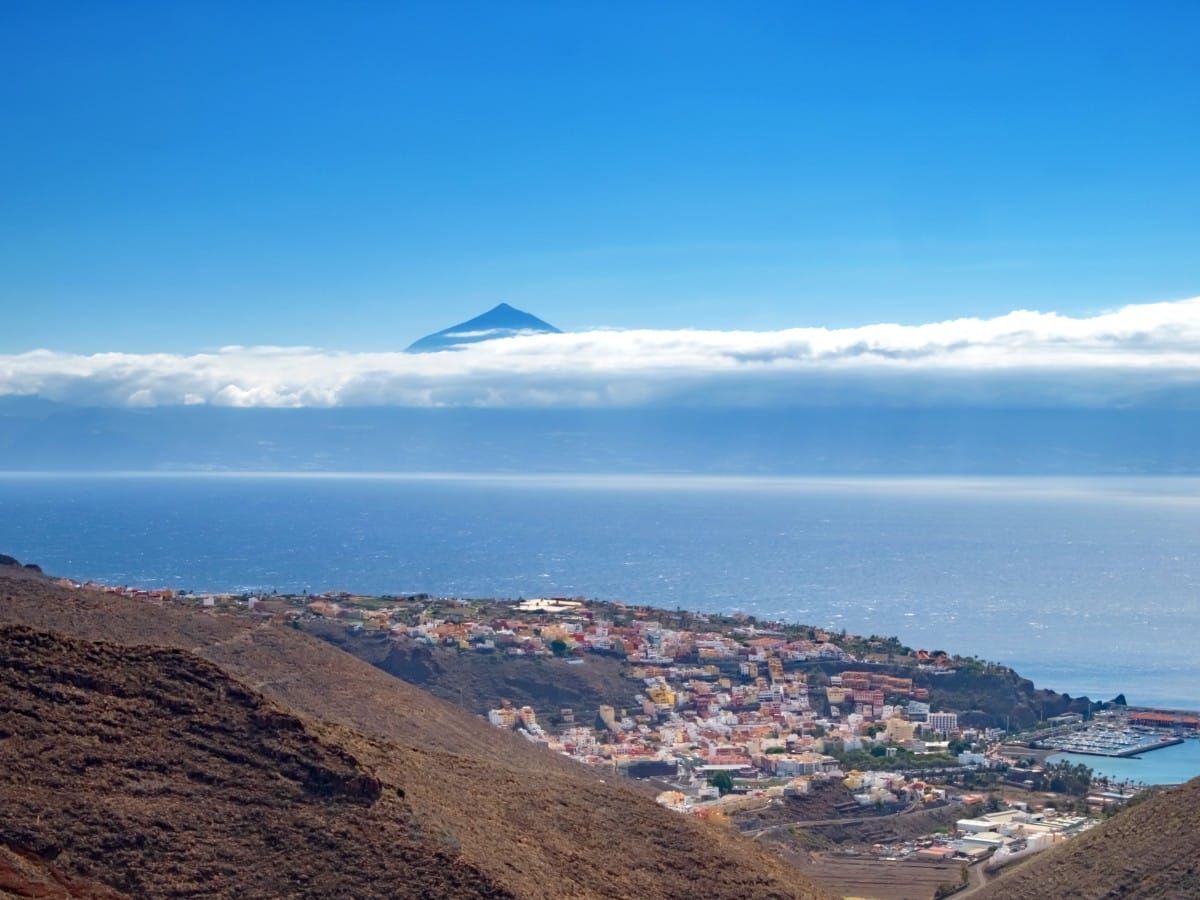
There are no dedicated surf hotels on La Gomera. It’s not really an island for surfers, so that’s why. Anyway, there are some lovely places to bed down. The best thing to do is book one, get your own car, and go from there.
- Hotel Playa Calera – Located near Valle Gran Rey, this hotel offers quick beach access and stunning ocean views, ideal for surfers looking to hit the waves early. It’s sort of the hotel where people go to surf Gran Rey but also a nice prospect, especially for that stunning infinity pool on the edge of the isle.
- Parador de La Gomera – Offering a mix of comfort and traditional Canarian architecture, this is a serene place to rest with easy access to most of La Gomera’s surf spots (so long as you have a car) and a pool perched above the Atlantic.
- Casa Luz – High on the rocks of the north coast, this house rental is a short drive from the potential breaks at Hermingua and has sweeping views that encompass Tenerife in the distance.
Other things to do on La Gomera
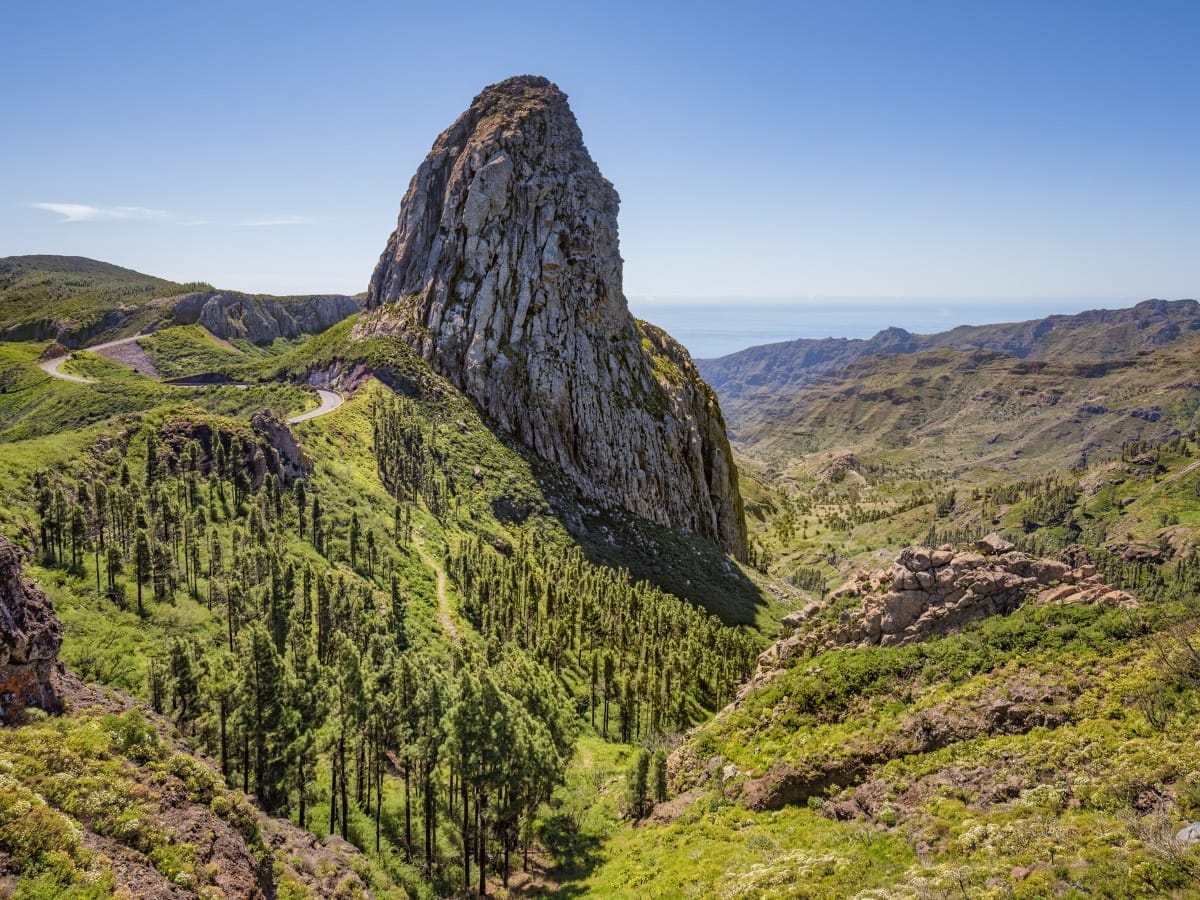
La Gomera is the sort of island where you could leave the board behind entirely and still have an incredible time. It’s all about raw nature here – mist-drenched laurel forests, vertigo-inducing ravines, and remote mountain hamlets where life ticks along as it has for centuries.
The island might be small, but it’s a hiker’s and explorer’s paradise, rich with viewpoints, trails, and cultural quirks that feel light-years away from the bustle of Tenerife across the channel.
If you’ve decided not to surf here and stick to another Canary (a wise choice I’d say), there is a middle option: Stay in Tenerife, where there’s LOADS of surf, and do a daytrip over to La Gomera.
- Garajonay National Park – A UNESCO World Heritage Site, Garajonay is a world apart. Think moss-covered trees straight out of a fairy tale, trails that wind through ancient laurel forests, and viewpoints like Alto de Garajonay that deliver 360° panoramas of the whole island. Bring a jacket – the mist and drizzle are part of the magic here.
- Mirador de Abrante – Suspended over a sheer cliff, this glass-floored viewpoint looks straight down to the red-roofed village of Agulo and the Atlantic beyond. It’s a thrilling stop that captures La Gomera’s dramatic geography in one snapshot. There’s also a sleek restaurant here where you can watch the mist roll in over lunch.
- San Sebastián de La Gomera – The island’s main town, San Sebastián, is steeped in history – it was Christopher Columbus’s last port of call before sailing to the New World. Wander the cobbled streets, visit the Torre del Conde fortress, and sip cortados by the marina. Nice and romantic in a way that the big resort towns of other Canaries can never be!
Get insured. [ad]
I use SafetyWing. They’ve got two plans: Essential and Complete. Surfing is included as standard in both.
Things I like:
- Buy while you’re abroad. No penalties if you’re already traveling.
- Flexible packages. You can either get it as a subscription, so it rolls on until you cancel, or pay for certain dates.
- Surfing is included as standard in the Essential plan. No add-ons needed.
Travel essentials for La Gomera
Where is La Gomera?
Nestled west of its larger neighbor, Tenerife, and about 300 kilometers off the northwest coast of Africa, La Gomera is the second-smallest of the seven main Canary Islands.
It’s fine location affords it a unique blend of European and African influences, plus that coveted subtropical climate. Oh, and it brings in swell, from both SE and NW, just as you get in the rest of this Spanish archipelago.
How to get to La Gomera?
Reaching La Gomera is a journey that adds to the island’s allure. The most common route is to fly into Tenerife South Airport (TFS), which has excellent connections to major European cities. From there, a scenic ferry ride from Los Cristianos port in Tenerife takes you directly to San Sebastian de La Gomera, the island’s gateway.
After you’re on Gomera, the best way to get around is with your own car hire.
They’re probably going to cost a little extra on this island but it still should be relatively cheap (the Canaries generally are). Almost all the hire outlets are located right on the marina in San Sebastian.
I now use DiscoverCars for my hires, provided it’s the cheapest – they tend to offer me the best rates in Europe and North America.
One thing we wouldn’t skip on is sunscreen.
I use Suntribe’s blocks because they’ve made a real effort to strip out any unneccessary chemicals.
Plus, they offer Surf Atlas readers 10% off orders with code Surfatlas10.
So, should I go surfing in La Gomera?

Look…the answer we have to give is probably not. This small member of the Canary chain does have spots. But, as you can see from the modest list above, they have nothing like the variety and consistency you get on other islands in the region.
AKA – there’s WAY better surf for all levels to be had very close by.
If you’ve decided not to surf here and stick to another Canary (a wise choice I’d say), there is a middle option: Stay in Tenerife, where there’s LOADS of surf, and do a daytrip over to La Gomera.
Want to learn more?
Check out:
- Tenerife – The best option for intermediates-advanced in the Canaries.
- Lanzarote – The joint-best in the Canaries for beginners.
- Fuerteventura – The next joint-best for beginners, but also some blinding beaches for all levels.
- Gran Canaria – A good all-level option and best if you like city life, though probably more towards the upper intermediate.
We might use affiliate links in this post. Basically, you click em’ and we get a little something from your booking or purchase. They help us keep offering more and more in-depth surf guides to awesome places all around the globe. So, thanks for that!
