
La Pared Fuerteventura – Surf, Chill, Repeat

La Pared is where Fuerteventura’s resort-lined east gives way to its wilder, more dramatic western edge. It’s small, sleepy, and rarely in the travel brochures. And, right on the doorstep is one of the best all-level beach breaks on this side of the island.
There’s not much to it – a few surf lodges, one particularly awesome cafe, and dusty tracks that wind down to the water. That’s why I love it so much.
La Pared feels off-grid, even though it’s only 25 minutes from Costa Calma and about an hour from the airport. It’s a place for people who’d rather wake up to the sound of waves than traffic, and who like thier breaks void of big surf-camp groups.
The main beach, Playa del Viejo Rey (also called La Pared beach), is the star of the show: a powerful west-facing stretch that breaks year-round, often peeling into hollow lefts and punchy A-frames. Around it, the coast runs wild and empty to the norht and the south, offering a few remote spots you’ll need a rental car to reach.
We might use affiliate links in this post. Basically, you click em’ and we get a little something from your booking or purchase. They help us keep offering more and more in-depth surf guides to awesome places all around the globe. So, thanks for that!
Read our full guide to Fuerteventura
Where is La Pared?
La Pared sits on the fricking lovely looking west coast of Fuerteventura, roughly a quarter of the way up the island, close to its narrowest point.
It’s part of the municipality of Pájara, tucked between the vast desert interior and the thundering Atlantic. The nearest major resort is Costa Calma, just a 20–25 minute drive east, while the island’s main airport at Puerto del Rosario is about an hour away by car.
Talking of cars – a hire car is a good idea here, since the whole thing of La Pared is getting away from the resorts and surf camps of Corralejo and other places. You’ll be driving your own surf hol in these parts.
Surfing in La Pared
The main beach here is actually known as Playa del Viejo Rey. It’s one of the lesser-known surf spots on the west coast of Fuerte. Some will call it Playa del Viejo Reyes, but most call it, simply, La Pared beach. It’s really nice.
It’s not so much a secret because it’s a locals place or anything. It’s mainly becuase of the location – this one sits far south of the surf hub of El Cotillo, and right on the far side of the island from Corralejo, which is where you’ll find most surf camps in Fuerteventura.
The spot itself is really, really great. It’s essentially a long stretch of quintessential Fuerteventuran beachfront – big cliffs, white sand, turquoise waters. In the middle, you get a nice bunch of sandbanks that offer up all shapes come a pushing tide.
The level of the beach depends on the swell size. Throughout the summer, it tends to be very easy going and great for beginners. In the winter, the banks suffer a lot from closeouts (like up in El Cotillo) but on days with 6-8 foot it can be heavy and fun here, with occasional barrels depending on how well the sand has settled. When it’s large, it reminds me more of something out of the western Algarve.
Winds are key: offshores from the east (common in the mornings) are ideal, while the trade winds that blow from the NE can cause heavy cross-chop by midday. It’ll all turn to slop then.
The north end of the beach at Punta Guadalupe can hook in some decent right hand points, which are almost the only waves on the bay that break over reef, not sand. I say almost becuase the southern point also has some decent left reefs but they’re comparable to the beach peaks so hardly worth the long walk.
The access point is on a path straight down from the parking lots, which sit on the top of the cliffs.
Other surf spots near to La Pared
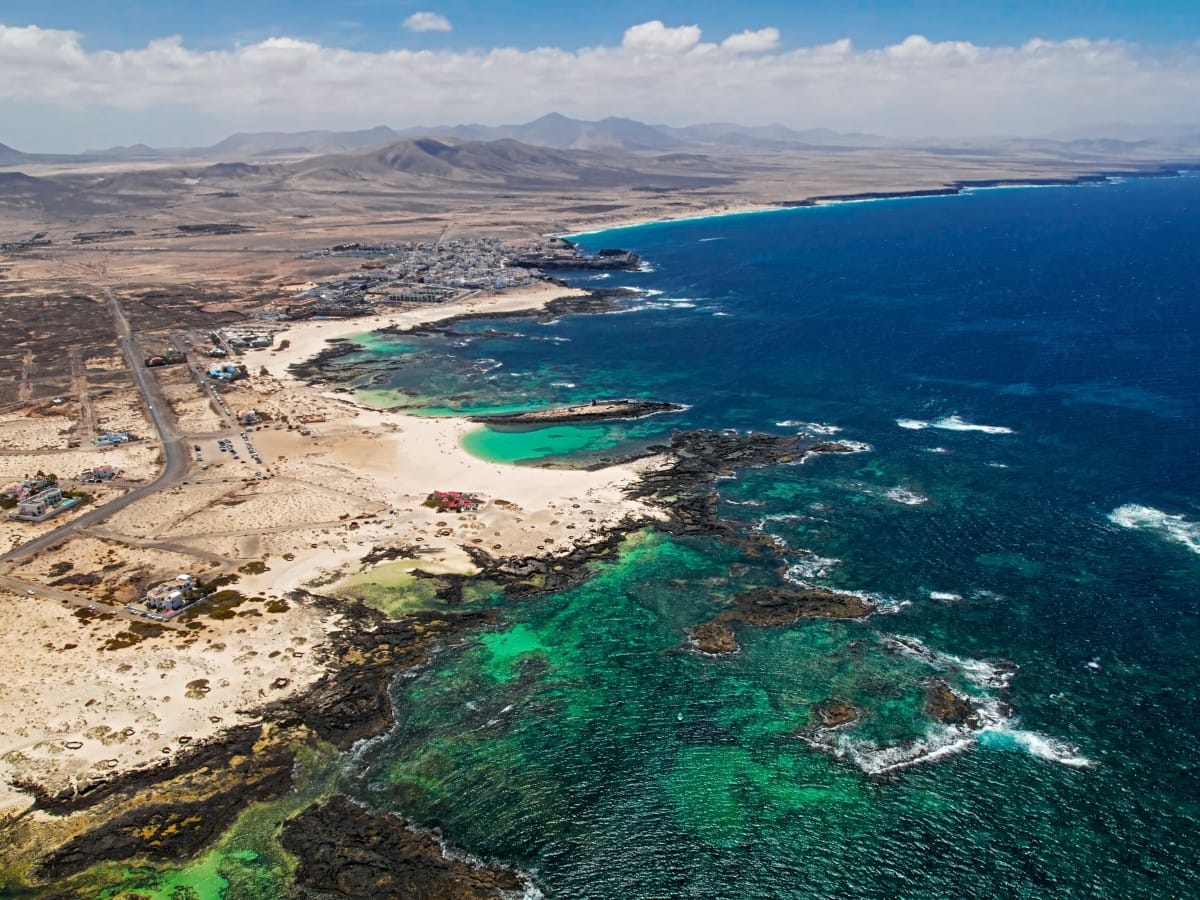
La Pared’s location on the central-west coast means its kinda isolated. The FV-605 runs north of town to a few other spots – it’s a paved main highway with good driving – but there’s not loads of them (the coast there is rocky and rarely opens for access).
That highway cannot take you all the way to El Cotillo since there’s a volcano and a national park in the way! You can still surf up the northern coast (around El Cotillo and Corralejo) but expect a drive of about an hour and a detour to the main motorway.
- El Cotillo (1h20 min north) – The main surf town on the Fuerte west coast, El Cotillo has surf camps and surf hotels and shops. It’s got a beginner-friendly beach break, but also sits on the doorstep of a swell magnet of a north shore where there are harder reef breaks.
- Corralejo (an hour’s drive) – A string of east-facing beaches that can handle the big N swells in winter. This is the main northern resort of the island.
- Playa de Garcey (40-90 minutes north) – One of the most famous bays on the west coast, Playa de Garcey has a big shipwreck and a surrounding set of high cliffs. There are waves, too. A bit of shelter from head-on NW swells mean they’re usually a bit smaller than up north, but it’s all reliant on good sandbars. Depending on swell size, it can be good for all levels, though beginners should skip it on account of how remote it is.
When to surf in La Pared?

Fuerteventura gets year-round surf, but autumn to spring (October–April) is prime time on the west coast. During these months, the Atlantic pumps consistent groundswell that lights up the beach breaks from Cotillo down to La Pared.
- Winter (December–February) – Big, powerful surf dominates. Expect strong rips and frequent overhead days. Advanced surfers it’s good for, but beginners should sit it out or head to sheltered east-coast coves like Costa Calma. There can be smaller days, mind, but you may need to leave La Pared to look for shelter up in Corralejo (which has an east-facing shore).
- Spring (March–May) – Milder conditions and glassy mornings as the trades ease off. You’ll still get good west swells, but with more manageable size. This is the sweet spot for intermediates who want a bit of a challenge.
- Summer (June–September) – Smaller and often windy, though clean days sneak through when the easterlies calm. Early dawn sessions can be lovely with chest-high peelers. Summer is the season for beginners in Fuerte.
- Autumn (October–November) – One of the best windows: steady groundswell, warmer water (around 23 C), and fewer crowds before the winter kick-off.
The village of La Pared
La Pared feels a world away from the buzz of Corralejo or the resort strips of the east coast. It’s a quiet, low-key surf village perched above Fuerteventura’s less-seen western coast.
There’s no real town centre to speak of, just a small cluster of whitewashed villas, surf lodges, and a single road that winds down toward Playa del Viejo Rey (the main surf beach). The vibe here is peaceful and local, with a tight-knit mix of residents, surf instructors, and a few sun-seeking travellers who prefer the raw, natural side of the island.
Starting to get an idea of why I think it’s so rad?
The social hub for me is Cafe Caveto, a coffee, ice cream and breakfast stop that even offer board rentals. Be sure to drop in there.
Staying in La Pared

Forget the big resorts that define the rest of Fuerteventura. La Pared is for self-catering villas by the shore. There are some SPECTACULAR ones, too. I love them as options for long-term Canary surf trips or just as a base for a week’s hol, but I then I am a sucker for remote, quiet stays.
- Gartenappartement – Tierra – Surf & Yoga Villa – A small bolthole that’s perfecto for surf couples who want to get away from it all. It’s in the quiet part of town, offering mountain views and access to a swimming pool.
- Casa Palmera – A typical Canarian villa that’s finished wonderfully inside and out. It can sleep up to 5 people, so the $200/night ish tag isn’t so bad. Vert nice indeed.
We might use affiliate links in this post. Basically, you click em’ and we get a little something from your booking or purchase. They help us keep offering more and more in-depth surf guides to awesome places all around the globe. So, thanks for that!
