8 STUNNING Fuerteventura Beaches – For Surfers & Non-Surfers

When it comes to beaches, I reckon Fuerteventura is one of the very best of the Canaries. There I said it. I don’t have a color-ometer or anything but as far as I can tell, the sands here are just that little bit creamier than elsewhere, the waters a bit more turquoise, and I personally have a bit of a soft spot for the way the wild, volcanic domes crash straight into the sea. It’s nice.
More than that, there are just, simply, more beaches where you can surf in Fuerteventura within a short driving distance of each other than, say, Lanzarote, or Gran Canaria – islands that both demand a bit of driving, or sticking to single beaches where there’s a dearth enough of localism to let you actually enjoy getting in the water (I’m looking at you, Caleta de Famara).
With all that in mind, I thought I’d put together a little guide to the top beaches in the region. You will notice that there’s a heavy focus on beaches on the northeast and northwest sides of the island. That’s no accident. Those are the key surf areas, and, therefore, the areas me – and probably you guys as readers – are most interested in.
The good thing is that most beaches in Fuerteventura, unlike in Lanzarote, double as lazing beaches and surf beaches – you can come, chill, surf when you wanna, picnic, and just have an all-round good time on the sand.
I would highly recommend a car hire if you want to explore the best of the spots listed below – car hire in Fuerteventura isn’t expensive, and driving around the island is generally pretty easy. It’s also the only real way to escape the crowds (and crowded lineups).
I’ll separate the beaches here into regions to make it easy to navigate. Let’s begin…
We might use affiliate links in this post. Basically, you click em’ and we get a little something from your booking or purchase. They help us keep offering more and more in-depth surf guides to awesome places all around the globe. So, thanks for that!
>>Read more about surfing in Fuerteventura
>>Also read our guide to the top surf camps in Fuerteventura
Beaches on the west coast of Fuerteventura
The west coast is the more-exposed of the two shorelines. It gets more swell, but is also wilder, less built up and less accessible. The main access town is either El Cotillo or La Pared – the first on the north side, the latter on the south side.
Piedra Playa

Number one here just as it should be is long, lovely Piedra Playa. A broad, bluff-backed run of sand, it’s definitely the most famous beach in the surf town of El Cotillo (the main surf town on Fuerte’s west coast), and it’s easy to see why.
There’s consistent swell here pretty much all year, largely thanks to the neverending churn of the NW swell channel, and the fact that there’s almost a 180-degree swell window on Piedra Playa. (More on the surf below…)
As a beach, it has its good days and bad days. The wind can get up because it’s fairly exposed, but when it’s not, or during the low-wind early morning sessions, it’s a real nice spot. Just a few mins’ drive south of El Cotillo town, you park up on the clifftop and walk down to find gold sand and a few clusters of rock reefs.
I’ve always found the water to be super-clear, with that sort of lovely Canary tinge of light blue. And it’s rarely crowded since there’s plenty of space – though you’re never likely to be totally alone.
Bottom line? It’s a cracking all-rounder
The surf? Piedra Playa is the main beach that serves El Cotillo, which is now in the top two surf towns on the island for good reason. It can get really big here, but when the swell hangs around 2-3 foot and the tide goes low, it’s a dream for learning – sandbank waves, quite mellow, and just good vibes.
>>Read our guide to the best beaches in El Cotillo right now
Playa de Esquinzo
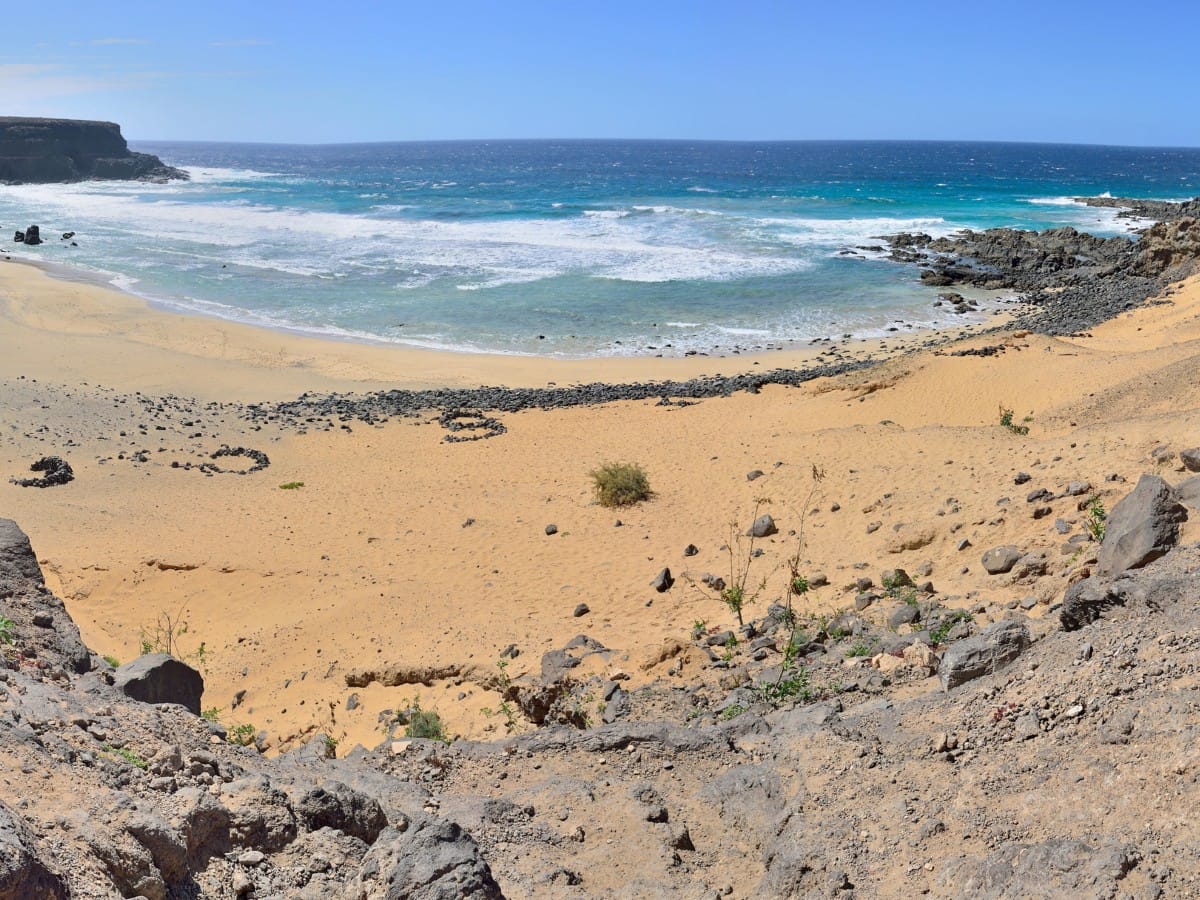
Gold sands and ultra-blue water are, again, the name of the game on Playa de Esquinzo. It takes 20-25 mins to drive here from the town of El Cotillo, and the roads are bumpy coast roads covered in sand – you’ve been warned.
What’s nice is that the crowds of Piedra really do drop away when you come this far down from the town.
Big cliffs rise to the north of the beach here, offering some good wind protection, and the sand faces just a hint to the southwest, which means there’s a bit more of an angle on the swell.
It’s not built up at all, so it’s a great choice if you like to hang on totally unbusy beaches with no hotel or whatever cramping your style. Swimming can be rough, though – so only dip your toe in if you know exacto what you’re doing.
(Don’t confuse this Playa de Esquinzo with the one of the same name that’s closer to Costa Calma on the south coast of the island – there is actually surf there too but it’s much more for families and kids).
The surf? West-facing Playa de Esquinzo also gets plenty of swell. It’s usually punchier here than in Piedra, but only because the sand is more pitching. The best spot is usually around the north side of the beach at low tide, when the swell hooks in and gives some nice wedgy rights off the cliff faces.
La Pared
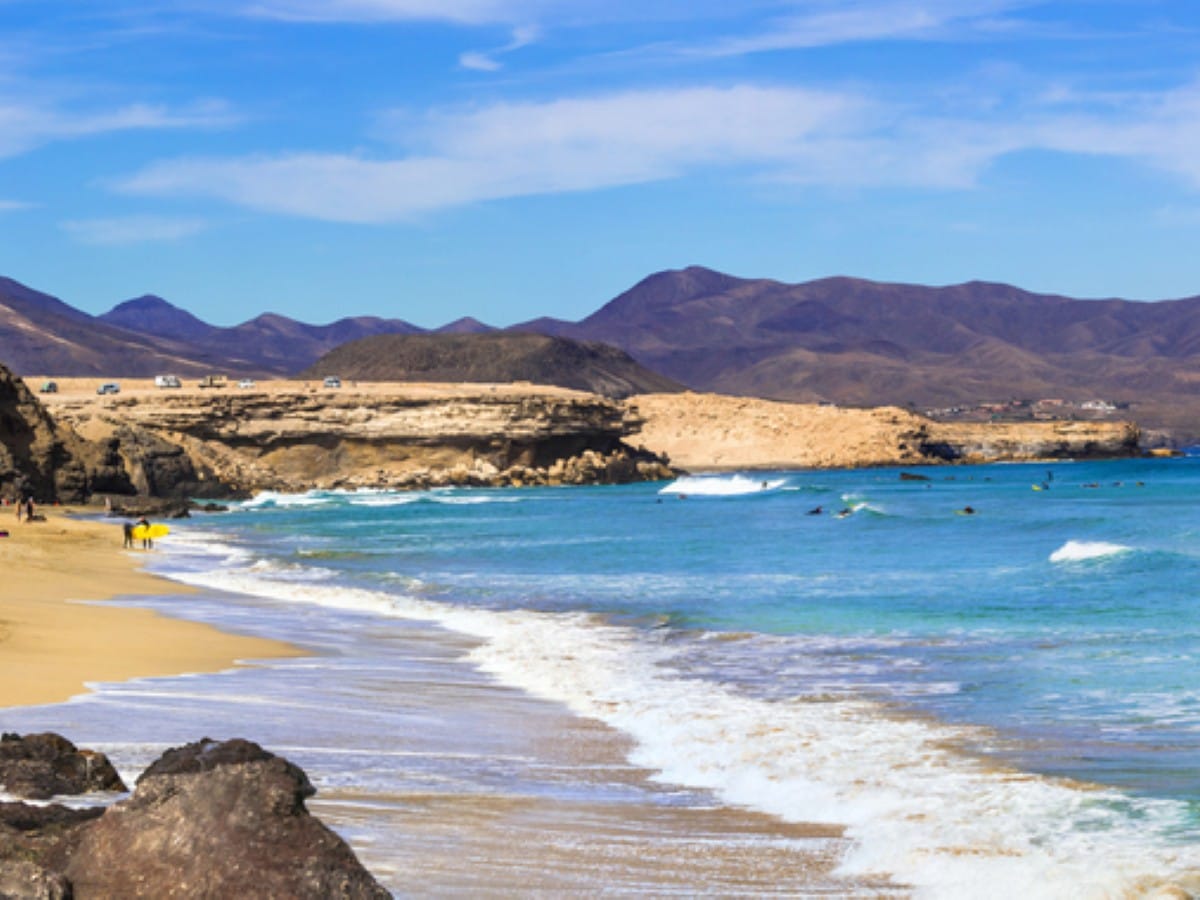
La Pared takes us all the way to the other end of the west coast of Fuerteventura. It’s a bit of a rising star when it comes to surf towns if you ask me – much more chilled than Corralejo or El Cotillo, but still with a nice café, good access to waves, and some top places to stay.
The beach here is about 15 mins’ walk – or a two min drive – from the town of La Pared itself. It’s down a dirt-track road and sort of opens suddenly beside or wide reef shelf.
The best part of the beach, though, is just a touch to the south. There’s a big wall of cliff that you have to go over, then you can see the sand opening up below. High tides will close much of it off, but as the water peals back, you’ll start to see a lovely ribbon of beige-tinged sand appear under the dunes.
Often quiet compared to beaches further north up the west coast, and I love the proximity to little La Pared itself.
The surf? Like its neighbors, this west-facing beach is highly consistent. Almost always has some sort of wave, but is susceptible to wind. At it’s best on a 2-4 foot swell from the NW with low or E winds, when it can be such a nice all-level spot. Some surf schools now come by, but there’s usually space.
La Concha Beach
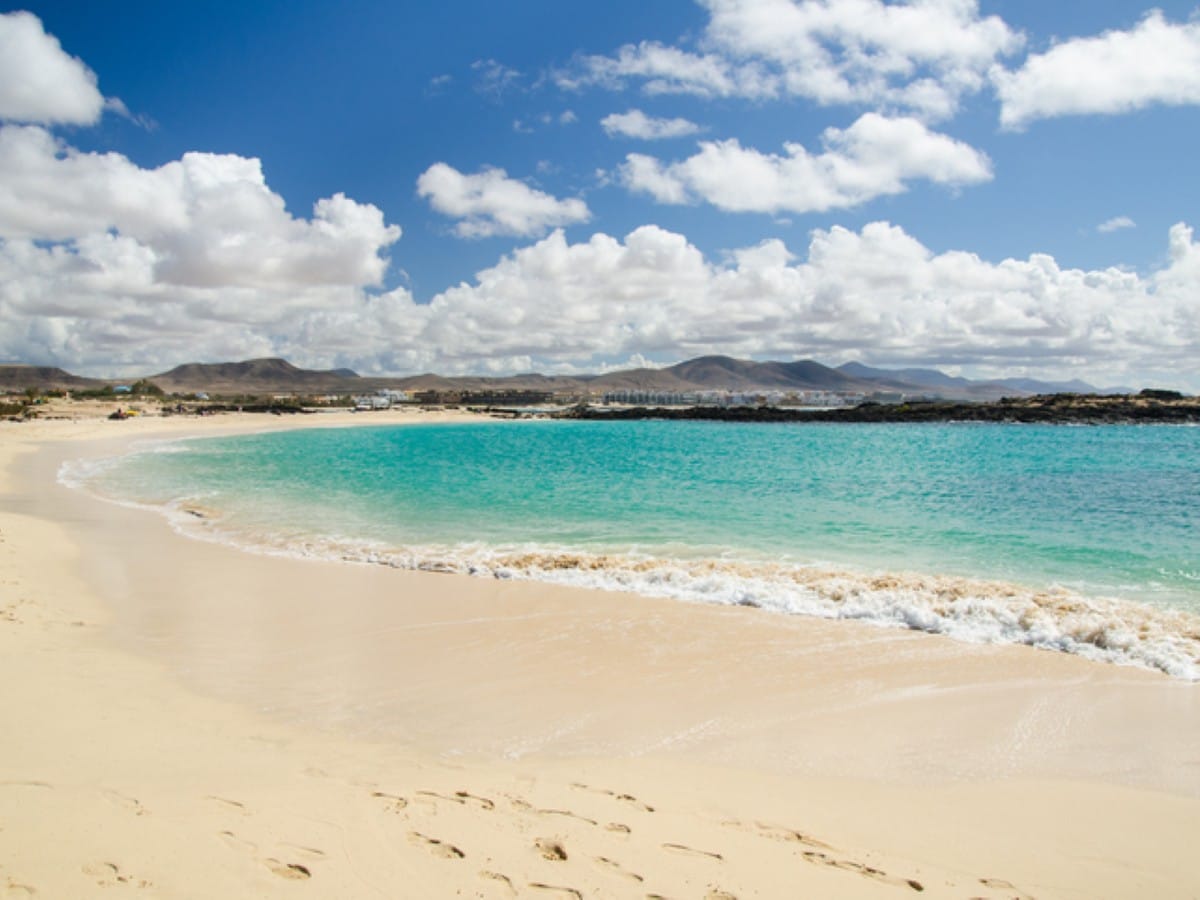
Number one here just as it should be is long, lovely Piedra Playa. A broad, bluff-backed run of sand, it’s definitely the most famous beach in the surf town of El Cotillo (the main surf town on Fuerte’s west coast), and it’s easy to see why.
All the way back up north in the town of El Cotillo, La Concha Beach is the one you’ve probably seen in the travel brochures. There’s a good reason for that, because this is basically one serious photo-worth beach, perfectly conch-shaped, glowing with white sand, lapped by clear water that even looks da bomb when the clouds cover the sky.
It’s a part of an area just north-ish of town, but also in the center that’s totally dominated by lava reefs on the inside and out. They kill all the swell, so there’s no surf, but also help to keep the water really still, hence why it looks so damn good.
If you want a day of hanging, chilling, swimming, and sunbathing, I’d say this one probably can’t be beaten on the west coast.
The surf? None – but Piedra Playa is just south of it, so it’s not far if you wanna go get wet.
Cofete
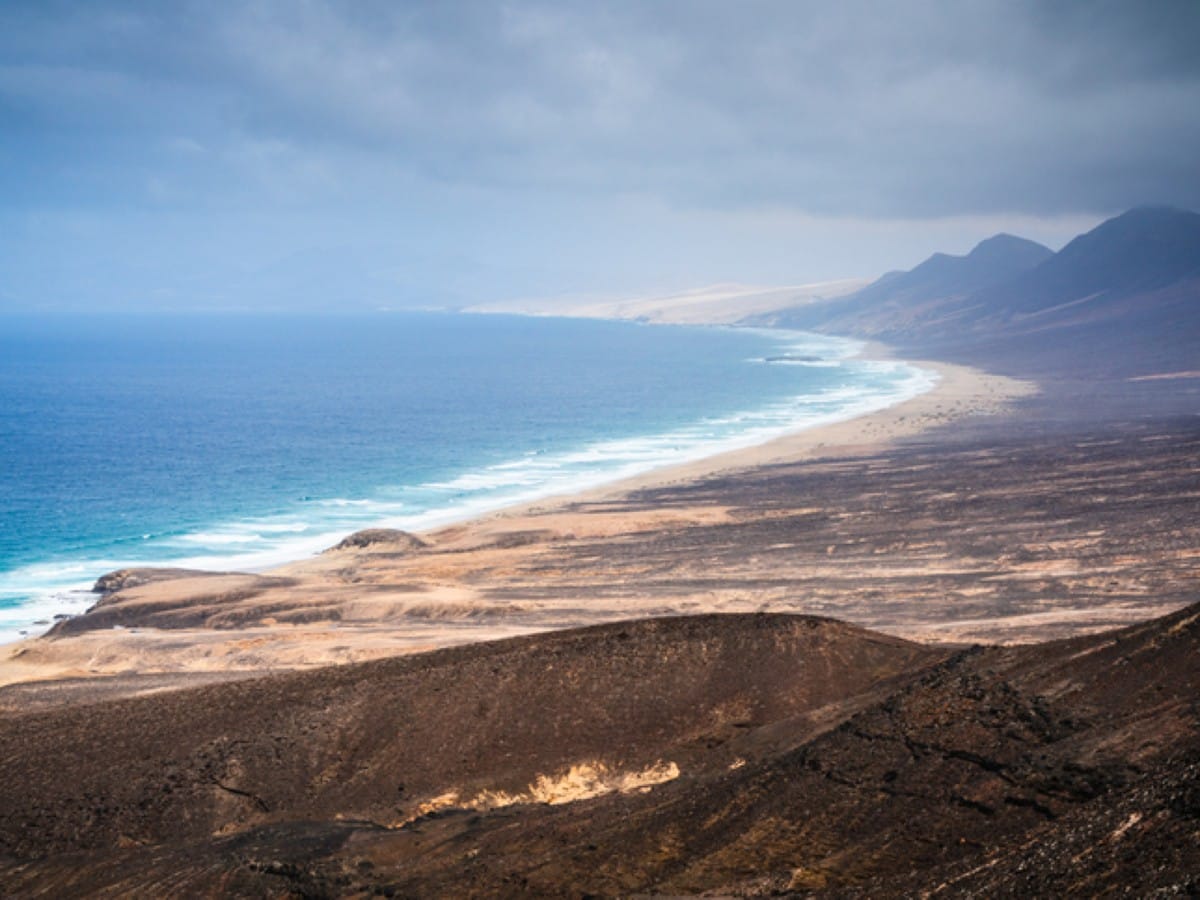
Last but most certainly not least for the west coast is Cofete. No list of Fuerteventura beaches could possibly be without it, since it’s a super-striking bay and – I think (and don’t bother correcting me if I am wrong here) – the longest single beach in the Canary Islands.
The catch is that it’s ultra-remote. You gotta drive the whole way down to the south end of the west coast and it’s mud-track gravely roads all the way in.
The reward will be miles (literally) of completely empty white sands with endless Atlantic waves lashing it. The cliffs that rise above are so dramatic, and it has this feeling of real, raw wilderness that literally nowhere on the island can match.
The surf? There is loads of surf in Cofete. There’s no telling what you’ll get on any given day, mind. The sandbanks here shift and change all the time, but there can be really nice sets on smaller days (it’s brutal on big swells!). The main draw is that it’s likely to be almost entirely empty.
Beaches on the east coast of Fuerteventura
The area we’ll focus on here is mainly the town of Corralejo and just south of it, where a long (and lovely) run of beaches called the Playas Grande unfolds with tons of chilling spots, great swimming, and surf.
Waikiki Beach
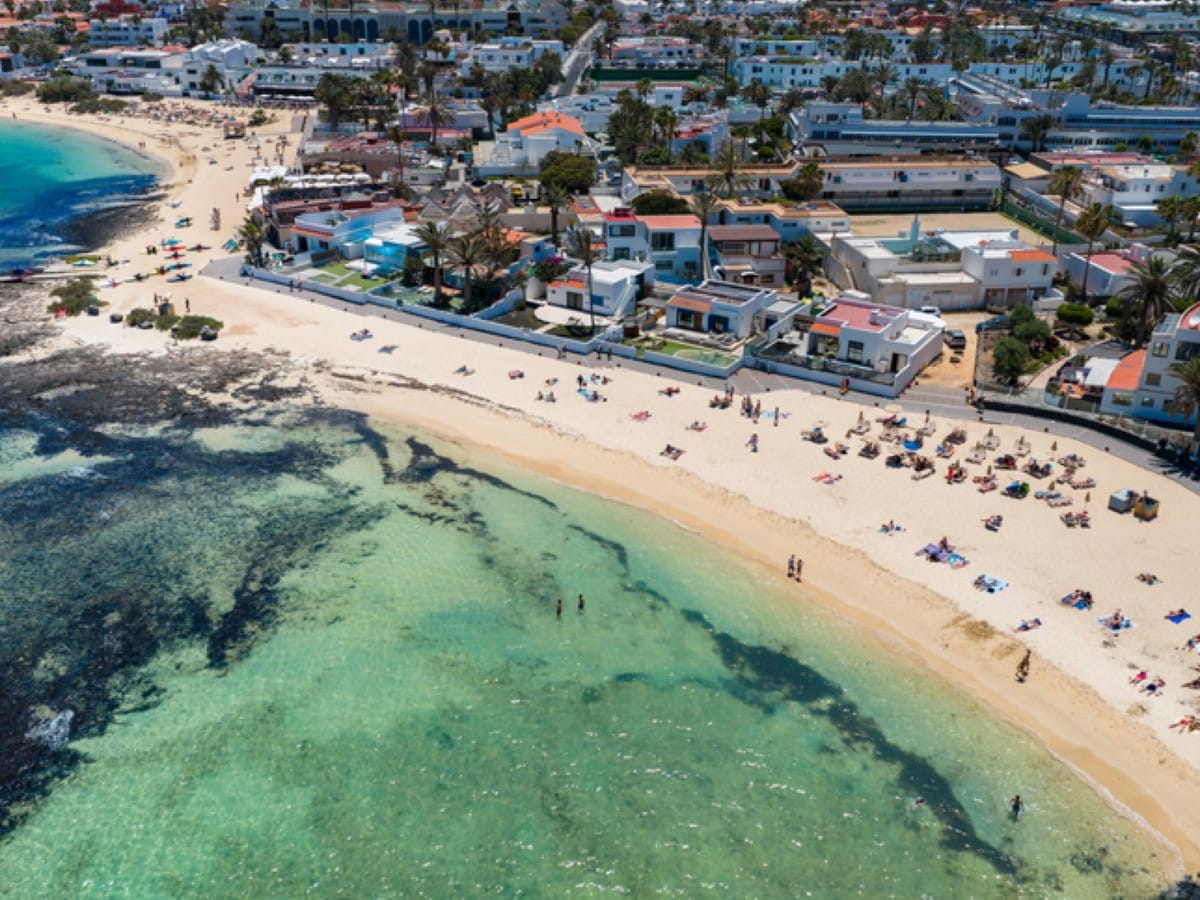
I don’t know about you guys but I personally hate it when someone uses the Hawaii classic as a namesake, especially when the spot they’re naming hardly shares a single thing with its Aloha bro. That’s the case here – save for, perhaps, the fact that this is the main urban sand stretch in Corralejo, and it comes lined with Canarian beach bars and cafes.
Yea, so it’s the place to hang in Corralejo. The place to come for breakfast coffee and later-on cocktails. There’s protected water for swimming in, and rows of those annoying sunbeds put out by whoever wants to steal the 20 euros from you that day.
It just has to be mentioned here as one of the best beaches on the island because it’s the hub of the town. Plus, it’s only a short walk north of two of Corralejo’s main surf spots…
The surf? Waikiki Beach has no surf. That’s the sort of point of it being a family friendly hang spot. However, Rocky Point, a long shelving reef break that has an easier inside section and a heavier outside section sits literally 5 mins walking to the south.
>>Read our more in-depth guide to beaches in Corralejo right now
Playa del Moro
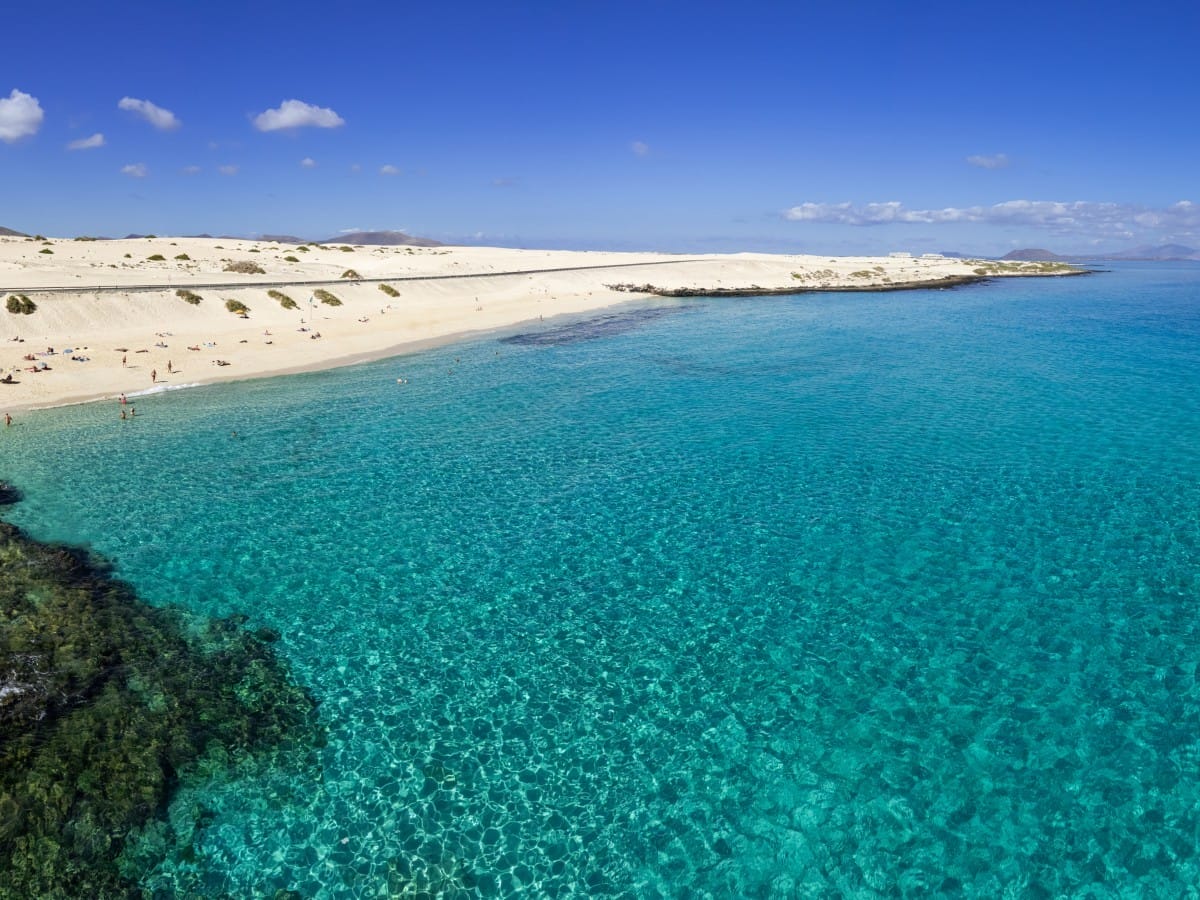
In my humble opinion this one is the gem of the Grandes Playa area south of Corralejo. A short-ish stretch of pure orange-tinged sand that sort of rolls naturally out of the dunes right behind it. The water is always ridiculously clear and shimmering blue. It’s rarely too busy. It’s got it all.
If I was being picky, I guess I’d say that the lack of topography at Playa del Moro means that the onshore winds (usually in summer) can make it a hard place to relax between May and August, so check the forecast.
It’s roughly a 10-12 minute drive from Corralejo town center. Parking is just south of the main beachfront along the coast road.
The surf? Dependent on those summer windswells almost entirely, though usually quite good quality. Playa del Moro offers up lovely little wedge-type sandbar waves between May and August. It can occasionally work in winter with big NW push-through swells. Good for all levels. Lovely place to surf.
Sotavento
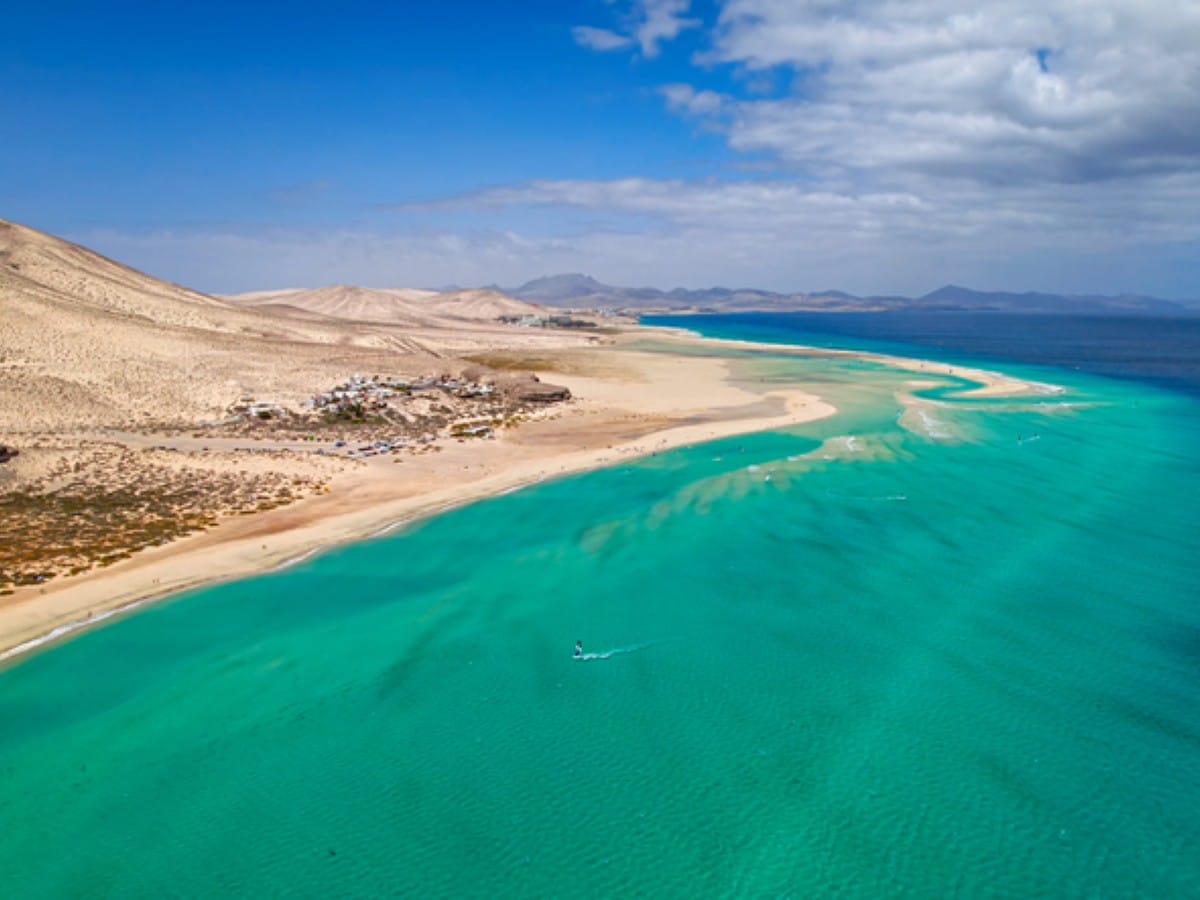
Sotavento is sort of the east coast’s answer to Cofete. It’s long – like 9km or something – and wild, and almost entirely within some sort of nature reserve.
But the shape and style of this east-coast gem is different. It reminds me more of something like a Queensland Whitsundays beach, because it unfolds in a patchwork of wispy sandbars that move and bend through the ocean this way and that.
It’s windy, too. Real windy. That’s why Sotavento is often the main place kitesurfers head.
Amazing for beach hiking, some good swim spots if you can find the places where the lagoons have formed on the inside (usually at lower tides), and some nudey sections if that’s your thing.
The surf? Wind is the thing here. If you got a kite then you’ll know about Sotavento.
We might use affiliate links in this post. Basically, you click em’ and we get a little something from your booking or purchase. They help us keep offering more and more in-depth surf guides to awesome places all around the globe. So, thanks for that!
